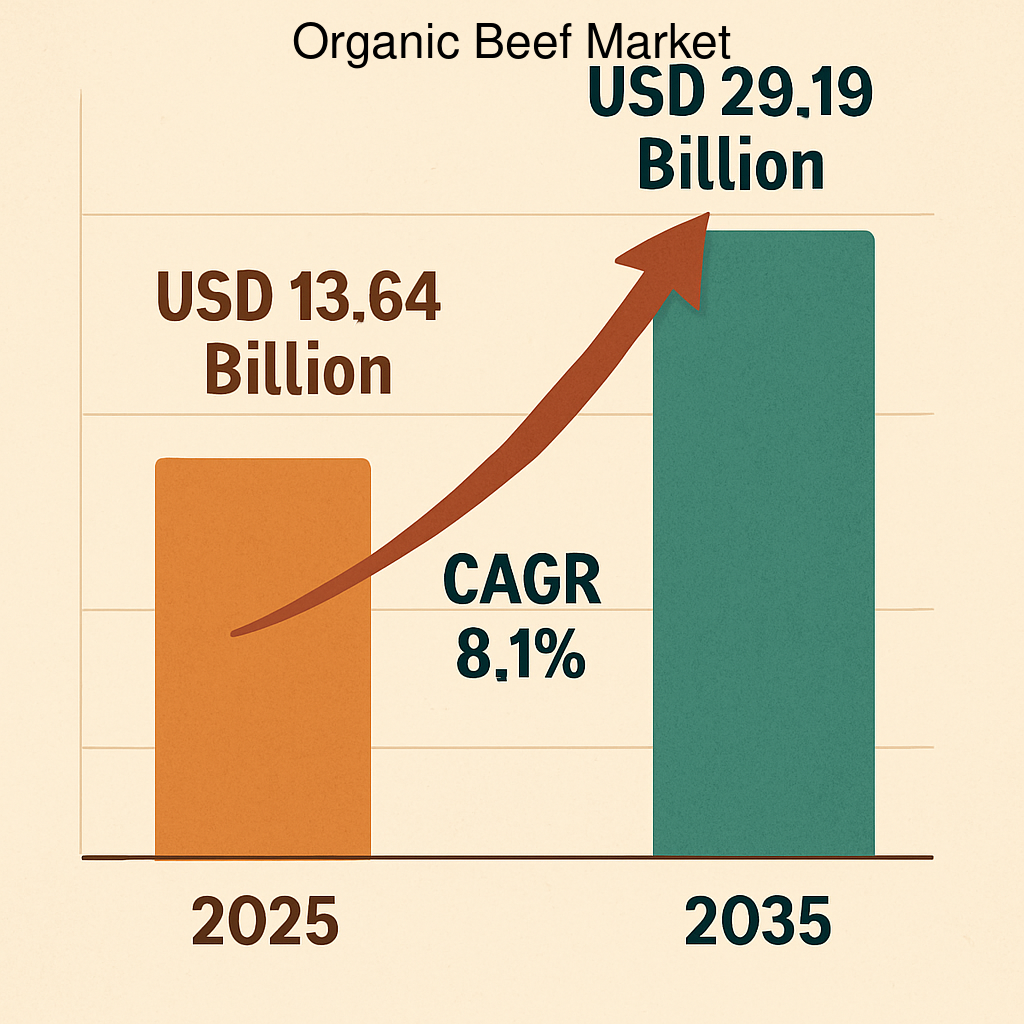
The global organic beef market is on an impressive upward trajectory, expected to more than double in value between 2025 and 2035, USD 13.64 billion by 2025 and is projected to reach a value of USD 29.19 billion by 2035, reflecting a CAGR of 8.1%. This growth is being propelled by consumers’ rising preference for clean‑label proteins, stronger regulatory support for sustainable farming, and heightened awareness of antibiotic resistance and animal welfare. Organic beef is rapidly cementing its place within the premium protein segment, especially in high‑income economies where ethical sourcing and environmental stewardship drive purchase decisions.
Uncover Essential Data – Get A Sample Copy: https://www.futuremarketinsights.com/reports/sample/rep-gb-4463
Market Trends Highlighted
Traceability and Transparency Move Center Stage
- Modern shoppers want detailed knowledge of the supply chain—from farm origins and feed sources to transport conditions and processing methods. Certifications that document animal welfare, pasture access, and no antibiotic usage have become critical trust builders, prompting producers to invest in blockchain tracked and QR based labeling.
Premium Protein Meets Wellness Consciousness
- Health oriented consumers identify grass fed, hormone free organic beef as a safer alternative to conventional meat. Perceptions of lower antibiotic residues and healthier fatty acid profiles are translating into premium shelf prices and growing food service demand for organic beef entrees, burgers, and ready to eat meals.
Regulatory Push for Sustainable Animal Husbandry
- Governments in North America, Europe, and Oceania are tightening standards around feed additives, growth promoters, and environmental impact. Subsidies and grant programs that reward organic transitions encourage small and midsize cattle operations to adopt certified practices, widening the supply base.
Retail Diversification and Direct to Consumer (D2C) Channels
- Supermarkets are expanding organic protein sets, while online platforms enable ranchers to ship subscription boxes of portion cut steaks, mince, and value added products directly to households. This omnichannel approach improves margins and builds brand loyalty around provenance stories.
Climate Smart Marketing Resonates with Eco Sensitive Shoppers
- Organic beef producers highlight carbon sequestration benefits of managed grazing, biodiversity restoration, and reduced chemical runoff. Life cycle assessments and environmental product declarations add a data driven edge to sustainability claims, fostering trust among environmentally conscious millennials and Gen Z.
Institutional Procurement Shifts Toward Antibiotic Free Menus
- Schools, hospitals, and corporate cafeterias are adopting “raised without routine antibiotics” policies. Bulk contracts for organic ground beef and strip loins are rising, reinforcing steady demand even during periods of retail price volatility.
Innovation in Value Added & By Product Lines
- Brands are launching frozen organic beef meatballs, shelf stable jerkies, and high protein snacks that extend product reach. Tallow is being refined into clean label personal care items, turning what was once waste into a new revenue stream and improving overall carcass utilization.
Get Report Link: https://www.futuremarketinsights.com/reports/organic-beef-meat-market
Key Takeaways of the Report:
Premiumization Continues: Average unit prices remain resilient as shoppers equate organic certification with superior nutrition, better taste, and responsible production, supporting healthy margins for processors and retailers.
Policy Support Matters: Incentives for pasture‑based systems and bans on routine antibiotic use are accelerating organic herd conversions, expanding supply in regions where consumer demand already outpaces domestic production.
Supply‑Chain Digitization: Producers are adopting robust traceability platforms to document feed sources, animal movements, and processing conditions—now a baseline requirement for major retailers and export markets.
Health & Environmental Messaging: Marketing campaigns that connect organic beef consumption to personal wellness, reduced antibiotic resistance, and lower environmental impact resonate strongly with educated, high‑income demographics.
Value‑Added Diversification: New product formats—from sous‑vide roasts to keto‑friendly beef sticks—are broadening organic beef’s appeal beyond traditional steak and ground categories, capturing incremental revenue in convenience‑oriented segments.
Regional Market Outlook: Key Insights
United States (CAGR: 6.5%)
North America leads the global organic beef market, with the U.S. driving demand due to high purchasing power, health-conscious consumers, and rising preferences for antibiotic-free and traceable meat.
Germany (CAGR: 6.2%)
Germany is at the forefront of Europe’s organic beef growth, fueled by strong consumer awareness, robust regulatory frameworks, and expanding availability of climate-labeled meat products in retail chains.
Australia (CAGR: 6.0%)
Australia leverages vast pasturelands and efficient farming practices to produce export-grade organic beef, positioning itself as a key supplier to high-demand regions like Asia and the Middle East.
Canada (CAGR: 5.8%)
Canada’s organic beef sector is scaling up steadily, supported by domestic clean-label trends and opportunities to serve premium meat markets internationally.
United Kingdom (CAGR: 5.5%)
The UK market is growing with increasing consumer demand for ethically sourced meat, with retailers investing in certified organic beef offerings amid post-Brexit sustainability initiatives.
Leading Organic Beef Brands
- JBS S.A.
- Tyson Foods Inc.
- Danish Crown A/S
- Meyer Natural Foods
- Perdue Farms
- OBE Organic
- Verde Farms LLC
- Australian Organic Meats Group Pty Ltd.
- Arcadian Organic & Natural Meat Co. Pty Ltd.
- Eversfield Organic Ltd.

Explore Meat, Poultry & Seafood Industry Analysis:
https://www.futuremarketinsights.com/industry-analysis/meat-poultry-and-seafood
Key Segments
By Product Type:
The market is segmented into fresh meat and processed meat.
By Sales Channel:
Distribution channels include direct sales and indirect sales.
By Region:
The market is analyzed across North America, Latin America, Western Europe, Eastern Europe, South Asia & Pacific, East Asia, Central Asia, Balkan and Baltic Countries, Russia and Belarus, and The Middle East & Africa.