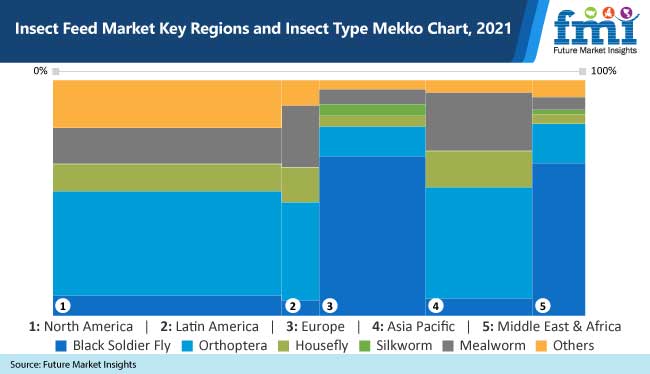
 The global insect feed market is experiencing a major surge, currently valued at USD 2.16 billion and projected to grow at an impressive CAGR of 18%, reaching USD 11.31 billion by 2035. This significant rise is fueled by the growing demand for sustainable and high-protein alternatives in animal nutrition, with insect-based feeds emerging as a frontrunner. Black soldier fly (BSF) larvae, in particular, are garnering attention due to their nutritional profile and minimal ecological footprint.
Keep Up with Market Trends: Access Your Sample Report: https://www.futuremarketinsights.com/reports/sample/rep-gb-11604
Market Trends Highlighted:
Sustainability-Driven Demand:
The increasing need for environmentally friendly feed options is a central driver of market growth. Insect feed requires less land, water, and energy compared to traditional protein sources like soy and fishmeal.
Rise of Aquaculture Adoption:
Aquaculture is leading the charge, with fish farmers embracing insect meal to counter rising fishmeal prices and dwindling fish stocks. This segment holds 44% of the market share in 2025 and is projected to maintain dominance.
Expansion into Poultry and Pet Food:
The poultry industry and pet food sector are increasingly adopting insect proteins. These sectors are particularly interested in the digestive and hypoallergenic benefits of insect meal, which make it ideal for premium and specialty pet food formulations.
Focus on Black Soldier Fly (BSF):
BSF larvae remain the preferred insect species due to their high conversion efficiency, robust amino acid profile, and scalability in production, making them a staple in commercial insect feed operations.
Expanding Market Need: Access Our Full Report for In-Depth Analysis and Trends: https://www.futuremarketinsights.com/reports/insect-feed-market
Key Takeaways of the Report:
- The global insect feed market will grow from USD 2.16 billion in 2025 to USD 11.31 billion by 2035, at a CAGR of 18%.
- Insect meals, especially those derived from BSF, are increasingly viewed as the “protein of the future.”
- Aquaculture remains the largest and fastest-growing end-use segment, representing nearly half of the current market.
- Demand is surging for insect feed in poultry and pet food industries, particularly for health-conscious and allergy-sensitive formulations.
- The shift toward circular agriculture, waste valorization, and sustainable food systems continues to underpin market expansion.
Regional Market Outlook:
The United States is projected to be the largest national market, reaching a value of USD 1,697.7 million by 2035, driven by strong demand from aquafeed and high-end pet food producers.
Germany follows closely at USD 1,131.8 million, with Europe’s supportive regulatory landscape and growing circular economy practices aiding growth.
China and India are emerging as major growth hubs in Asia, with expected market values of USD 905.5 million and USD 565.9 million, respectively. Both countries are leveraging their expanding aquaculture industries and large-scale feed production capacities to adopt insect-based alternatives. Japan, though smaller in value (USD 226.4 million), is focusing on innovation-driven applications and premium pet food segments.
Competition Outlook:
The insect feed industry is witnessing rapid expansion with increased investments in R&D and commercial scale-up. Leading players are focusing on optimizing large-scale production processes and developing proprietary rearing technologies to improve yield and cost efficiency.
Leading Insect Feed Brands
- Nextprotein
- Buhler AG
- Hexafly
- Entofood
- Diptera Nutrition
- Enviroflight
- Coppens
- Agriprotein
- Others
 Explore Animal Nutrition Industry Analysis: https://www.futuremarketinsights.com/industry-analysis/animal-nutrition
Key Segments
By Insect Type:
This segment is further categorized into Fly Larvae, Silkworms, Cicadas, and Other Insects.
By Application:
This segment is further categorized into Aquaculture, Pig Nutrition, Poultry Nutrition, Diary Nutrition, and Other Applications.
By Region:
Industry analysis has been carried out in key countries of North America, Latin America, Eastern Europe, Western Europe, East Asia, South Asia & Pacific, Central Asia, Balkan and Baltic Countries, Russia & Belarus and the Middle East & Africa.