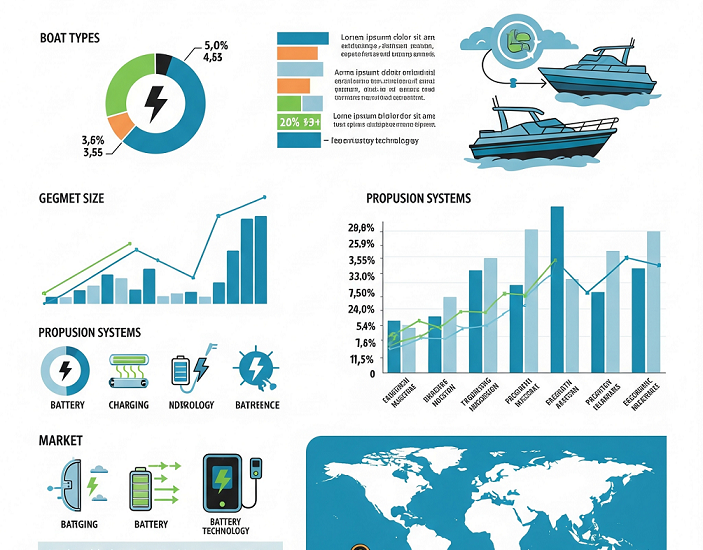
The global electric boat market is valued at USD 7.68 billion in 2025. The market is set to witness USD 20.85 billion by 2035, registering a robust CAGR of 10.5% during the forecast period. This growth is primarily driven by the increasing emphasis on reducing carbon emissions and promoting sustainable marine transportation solutions worldwide.
Marine travel has long been synonymous with roaring engines, diesel fumes, and choppy wakes. But just beneath the surface, a quieter transformation is underway. As sustainability, regulation, and innovation converge, electric boats are emerging as the silent force redefining how we navigate waterways.
They don’t thunder through harbors or leave oily trails behind, but they promise cleaner coasts, efficient operation, and a radically different boating experience. In a world moving toward decarbonization, the electric boat isn’t a novelty—it’s the future of responsible, intelligent marine transport.
Get Ahead with Our Report: Request Your Sample Now!
https://www.futuremarketinsights.com/reports/sample/rep-gb-5121
Beyond the Dock: The Power Beneath the Hull
Electric propulsion systems are more than just eco-friendly swaps for combustion engines. They deliver smoother acceleration, near-silent operation, and precise maneuverability. Whether used in recreational crafts, ferries, or workboats, electric powertrains are changing what’s possible on the water.
Battery technologies, motor efficiency, and charging infrastructure are maturing rapidly, making electric boats not just viable—but preferable. From urban canals to open lakes, these vessels provide an alternative that reduces noise pollution, lowers maintenance, and offers a fundamentally different interaction between human and marine environment.
Overshadowed by EVs, Anchored in Innovation
The automotive industry has captured much of the attention around electrification, but the marine sector has its own electric evolution quietly gaining momentum. While electric cars roll across highways and dominate headlines, electric boats are carving a parallel path—often in regulatory shadows, yet buoyed by the same core technologies.
The challenge is different: water creates unique resistance, and marine-grade components must withstand corrosion, vibration, and dynamic load shifts. But advancements in lithium-ion chemistry, modular battery packs, and power-dense motors are bringing marine electrification closer to scale.
Clean Currents, Quiet Operations
Traditional marine engines contribute significantly to air and water pollution. By contrast, electric boats leave no emissions in their wake. This is particularly critical in sensitive ecosystems, tourism-heavy regions, and inland waterways where environmental impact is closely monitored.
More than a sustainability measure, silence on the water offers a new kind of luxury—one defined not by horsepower, but by harmony. For operators and passengers alike, the absence of engine rumble translates into smoother rides, richer conversations, and less strain on marine life.
A New Challenge for Charging Infrastructure
As more vessels go electric, ports and marinas are facing a new demand: fast, scalable, and saltwater-safe charging stations. Unlike highways dotted with EV chargers, water-based networks are only just beginning to emerge. Here, innovation meets geography—charging must be mobile, flexible, and integrated into diverse waterfronts.
Some manufacturers are tackling this through solar docks, battery swap stations, or hybrid onboard generators. But the race to define marine charging standards is wide open, offering opportunities for collaboration across utility, marine, and tech sectors.
Electrifying Every Vessel Class
From compact dinghies to passenger ferries, electric propulsion is making its way across all boat categories. Smaller vessels benefit from instant torque and low energy needs, while commercial operators see long-term savings in fuel, service, and downtime.
Meanwhile, innovators are experimenting with hydrofoils, solar assistance, and AI-based energy management to push range and performance boundaries. These developments aren’t just about replacing diesel—they’re about reimagining the boat itself as a smart, connected, and efficient system.
Exhaustive Market Report: A Complete Study
https://www.futuremarketinsights.com/reports/electric-boats-market
Where Technology Meets Responsibility
Maritime regulations are tightening, and consumer demand is shifting. Eco-tourism operators, lakefront municipalities, and even defense agencies are looking at electric boats not only as greener options, but as strategic investments in cleaner, quieter operations.
As climate goals steer global policies, being electric isn’t just trendy—it’s increasingly necessary. The boat of the future must comply with emission mandates, meet sustainability metrics, and operate with minimal disruption to its environment.
The Invisible Wake of Progress
Electric boats don’t announce themselves with sound or smoke. But they are quietly creating ripples that extend far beyond the marinas they dock in. They represent a shift in thinking—toward energy autonomy, responsible recreation, and smarter marine logistics.
Ignore this movement, and the marine industry risks remaining anchored to an outdated model of propulsion. Embrace it, and the waterway becomes more than a route—it becomes a showcase of clean, intelligent design navigating toward a quieter, more sustainable horizon.