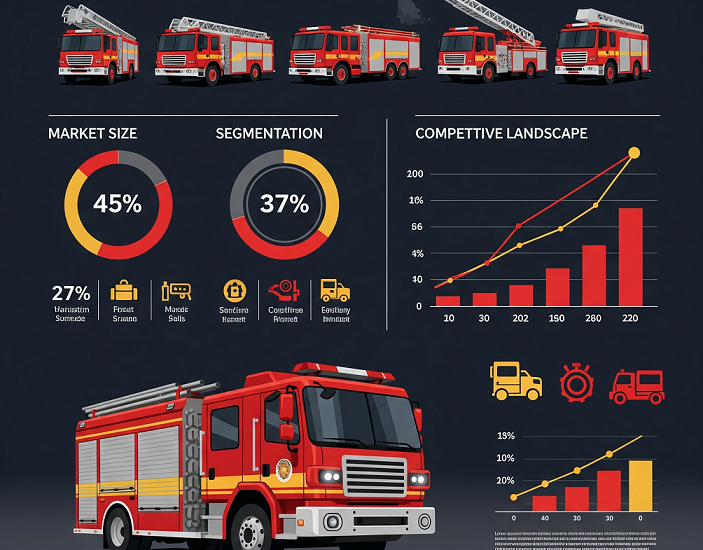
The global fire truck market is estimated to reach USD 6,376.3 million in 2025 and is projected to expand to USD 9,192.8 million by 2035, registering a compound annual growth rate (CAGR) of 3.8% over the forecast period. This growth is being driven by the modernization of emergency response fleets, regulatory mandates for fire safety upgrades, and technological innovation in electric and hybrid fire apparatus.
In a world of high-tech rescue drones, AI-enabled dispatch systems, and real-time fire risk mapping, you’d think fire departments are more prepared than ever. But on the front lines of disaster response, one core piece of equipment is reaching its breaking point—the fire truck.
Not the software. Not the sensors. The truck itself.
You don’t hear much about them until sirens wail. But cities, towns, and fire districts across the globe are quietly wrestling with a dangerous truth: our fire truck fleets are aging fast, replacement is painfully slow, and procurement is mired in cost spikes, delays, and design stagnation.
Get Ahead with Our Report: Request Your Sample Now!
https://www.futuremarketinsights.com/reports/sample/rep-gb-2732
An Emergency Response System with Cracks in the Chassis
Modern fire trucks are technological marvels. They carry compressed air foam systems, high-capacity pumps, thermal imaging gear, and advanced telemetry. But underneath that gear is a mechanical beast that requires careful calibration, constant maintenance, and custom builds to suit each department’s unique terrain and use case.
And here’s the catch—unlike mass-produced sedans or SUVs, fire trucks are often built to order. Every department has different specs, from ladder length to off-road capability. That means long lead times, limited suppliers, and rising manufacturing pressure. Yet, demand keeps growing as climate change fuels more wildfires, urban density increases, and public safety standards tighten.
Backlogs, Breakdowns, and Budget Battles
Fire departments in major cities and rural towns alike are sounding the alarm—not about fires, but about the trucks they rely on. Replacement cycles are dragging past safe thresholds. Maintenance costs are skyrocketing. New truck deliveries can take years.
The cause? A mix of supplier consolidation, skilled labor shortages, and outdated procurement policies that favor price over resilience. Departments are left choosing between blowing their budgets on one rig—or running another year on one that’s already two decades old.
Tech-Heavy, Mechanically Underfunded
While fire services have embraced software and digitization—CAD systems, AI-driven response routing, satellite-linked communication—the mechanical heart of the operation is lagging. The core fire truck design hasn’t evolved much in decades. Innovations like electric propulsion, modular platforms, and smart pump integration exist—but adoption remains niche.
Why? Because the funding isn’t there. Because the supply chains aren’t built. And because the few remaining manufacturers control the game, setting prices and timelines without much competition. It’s a system vulnerable to failure, especially in times of emergency-scale demand.
Exhaustive Market Report: A Complete Study
https://www.futuremarketinsights.com/reports/fire-trucks-market
Rural Areas Left Behind
In small towns and remote areas, the problem is magnified. With limited tax bases and shrinking municipal budgets, these departments often rely on grants or second-hand rigs. But even used trucks now command premium prices. And when an outdated pumper breaks down mid-response, the results can be deadly.
This isn’t just a rural issue—it’s a national vulnerability. Fires don’t wait for funding cycles, and equipment failures don’t respect jurisdictional lines.
Don’t Wait for the System to Burn Down
We don’t notice fire trucks—until we need them. But their decline is already happening in slow motion. Delays, shortages, rising costs—these are the warning signs. And unlike a faulty app or a delayed shipment, this failure has life-or-death consequences.
If we want our fire departments to be the first line of defense, we need to make sure they have what they need—starting with the trucks that carry the fight.