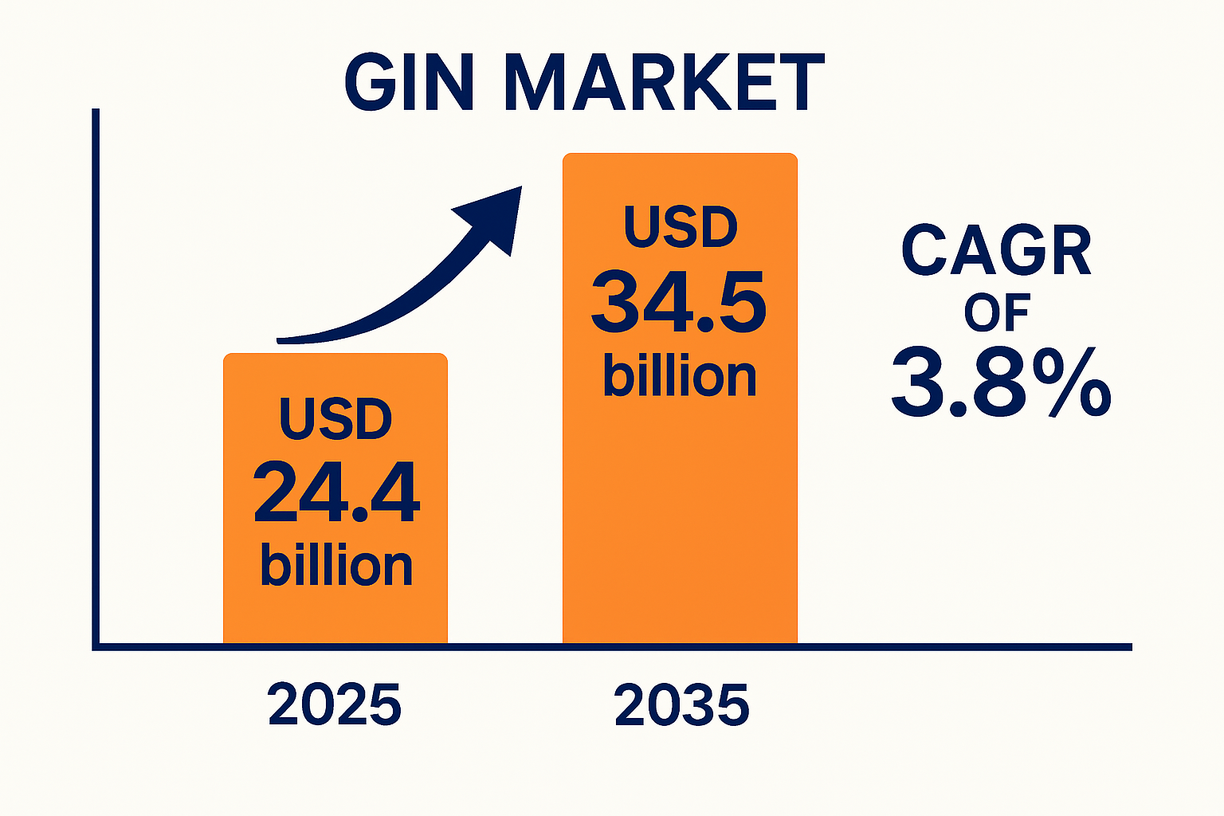
The gin market is experiencing a renewed surge in demand, driven by shifting consumer preferences toward craft spirits, premium botanicals, and innovative flavors. With a CAGR of 3.8% expected between 2025 and 2035, the industry is projected to rise from USD 24.4 billion to over USD 34.5 billion in value, highlighting its growing appeal across developed and emerging markets.
Uncover Essential Data – Get A Sample Copy: https://www.futuremarketinsights.com/reports/sample/rep-in-1074
Market Trends Highlighted:
- Craft and Artisanal Gins on the Rise:
Consumers, especially millennials, are increasingly favoring small-batch, locally distilled gin varieties featuring unique botanicals and regional influences. - Premiumization Driving Sales:
There’s a strong market shift toward high-end and super-premium gins, with consumers willing to pay more for quality, design, and authenticity. - Flavored Gin Innovation:
The popularity of flavored gins—such as citrus, berry, and herb-infused varieties—continues to attract new demographics, including younger and female drinkers. - On-Trade Recovery Post-Pandemic:
The revival of bars, restaurants, and nightlife scenes is boosting on-premise gin consumption globally, helping fuel overall market growth. - Sustainability and Local Sourcing:
Distillers are embracing eco-friendly practices, including locally sourced ingredients and sustainable packaging, aligning with global consumer values.
Get Report Link: https://www.futuremarketinsights.com/reports/gin-market
KEY TAKEAWAYS OF THE REPORT
The global gin market is forecasted to grow at a CAGR of 3.8% from 2025 to 2035.
Craft, flavored, and premium gins are the most dynamic segments contributing to market expansion.
Increased penetration in developing economies such as India and growing consumption in traditional markets like the UK and USA are strengthening the global footprint of gin.
E-commerce and digital marketing are significantly boosting off-trade sales, especially among younger demographics.
Regulatory support and innovations in production techniques are aiding the development of regional and artisanal gin markets.
Regional Market:
United States (CAGR: 5.4%)
The U.S. gin market is experiencing notable growth, driven by rising interest in botanical spirits, craft distilling, and cocktail culture. Premium and small-batch gins are gaining traction in both retail and hospitality channels.
United Kingdom (CAGR: 5.8%)
As the birthplace of many iconic gin styles, the UK remains a key growth region. Demand for locally distilled, flavored, and craft gins continues to drive innovation, supported by strong domestic consumption and exports.
Canada (CAGR: 6.1%)
Canadian consumers are increasingly embracing gin as part of their cocktail culture. A surge in domestic artisanal distilleries and the popularity of fruity and herbal blends are propelling growth.
India (CAGR: 7.2%)
India leads emerging markets with a growing urban middle class and youthful population experimenting with global spirits. Premium gins and craft labels are rapidly expanding their market presence, especially in metropolitan cities.
Japan (CAGR: 4.9%)
In Japan, gin is becoming a refined spirit of choice in upscale bars and lounges. The market is expanding due to local distilleries incorporating Japanese botanicals and consumers’ preference for clean, elegant flavors.
Key Market Players
- Tanqueray
- Gordon’s
- Beefeater
- Bombay Sapphire
- Hendrick’s Gin
- Monkey 47
- The Botanist
- Plymouth Gin
- 3 London Dry Gin
- Sipsmith Gin

Explore Alcoholic and Non Alcoholic Beverages Industry Analysis: https://www.futuremarketinsights.com/industry-analysis/alcoholic-and-non-alcoholic-beverages
Key Segmentation
By Product Type:
By product type, the industry is segmented into London dry gin, Plymouth gin, Genever/Dutch gin, Old Tom gin, and New American gin.
By Price:
By price, the industry is segmented into standard, premium, and luxury.
By Distribution Channel:
By distribution channel, the industry is segmented into hypermarkets and supermarkets, specialty stores, drug stores, online channels, and others.
By Region:
By region, the industry is segmented into North America, Latin America, Europe, Asia Pacific, and the Middle East & Africa.