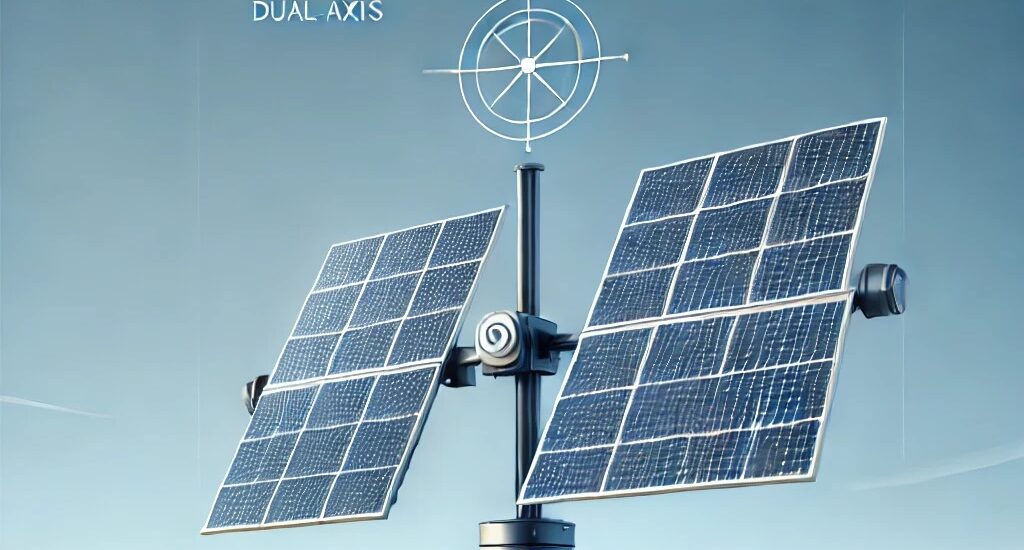
Future Market Insights (FMI), an ESOMAR Certified Market Research and Consulting Firm, has released its latest analysis on the Dual Axis Solar Trackers Market, highlighting the sector’s accelerating momentum in the renewable energy landscape. The report presents a comprehensive evaluation of market drivers, revenue trends, shipment analysis, and a forecast extending to 2035.
The global dual axis solar trackers market is witnessing robust expansion, driven predominantly by increased governmental emphasis on sustainable energy and a notable uptick in the installation of solar photovoltaic (PV) systems. As countries intensify their transition towards low-carbon economies, dual axis trackers are gaining widespread adoption for their proven ability to maximize solar energy capture by continuously adjusting the orientation of solar panels to follow the sun’s trajectory both horizontally and vertically.
According to FMI’s projections, the market is poised to grow from an estimated USD 8,331.8 million in 2025 to a significant USD 33,706.5 million by 2035, registering an impressive CAGR of 15.0% over the forecast period.
The Sample report is available in PDF format: https://www.futuremarketinsights.com/reports/sample/rep-gb-17351
Key Factors Driving Growth:
Governments across the globe are actively promoting renewable energy sources, setting ambitious solar capacity targets, and introducing favorable policies and incentives. This proactive approach has catalyzed large-scale deployment of advanced solar tracking systems, particularly dual axis trackers, which deliver higher energy yields per unit of installed capacity compared to fixed or single-axis alternatives.
The soaring global energy demand is another critical factor fueling the adoption of dual axis solar trackers. Industries and utilities alike are prioritizing technologies that enhance power output while ensuring operational efficiency and cost-effectiveness. Modern dual axis trackers, equipped with advanced tracking algorithms, integrated sensors, and precision control systems, have demonstrated substantial improvements in tracking accuracy and overall reliability. These technological advancements are further reinforcing market growth by reducing maintenance costs and enhancing long-term performance.
Regional Insights:
- North America stands out as a pivotal region in the dual axis solar trackers market, underpinned by constant innovation and a strong focus on boosting renewable energy capacity. FMI forecasts a CAGR of 14.7% for the region through 2035, reflecting growing investment in solar infrastructure and supportive regulatory frameworks.
- Asia Pacific emerges as another lucrative market, projected to record a CAGR of 14.6% during the forecast period. Countries such as China, India, and South Korea are accelerating large-scale solar deployments to meet surging electricity needs sustainably. Notably, South Korea’s dual axis solar trackers market alone is expected to achieve USD 1.3 billion in revenue by 2035.
- The United Kingdom is also witnessing promising developments and is on track to reach a market valuation of USD 1 billion by 2035, driven by government initiatives to expand renewable capacity and reduce carbon footprints.
Market Performance Highlights:
- From 2018 to 2022, the global market registered a steady CAGR of 8.8%, laying a strong foundation for accelerated growth in the coming decade.
- By type, the single-axis tracker segment has contributed significantly with a CAGR of 14.4%, while the dual axis segment remains pivotal for higher efficiency projects.
- The utility segment dominates application-wise, with a projected CAGR of 14.1%, as large solar farms increasingly opt for dual axis systems to maximize output.
Latest Automation Auxiliary Reports: https://www.futuremarketinsights.com/industry-analysis/automation-auxiliary
Competitive Landscape:
Prominent players shaping the dual axis solar trackers market include Soitec, First Solar, Inc., Reutech Radar Systems, Targray Technology International Inc., Trina Solar Co. Ltd., SunPower, and Arctech Solar.
SunPower, renowned for its high-efficiency solar modules, integrates sophisticated dual axis tracking systems engineered to optimize power yield and system efficiency. Similarly, Arctech Solar has established a strong global footprint, delivering precision-engineered dual axis trackers for utility-scale solar farms worldwide.
Dual Axis Solar Tracker Market Segmentation by Technology, Application, and End Use
By Type:
- Single Axis
- Dual Axis
By Application:
- Utility
- Non-Utility
By Region:
- North America
- Latin America
- Western Europe
- Eastern Europe
- East Asia
- South Asia Pacific
- Middle East and Africa