The world’s EV obsession is hurtling forward. But beneath the glossy dashboards and billion-dollar battery investments, one underappreciated component threatens to slow it all down: the reducer.
You’ve probably never heard of it. Most consumers haven’t. But this quiet gear mechanism—tasked with transmitting electric motor power to the wheels—is becoming a serious problem. If EVs are the future, the reducer might just be the part we forgot to future-proof.
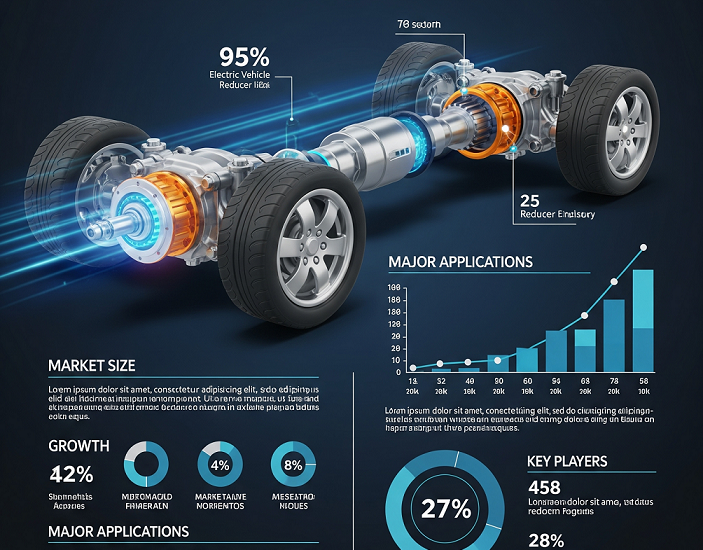
According to Future Market Insights, the global electric vehicle reducer market is projected to explode from USD 2.5 billion 2025 to USD 13.6 billion by 2035, growing at a sharp 18.5% CAGR. That’s a staggering increase for a component that barely registers in mainstream conversations. And that’s precisely the issue.
EV makers are obsessed with batteries and chips. Meanwhile, the reducer—the physical link between electric power and movement—is dangerously overlooked.
Get Ahead with Our Report: Request Your Sample Now!
https://www.futuremarketinsights.com/reports/sample/rep-gb-15841
America’s Blind Spot
The U.S. is betting the farm on EVs. Public policy is aligned. Tax credits are generous. Automakers are pledging all-electric futures. But for all the talk of “Made in America,” one question goes mostly unanswered: Where are we making the critical parts?
Not here. Not enough of them. FMI’s data makes it painfully clear—Asia-Pacific dominates reducer production, especially China, Japan, and South Korea. The U.S. is barely a blip on the radar.
This isn’t just a supply chain issue. It’s a strategic vulnerability. If Washington wants EV independence, then outsourcing key powertrain parts is a contradiction—and a costly one.
A Mechanical Bottleneck
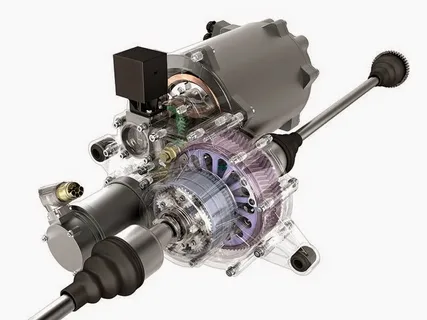
Unlike internal combustion engines, EVs typically use single-speed gear reducers. No shifting. No clutches. Just pure torque conversion. Sounds simpler, right? It’s not.
If that reducer isn’t engineered with near-zero tolerance, you get heat, noise, power loss—and a drop in driving range. In a market where consumers judge EVs by mileage and ride smoothness, that’s catastrophic.
This isn’t theoretical. FMI notes the shift toward high-efficiency planetary gear reducers and integrated e-drive units as a direct response to performance pressure. These aren’t your grandfather’s gears. They’re complex, high-spec, and increasingly hard to source.
And yet, U.S. automakers continue to treat them as an afterthought. That’s reckless.
Exhaustive Market Report: A Complete Study
https://www.futuremarketinsights.com/reports/electric-vehicle-reducer-market
The Stakes Are Real
Let’s be blunt: you can’t build a modern EV without a reducer. Not unless you’re planning to push your car up the driveway.
FMI warns that without domestic production capacity, U.S. automakers will face rising costs, longer lead times, and quality control nightmares. Worse, they’ll remain tied to foreign suppliers during an era of rising global tension. For an industry staking its future on electrification, that’s a logistical time bomb.
Time to Wake Up
The solution isn’t rocket science. Invest in precision manufacturing. Train gear engineers. Build the reducer supply chain onshore—before the bottleneck becomes a blockade.
America has made this mistake before. We let Asia take the lead in semiconductors. In solar. In rare earths. Are we really going to hand over the keys to the EV drivetrain, too?