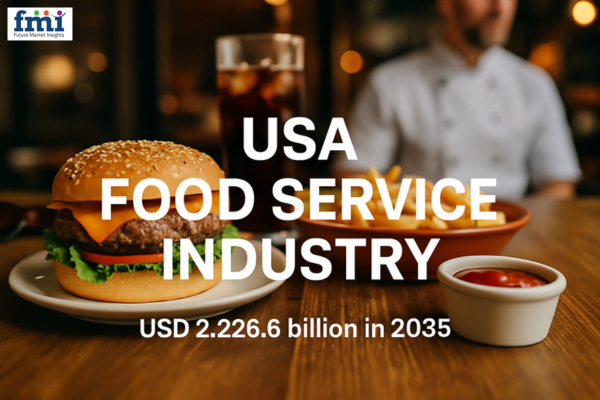
According to a recent report by Future Market Insights, the USA food service industry, currently valued at USD 1,121.4 billion in 2025, is poised for robust growth, projected to reach USD 2,226.6 billion by 2035, expanding at a CAGR of 7.3% over the forecast period. This exponential rise reflects a fundamental shift in how Americans consume food outside the home, driven by evolving lifestyles, innovation in service models, and increasing reliance on digital food platforms.
The food service landscape encompasses a wide range of establishments offering meals beyond the household—from dine-in restaurants and cafeterias to delivery apps, food trucks, and vending machines. The surge in demand for customization, coupled with widespread digital adoption, is revolutionizing how consumers engage with food services. Factors such as rising disposable incomes, tech-enabled convenience, and shifting dietary preferences (including plant-based and health-centric options) are further accelerating industry expansion.
Stay Informed – Request a Sample Copy for Exclusive Insights: https://www.futuremarketinsights.com/reports/sample/rep-gb-17045
Quick Service and Fast-Casual Formats Lead Commercial Food Service Growth
Quick-service restaurant (QSR) chains and fast-casual restaurant market segments in the U.S. are experiencing significant momentum. The shift toward affordable, speedy, and quality dining experiences has fueled this growth, with customers seeking out establishments that blend convenience with culinary diversity. Industry insights reveal that the quick service restaurants trends in the U.S. food industry are aligned with younger demographics prioritizing speed and mobile-order functionality.
Meanwhile, menu innovation in fast-casual formats is driving competitive differentiation. Consumers are increasingly drawn to restaurants offering healthier, customizable options in a casual atmosphere — a major factor influencing growth in this segment.
Full-Service and Institutional Catering Adapt to Shifting Consumer Needs
The full-service restaurant demand trends in 2024 reflect a comeback in post-pandemic dining, though with notable shifts. Customers are now favoring restaurants that incorporate smart kitchen and automation in restaurants, alongside contactless ordering and payment options. While traditional fine dining establishments still hold value, mid-range full-service operations are investing in technology to enhance the overall dining experience.
In the institutional food services in the U.S., particularly within hospitals, schools, and corporate settings, demand is rebounding as work and education normalize post-COVID. Analysts project the forecast of institutional catering services in America to remain stable through 2032, with opportunities emerging from health-conscious menu planning and sustainability initiatives.
Cloud Kitchens and Food Delivery Accelerate Market Transformation
One of the standout growth factors is the rise of cloud kitchen adoption in the U.S. food service market. With low overhead and high scalability, cloud kitchens are capitalizing on the demand for efficient food delivery and remote dining. These establishments cater exclusively to delivery and takeout orders, meeting the needs of modern, on-the-go consumers.
In parallel, the technology integration in U.S. food delivery services—including AI-powered logistics, dynamic pricing models, and personalized app interfaces—continues to streamline the user experience. As consumer expectations for rapid, convenient food delivery increase, companies are doubling down on innovation.
Your Competitive Advantage Starts Here – Access Full Report: https://www.futuremarketinsights.com/reports/usa-food-service-industry
USA Food Service Categories by Product and Application Type
A closer examination of the U.S. food service landscape by product type and application reveals rising segmentation and niche growth. Product-wise, plant-based items, clean-label meals, and specialty diets are gaining traction. On the application front, commercial food services—such as restaurants, cafes, and cloud kitchens—continue to dominate, but non-commercial sectors like hospitals, schools, and corporate cafeterias are rapidly modernizing their offerings.
Competition Outlook
The U.S. food service market remains highly competitive and fragmented, featuring both national giants and innovative local startups. While established players focus on operational scale and brand trust, emerging companies leverage tech agility and niche targeting. Key strategies across the board include menu diversification, digital loyalty programs, sustainable sourcing, and dynamic pricing models.
Key players include McDonald’s Corporation, Yum! Brands (KFC, Taco Bell, Pizza Hut), Restaurant Brands International, Starbucks Corporation, Darden Restaurants (Olive Garden, etc.), and Other Chains and Independent Operators.