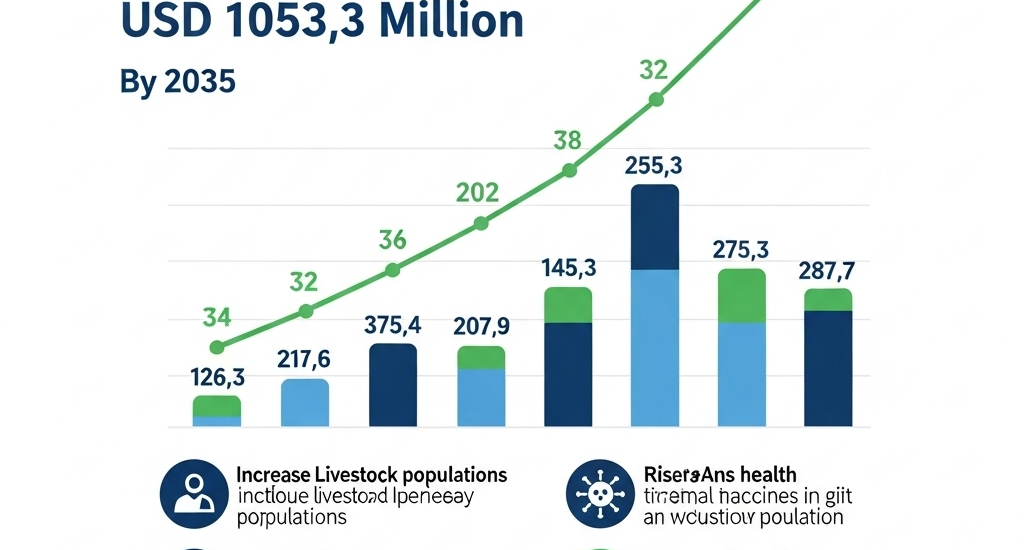
The middle east veterinary vaccines market is projected to reach USD 678.3 million in 2025 and expand to around USD 1,053.3 million by 2035, reflecting a CAGR of 4% during the forecast period. This growth is largely driven by an increasing focus on animal health, food safety, and the prevention of zoonotic diseases.
The Middle East veterinary vaccines market is gaining significant momentum, driven by increasing awareness of animal health, a rise in zoonotic diseases, and growing investments in veterinary infrastructure. With the region experiencing rapid economic development and a greater emphasis on food safety, veterinary vaccines have become essential in maintaining livestock productivity and controlling disease outbreaks.
Governments across the Middle East are actively promoting vaccination programs to ensure the health of both companion and farm animals. This proactive approach is elevating the importance of the Middle East veterinary vaccines market across national veterinary agendas. Additionally, as pet ownership rises in urban areas, so does the demand for vaccines that cater to companion animals.
Get Sample Report: – https://www.futuremarketinsights.com/reports/sample/rep-ma-3086
Market Trends
- Shift Toward Advanced Biotechnologies: The market is moving from traditional vaccines to DNA and recombinant vaccines, which offer greater efficacy and fewer side effects.
- Growth in Companion Animal Vaccination: Rising pet adoption rates, especially in urban hubs like Dubai, Riyadh, and Doha, are increasing the need for specialized vaccines.
- Integration of AI and IoT in Animal Health: Advanced technologies are helping veterinarians monitor animal health more accurately, which is creating new demand for data-driven vaccine deployment.
- Expansion of Halal-certified Veterinary Products: Culturally tailored products are gaining traction, especially in countries with religious considerations.
- Public-Private Partnerships (PPP): Governments are increasingly working with pharmaceutical companies to roll out nationwide immunization programs for livestock.
These trends highlight how innovation and socio-cultural dynamics are reshaping the Middle East veterinary vaccines market.
Driving Forces Behind Market Growth
- Rising Livestock Population: As meat and dairy consumption grows, so does the livestock population. Vaccination is essential for sustaining productivity.
- Zoonotic Disease Control: Outbreaks of diseases like rabies, avian influenza, and brucellosis are pushing governments to invest in preventive healthcare.
- Veterinary Healthcare Reforms: Policy shifts toward preventive care are creating a strong framework for vaccine uptake.
- Increased R&D Investment: Pharmaceutical companies are heavily investing in research to create vaccines tailored for regional climate and disease profiles.
- Economic Diversification Initiatives: In line with Vision 2030 strategies in several Gulf countries, diversification into veterinary healthcare is gaining prominence.
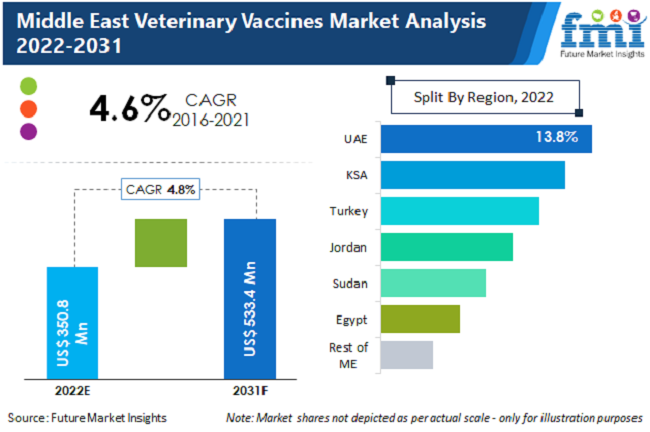
All these factors are driving the upward trajectory of the Middle East veterinary vaccines market.
Challenges and Opportunities
Challenges:
- Cold Chain and Distribution Limitations: Maintaining vaccine efficacy across vast desert terrains remains a logistical hurdle.
- High Cost of Development: Developing and testing new vaccines involves significant costs, which can limit market penetration.
- Lack of Unified Regulatory Framework: Differing regulations across countries make regional distribution complex.
Opportunities:
- Untapped Rural Markets: There is a high potential in reaching rural farmers with affordable and accessible vaccination programs.
- Partnership with Academic Institutions: Collaborations can fast-track innovation and localize vaccine development.
- Customized Vaccine Solutions: Creating vaccines that address country-specific diseases will improve adoption and efficacy.
While challenges remain, the growth opportunities far outweigh the limitations in the Middle East veterinary vaccines market.
Regional Analysis
- GCC Countries: Saudi Arabia, UAE, and Qatar are leading in terms of veterinary infrastructure and government support. These countries are investing in pet health and food security.
- Levant Region: Countries like Jordan and Lebanon are developing their veterinary frameworks through international partnerships and donor support.
- North Africa (Egypt): Egypt is emerging as a manufacturing hub for veterinary products, supplying both domestic and regional needs.
- Conflict Zones: In areas like Yemen and Syria, the market is hindered due to unstable conditions, but NGOs play a significant role in providing veterinary aid.
Overall, the Middle East veterinary vaccines market shows promising signs of expansion, with regional collaboration being key to unlocking its full potential.
Top Companies
- Zoetis Inc.: A global leader actively expanding its footprint in the Middle East veterinary vaccines market.
- Boehringer Ingelheim: Known for its innovative livestock vaccines, with a growing presence in the Gulf region.
- Merck Animal Health: Offers a wide range of vaccines for cattle, poultry, and pets.
- Ceva Santé Animale: Focuses on R&D and distribution of vaccines tailored for Middle Eastern climates.
- Virbac: Specializes in companion animal vaccines, gaining popularity in urban markets.
These companies are not only shaping the current market but also laying the foundation for future growth.
Explore In-Depth Analysis-Click Here to Access the Report:- https://www.futuremarketinsights.com/reports/middle-east-veterinary-vaccines-market
Segmentation Outlook
- By Animal Type
- Livestock (cattle, poultry, sheep, goats)
- Companion Animals (dogs, cats, horses)
- By Vaccine Type
- Live Attenuated
- Inactivated
- Toxoid
- Recombinant
- DNA Vaccines
- By Distribution Channel
- Veterinary Hospitals
- Retail Pharmacies
- Online Platforms
- Government Programs
- By Country
- Saudi Arabia
- United Arab Emirates
- Egypt
- Jordan
- Qatar