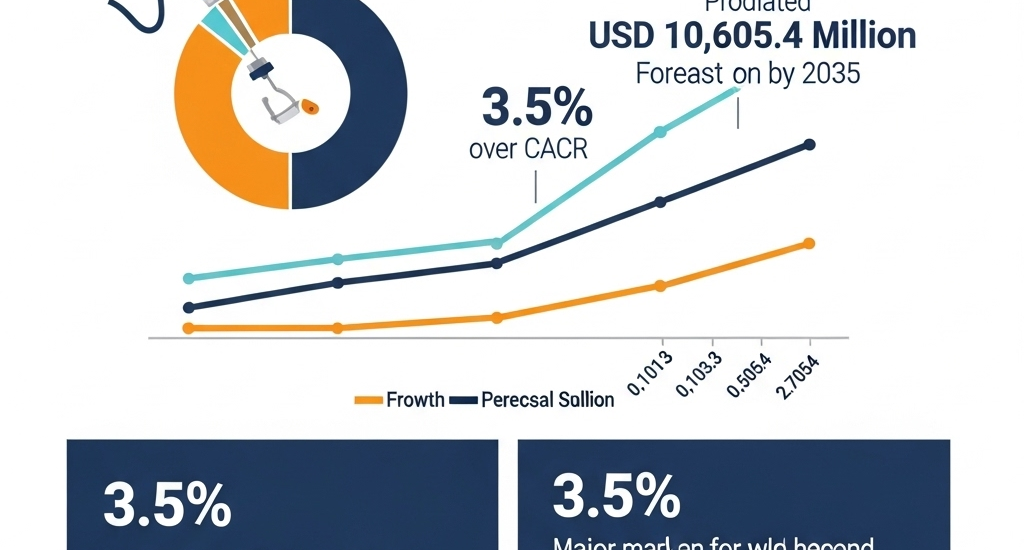
The global Electrosurgery Devices Market is estimated to be valued at USD 7,112.9 million in 2025 and is projected to reach USD 10,605.4 million by 2035, registering a compound annual growth rate (CAGR) of 3.5% over the forecast period. The electrosurgery devices market is experiencing steady expansion, driven by increasing surgical volumes across minimally invasive, outpatient, and robotic-assisted procedures.
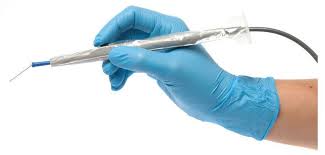
The electrosurgery devices market has witnessed significant growth over recent years, driven by advancements in surgical technologies and the increasing adoption of minimally invasive procedures. Electrosurgery devices utilize high-frequency electrical currents to cut, coagulate, or ablate tissue, making them essential tools in modern surgical suites.
These devices offer numerous benefits, including precision, reduced bleeding, and faster recovery times, which contribute to their widespread use in various medical fields such as general surgery, gynecology, cardiology, and oncology.
Get Sample Report: – https://www.futuremarketinsights.com/reports/sample/rep-gb-14920
Market Trends
Several key trends are shaping the electrosurgery devices market today:
- Technological Innovations: Development of advanced devices like bipolar and monopolar electrosurgery units, combined with integration of smart features for better control and safety.
- Minimally Invasive Surgery Preference: Growing preference for laparoscopic and robotic surgeries that rely heavily on electrosurgical tools.
- Increasing Adoption in Emerging Markets: Rising healthcare infrastructure and awareness in developing regions contribute to market expansion.
- Focus on Patient Safety: Innovations targeting reduction of surgical smoke and enhanced device sterilization are gaining traction.
- Portable and User-Friendly Devices: Manufacturers are designing compact and easy-to-use devices to increase accessibility in outpatient and smaller healthcare settings.
Driving Forces Behind Market Growth
Several factors are fueling the expansion of the electrosurgery devices market:
- Rising Number of Surgical Procedures: With aging populations and increasing prevalence of chronic diseases, the demand for surgical interventions is on the rise.
- Technological Advancements: Continuous improvements in device safety, precision, and efficiency encourage healthcare providers to adopt electrosurgery devices.
- Cost-Effectiveness: Electrosurgery devices reduce surgery time and hospital stays, making procedures more economical for both providers and patients.
- Growing Preference for Minimally Invasive Surgery: These techniques lead to quicker recovery and less postoperative pain, driving the use of electrosurgery.
- Expanding Healthcare Infrastructure: Particularly in emerging economies, better-equipped hospitals boost market growth.
- Increased Awareness and Training: More surgeons are trained in using these devices effectively, increasing their adoption rates.
Challenges and Opportunities
Despite promising growth, the electrosurgery devices market faces several challenges alongside opportunities:
Challenges:
- Safety Concerns: Risks of accidental burns or equipment malfunction can restrict use without proper training.
- High Initial Costs: Advanced devices can be expensive, limiting their adoption in smaller healthcare settings.
- Regulatory Hurdles: Stringent approvals and compliance requirements may delay product launches.
- Competition from Alternative Technologies: Techniques like laser surgery can compete with electrosurgery in certain applications.
Opportunities:
- Emerging Markets: Untapped potential in developing countries with growing healthcare expenditure.
- Technological Integration: Combining electrosurgery with AI and robotics could enhance surgical precision.
- New Applications: Expanding the use of devices in dental, veterinary, and cosmetic surgeries.
- Disposable Accessories: Increasing demand for single-use components to ensure hygiene and reduce infection risks.
Regional Analysis
The electrosurgery devices market displays varied growth dynamics across different regions:
- North America: Holds a dominant position due to advanced healthcare infrastructure, higher adoption of cutting-edge technologies, and substantial healthcare spending.
- Europe: Significant growth driven by technological innovations, presence of key market players, and favorable reimbursement policies.
- Asia-Pacific: Emerging as the fastest-growing market owing to expanding healthcare access, rising surgical volumes, and government initiatives to improve medical infrastructure.
- Latin America and Middle East & Africa: Growing awareness, improving healthcare facilities, and rising investments offer promising growth prospects despite slower adoption rates.
Top Companies
Several companies are leading the electrosurgery devices market with innovative products and strategic initiatives:
- Medtronic: Known for a wide range of electrosurgical instruments and cutting-edge technology.
- Ethicon (Johnson & Johnson): Offers comprehensive solutions with a focus on safety and efficiency.
- Bovie Medical Corporation: Specializes in electrosurgical generators and accessories.
- CONMED Corporation: Provides advanced surgical devices with emphasis on minimally invasive technologies.
- Smith & Nephew: Innovates in surgical technologies, including electrosurgical instruments for various specialties.
These companies focus on research and development, strategic partnerships, and mergers to strengthen their market presence.
Explore In-Depth Analysis-Click Here to Access the Report:- https://www.futuremarketinsights.com/reports/electrosurgery-devices-market
Segmentation Outlook
The electrosurgery devices market can be segmented based on various parameters to better understand its scope:
- By Product Type: Includes electrosurgical generators, handpieces, electrodes, and accessories.
- By Application: Used across general surgery, gynecology, orthopedics, urology, cardiology, and others.
- By Technology: Monopolar and bipolar devices cater to different surgical needs.
- By End-User: Hospitals, ambulatory surgical centers, and specialty clinics form the primary consumers.
- By Geography: Market dynamics vary regionally with distinct growth drivers and challenges.