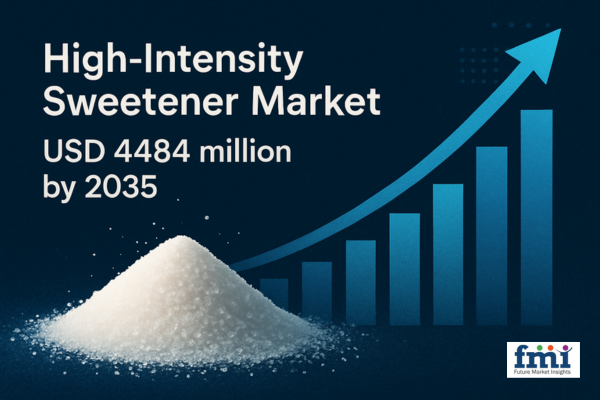
The global high-intensity sweetener market is poised for substantial growth, with its value projected to increase from USD 2,388 million in 2025 to USD 4,484 million by 2035, expanding at a compound annual growth rate (CAGR) of 6.5% over the forecast period. This surge is attributed to mounting health concerns, a global shift toward sugar reduction, and the robust uptake of sweeteners across food, beverage, and pharmaceutical industries.
The rising demand for functional and low-calorie foods, increasing diabetes and obesity rates, and growing consumer preference for natural and clean-label products are major drivers behind this market’s expansion. Additionally, sugar taxes and governmental initiatives to curb sugar consumption are propelling the adoption of alternatives such as stevia, sucralose, and monk fruit extract. Nevertheless, the market faces hurdles including stringent regulatory frameworks, concerns over potential health risks of artificial sweeteners, and raw material price volatility. However, increased R&D investments for sugar-free innovations and heightened sweetener adoption in emerging markets present lucrative growth opportunities for stakeholders. Challenges remain in areas such as product labeling and health claims, which can hamper consumer trust and product commercialization.
Preview the Latest Trends – Request a Sample Copy: https://www.futuremarketinsights.com/reports/sample/rep-gb-793
Mergers and Acquisitions
The high-intensity sweetener industry has seen a wave of mergers and acquisitions aimed at strengthening portfolios and market reach:
- Tate & Lyle PLC has been active in strategic acquisitions to expand its clean-label offerings and develop next-generation sweeteners.
- Ingredion Incorporated acquired PureCircle, a global leader in stevia-based sweeteners, to solidify its plant-based ingredient segment.
- Cargill partnered with biotech firms to develop fermentation-based sweeteners with sustainable production methods.
These developments underscore a broader shift toward natural, sustainable, and scientifically backed sweetening solutions.

Key Takeaways
- Market Size: Estimated to reach USD 4,484 million by 2035.
- Growth Rate: CAGR of 6.5% from 2025 to 2035.
- Primary Drivers: Rising health concerns, demand for natural ingredients, and regulatory sugar reduction policies.
- Challenges: Regulatory hurdles, negative health perceptions, and labeling complexities.
- Opportunities: Innovation in sugar-free product formulations and growing acceptance in developing economies.
Emerging Trends in the Global Market
- Increasing preference for natural-origin sweeteners like monk fruit, allulose, and stevia.
- Rise of bio-fermentation technology for sweetener production to ensure purity, consistency, and sustainability.
- Accelerating use of sweeteners in sports and protein drinks, baked goods, and personalized nutrition products.
- Development of hybrid sweeteners that blend natural and synthetic components for improved flavor and functional benefits.
Significant Developments in the Global Sector
- Rebaudioside M and Rebaudioside D, newer steviol glycosides, are gaining regulatory approval globally.
- Investment in flavor-masking technologies has improved consumer acceptance of natural sweeteners in RTD and functional beverages.
- Asia-Pacific nations like Japan and South Korea are pioneering innovations in low-glycemic and diabetic-friendly foods using next-gen sweeteners.
Trends and Opportunities in the Market
- Strong regulatory push toward sugar reformulation presents new product development avenues.
- Increasing demand for keto, diabetic, and weight-loss foods augments the sweetener application scope.
- Growing emphasis on sustainability and plant-based diets is steering innovations in eco-friendly production processes.
Access the Complete Report – Drive Your Strategy Forward: https://www.futuremarketinsights.com/reports/high-intensity-sweetener-market
Competition Outlook
The global landscape is highly competitive, with leading players focusing on R&D, acquisitions, and expanding into emerging markets. Key players include:
- Ajinomoto Co. Inc.
- Roquette Frères
- Evolva Holding SA
- JK Sucralose Inc.
- Hermes Sweeteners Ltd.
- Sunwin Stevia International Inc.
- Danisco (IFF)
- Nutrasweet Company
- Zydus Wellness
- Morita Kagaku Kogyo Co. Ltd.
These companies are investing in clean-label innovations and regulatory compliance to retain consumer trust and market dominance.
Region-wise Insights (Rewritten in Short Paragraphs)
United States
The U.S. market is flourishing due to demand across carbonated beverages, supplements, and pharma. FDA approvals for new sweeteners like Rebaudioside M have unlocked innovation. Stevia and allulose derived via fermentation are gaining popularity in low-calorie, clean-label applications. Regulatory support from anti-obesity campaigns further boosts this market’s prospects.
CAGR (2025–2035): 6.3%
United Kingdom
The UK’s sugar tax has fueled reformulation using sucralose, stevia, and acesulfame K. Home bakers and wellness-focused consumers are embracing stevia-based products. REACH-compliant production practices are also inspiring brands to explore low-toxicity and novel sweeteners.
CAGR (2025–2035): 6.2%
European Union
Driven by EFSA regulations and sugar-reduction goals, the EU market favors natural sweeteners. Germany, France, and Italy lead the pack in food reformulation. Ingredients like tagatose and high-purity steviol glycosides are gaining traction, especially among diabetic and keto consumers.
CAGR (2025–2035): 5.8%
Japan
Japan is a front-runner in adopting high-tech sweeteners for aged nutrition and wellness food. Companies are pioneering products using allulose and D-psicose. Government initiatives in healthy aging support further development and trust in scientifically validated alternatives.
CAGR (2025–2035): 6.4%
South Korea
South Korea’s market is expanding in beverages, beauty supplements, and functional dairy. Blends of monk fruit and stevia dominate RTD and yogurt segments. National efforts to reduce sugar in institutional meals also encourage demand for safe and clean-label sweeteners.
CAGR (2025–2035): 6.1%
Explore Flavors & Sweeteners Industry Analysis: https://www.futuremarketinsights.com/industry-analysis/flavors-and-sweeteners
Key segmentation
By Product Type:
- Saccharin
- Aspartame
- Acesulfame Potassium (Ace-K)
- Sucralose
- Neotame
- Advantame
- Stevia
By End-Use Application:
- Beverages
- Bakery and Confectionery
- Dairy Products
- Dietary Products
- Pharmaceuticals
- Table Top Sweeteners
- Others
By Region:
- North America
- Latin America
- Europe
- East Asia
- South Asia
- Oceania
- Middle East Africa