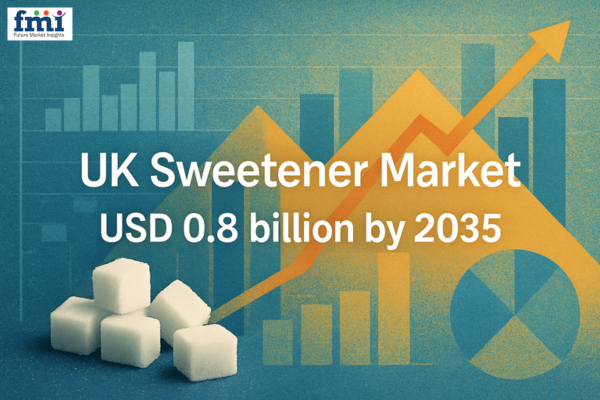
The UK sweetener market is projected to grow from USD 0.5 billion in 2025 to USD 0.8 billion by 2035, expanding at a compound annual growth rate (CAGR) of 3.1%. This steady rise is fueled by increasing consumer preference for healthier lifestyles and a significant shift away from refined sugar. Growing health consciousness, sugar reduction initiatives by food producers, and supportive government policies such as sugar taxes have been instrumental in shaping this trajectory.
An upsurge in the demand for low-calorie alternatives in processed foods and beverages is accelerating market growth. This demand is primarily driven by heightened public awareness of obesity, diabetes, and other health concerns associated with high sugar intake. Consequently, food manufacturers are reformulating their products to meet these consumer preferences, often using naturally derived sweeteners to enhance product appeal and functional health benefits.
Get a Taste of the Full Report – Request a Sample Today: https://www.futuremarketinsights.com/reports/sample/rep-gb-22212
New Product Development in the UK is Icing on the Cake for Natural Sweeteners
Natural sweeteners like stevia, honey, monk fruit, and coconut sugar are gaining dominance in the UK market, capturing a notable 43% market share. The clean-label movement, which emphasizes transparency and naturally sourced ingredients, continues to influence purchasing decisions. As a result, these sweeteners are increasingly being used in functional food and beverage categories that focus on health and wellness.
Product innovations that improve taste, stability, and glycemic response characteristics have opened up new opportunities for sweeteners in the bakery, dairy, and wellness beverage sectors. Formulators are now blending multiple sweeteners to overcome individual limitations and deliver optimal flavor and mouthfeel, broadening their application across end-use industries.
Hypermarkets/Supermarkets Lead Retail Sales
Supermarkets and hypermarkets remain dominant in sweetener distribution, accounting for 37% of total UK sales. Their expansive shelf space, frequent promotional campaigns, and exposure to diverse consumer demographics make them ideal for launching premium and niche sweetener products. However, the online retail segment is gaining significant momentum, particularly for health-focused and specialty sweeteners such as keto-friendly, diabetic-safe, and organic variants sold in bulk.
𝐌𝐞𝐫𝐠𝐞𝐫𝐬 𝐚𝐧𝐝 𝐀𝐜𝐪𝐮𝐢𝐬𝐢𝐭𝐢𝐨𝐧𝐬
The UK sweetener industry is witnessing strategic mergers and acquisitions as companies strive to expand their product portfolios and market footprint. Key examples include global sweetener manufacturers acquiring local players to gain access to UK distribution networks and consumer insights. Moreover, ingredient suppliers are merging with tech-driven food innovation firms to accelerate clean-label formulation development and R&D.

Key Takeaways
- The UK sweetener market is forecasted to reach USD 0.8 billion by 2035, growing at a CAGR of 3.1%.
- Natural sweeteners now constitute 43% of the total market share.
- Supermarkets lead distribution, while online sales are rapidly rising.
- Bakery, dairy, and wellness beverages are primary end-use segments.
- Product innovation and clean-label demand are key growth enablers.
Comprehensive Market Insights at Your Fingertips – Get Full Report: https://www.futuremarketinsights.com/reports/united-kingdom-sweetener-market
Trends and Opportunities in the Market
There are abundant opportunities in the UK market for companies offering sugar alternatives that cater to ketogenic, diabetic, and plant-based diets. With evolving consumer needs, brands that focus on transparency, ethical sourcing, and added functionality (such as prebiotic sweeteners) are expected to capture larger market shares. The rising trend of sugar reformulation across multinational food brands also provides significant B2B growth avenues.
Recent Developments in the Market
- 2024: A UK-based startup launched a prebiotic fiber-based sweetener that aids digestive health while providing sweetness without sugar spikes.
- 2023: Major retailers expanded shelf space for organic and zero-calorie sweeteners in their health food sections.
- 2023: A multinational food company introduced a stevia-enhanced yogurt drink aimed at children, emphasizing natural sweetness and dental safety.
Competition Outlook
The UK sweetener market is moderately fragmented, with a mix of global giants and domestic players. Companies like Tate & Lyle PLC, Whole Earth Sweetener Co., and NKD Living are actively investing in product R&D, sustainability practices, and packaging innovation. The competitive landscape is driven by factors such as product differentiation, partnerships with food manufacturers, and direct-to-consumer marketing strategies. Players offering functional, ethically sourced, and eco-packaged products are likely to maintain a competitive edge in this evolving market.
Key players include Tate & Lyle, Cargill, DuPont, Ingredion, Aspartame International, and other regional and specialty suppliers.
Explore Flavors & Sweeteners Industry Analysis: https://www.futuremarketinsights.com/industry-analysis/flavors-and-sweeteners
Key Segments
By Product Type:
The industry is categorized into Natural Sweeteners (Stevia, Palm Sugar, Coconut Sugar, Honey, Maple Syrup, Monk Fruit Sugar, Agave Syrup, Lucuma Fruit Sugar, Molasses, Other Natural Sweeteners), Artificial Sweeteners (Acesulfame Potassium, Aspartame, Neotame, Advantame, Saccharin, Sucralose, Other Artificial Sweeteners), Sucrose, Novel Sweeteners, and Sugar Alcohols (Erythritol, Xylitol, Sorbitol, etc.).
By Category:
This segment is further categorized into High Intensity Sweeteners and Low Intensity Sweeteners.
By Form:
This segment is further categorized into Powder, Liquid, and Crystals.
By Nature:
This segment is further categorized into Organic and Conventional.
By Application:
This segment is further categorized into Food (Bakery Goods, Sweet Spreads, Confectionery and Chewing Gums, Dairy Products, Others), Beverages (Carbonated Drinks, Fruit Drinks & Juice, Sports & Energy Drinks, Powdered Drinks and Mixes, Others), Pharmaceuticals, Personal Care, and Other Applications.
By Sales Channel:
This segment is further categorized into Hypermarkets/Supermarkets, Convenience Stores, Specialty Retail Stores, Traditional Grocery Retailers, Online Retailers, and Other Channels.