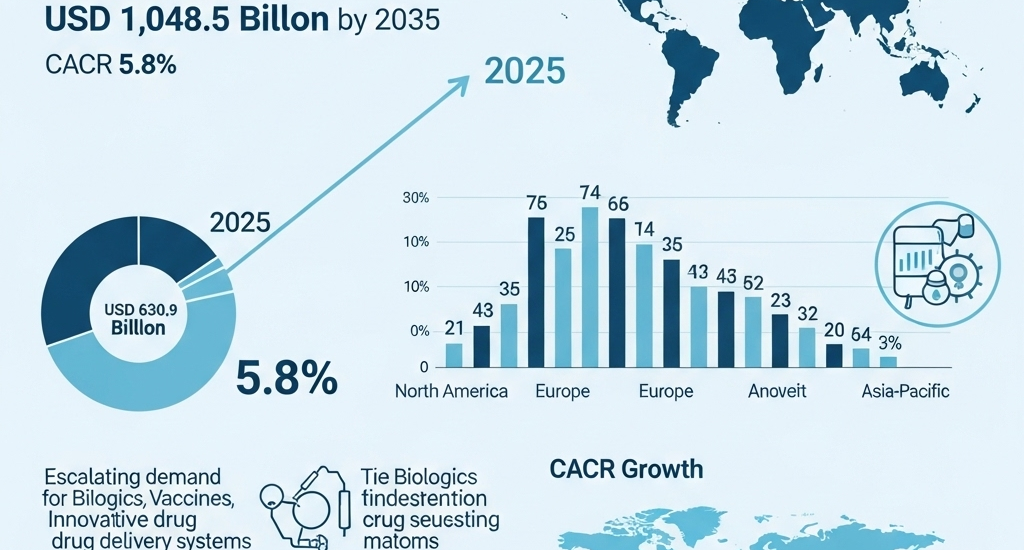
The injectable drug market is projected to grow from USD 630.9 billion in 2025 to USD 1,048.5 billion by 2035, reflecting a CAGR of 5.8%. This growth is driven by rising demand for biologics, vaccines, and innovative drug delivery systems globally.
The injectable drug market is evolving rapidly due to technological advancements and increased demand for effective, fast-acting treatments. This market includes a wide range of therapeutic areas such as oncology, diabetes, cardiovascular disorders, and autoimmune diseases. Injectable drugs offer quick absorption and accurate dosage, which makes them a preferred option for critical and chronic conditions.
- Injectable formulations range from intravenous and intramuscular to subcutaneous types.
- These drugs are widely used in hospitals, clinics, and increasingly in homecare settings.
- A rise in biologics and biosimilars is fueling the demand for injectable drugs.
- Increasing prevalence of chronic illnesses continues to drive market expansion.
Get Sample Report: – https://www.futuremarketinsights.com/reports/sample/rep-gb-15073
Market Trends
The injectable drug market is undergoing transformative changes driven by innovation and demand for personalized therapies. Several notable trends are shaping its future.
- Biologic drugs are dominating the injectable segment due to their high efficacy and targeted action.
- Self-injectable devices, such as auto-injectors and prefilled syringes, are gaining popularity for patient convenience.
- The growth of contract manufacturing organizations (CMOs) is helping pharmaceutical companies streamline production.
- Advancements in sustained-release formulations are improving therapeutic outcomes and patient adherence.
- Rising focus on cold chain logistics is ensuring product safety and integrity during transport.
Challenges and Opportunities
While the injectable drug market shows promising growth, it also faces significant hurdles. However, these challenges open the door for innovation and strategic growth opportunities.
- High production costs and strict regulatory guidelines slow down new drug launches.
- Issues with drug stability and shelf life remain persistent in injectable formulations.
- Needle phobia among patients creates reluctance in adopting injectable treatments.
- The market has opportunities in developing markets where healthcare infrastructure is improving.
- The growing use of biosimilars and generic injectables presents a major cost-saving opportunity.
- Digital health integration, such as smart injection tracking, enhances patient monitoring and compliance.
Key Points
Below are critical takeaways about the injectable drug market:
- Injectable drugs provide rapid and accurate drug delivery, ideal for emergency and long-term treatments.
- Biologics and biosimilars are redefining treatment protocols in multiple therapeutic areas.
- Patient-centric innovations, such as prefilled syringes, are boosting adoption in outpatient settings.
- Manufacturing scalability and regulatory approvals remain key hurdles for new entrants.
- Increased investment in R&D and advanced delivery systems is driving future market growth.
Key Regional Insights
Geographically, the injectable drug market shows varied growth patterns driven by healthcare access, population demographics, and policy regulations.
- North America leads the global injectable drug market, driven by high healthcare spending and strong pharmaceutical R&D.
- Europe follows closely, with increased adoption of biosimilars and advanced biologics.
- Asia-Pacific is experiencing rapid growth due to expanding healthcare infrastructure and rising awareness of injectable therapies.
- Latin America and the Middle East & Africa offer growth potential as public health programs expand access to essential medications.
Top Companies
Several major players dominate the injectable drug market by leveraging innovation, strategic partnerships, and expansive product portfolios.
- Pfizer Inc. continues to lead with a robust range of injectable vaccines and biologics.
- Novartis AG is investing heavily in next-generation injectables for oncology and rare diseases.
- Johnson & Johnson offers a broad injectable portfolio with a strong focus on autoimmune and infectious diseases.
- Roche Holdings is at the forefront of injectable oncology treatments.
- Sanofi and Amgen are also key players, focusing on chronic disease management and biosimilar development.
- These companies are actively involved in global partnerships and acquisitions to expand their market reach.
Explore In-Depth Analysis-Click Here to Access the Report:- https://www.futuremarketinsights.com/reports/injectable-drugs-market
Segmentation Outlook
The injectable drug market is segmented based on type, application, end-user, and route of administration. Understanding these segments helps to analyze market dynamics more effectively.
- By Type: Includes branded drugs, generics, and biosimilars.
- By Application: Covers oncology, autoimmune disorders, hormonal imbalances, cardiovascular diseases, and more.
- By Route of Administration: Segmented into intravenous, intramuscular, and subcutaneous routes.
- By End-User: Hospitals, clinics, homecare settings, and ambulatory surgical centers are the main consumers.
- The oncology segment holds a major market share due to the increasing burden of cancer globally.
- The homecare segment is growing as patients prefer self-administration and convenience.