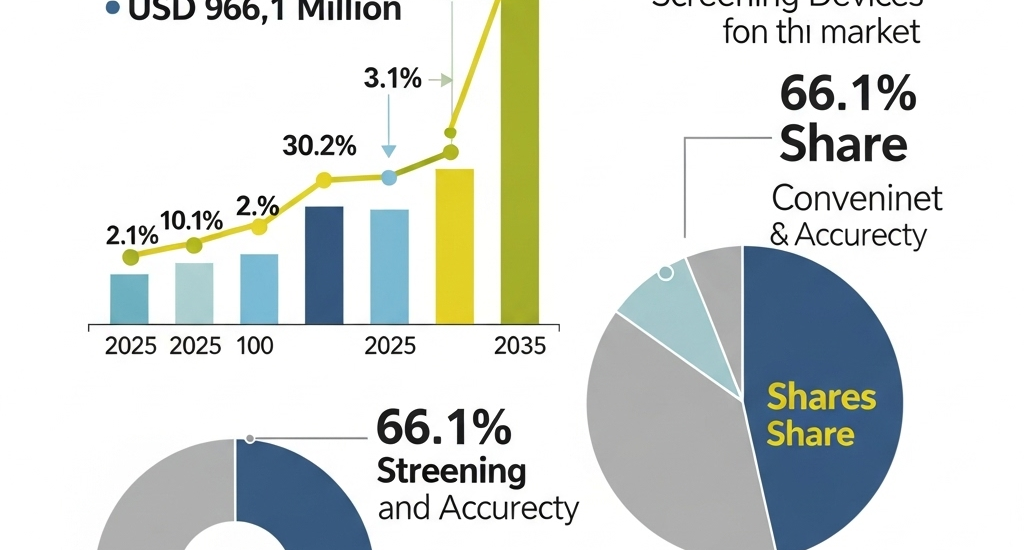
The global home sleep apnea testing (HSAT) market is estimated to be valued at USD 712.3 million in 2025 and is projected to grow steadily to reach USD 966.1 million by 2035, expanding at a compound annual growth rate (CAGR) of 3.1% over the forecast period. This moderate growth is driven by increasing prevalence of sleep apnea disorders, rising awareness about sleep health, and growing demand for convenient, cost-effective diagnostic solutions.
The home sleep apnea testing market has seen significant growth due to increasing awareness of sleep disorders and the rising prevalence of obstructive sleep apnea. Home-based sleep testing devices offer convenience, affordability, and ease of access compared to traditional lab-based sleep studies. These devices are typically recommended by healthcare professionals for patients showing symptoms like chronic snoring, fatigue, or irregular breathing during sleep.
With the advancement of portable diagnostic tools and growing acceptance of telehealth services, the home sleep apnea testing market continues to expand. Rising healthcare costs and long wait times for in-lab sleep studies have pushed patients and providers to opt for home-based testing solutions. Furthermore, insurance companies are increasingly recognizing the cost-effectiveness of home testing, boosting market adoption.
Get Sample Report: – https://www.futuremarketinsights.com/reports/sample/rep-gb-10060
Size & Trends
- The home sleep apnea testing market is growing rapidly due to the high demand for personalized, accessible healthcare services.
- Increased awareness of the dangers associated with untreated sleep apnea has led to a surge in diagnosis rates.
- Technological advancements such as smartphone integration, AI-driven data analysis, and compact device design are key growth drivers.
- The market is seeing a shift from hospital-based diagnostics to at-home solutions as part of the broader trend of patient-centric care.
- An aging population with higher rates of chronic illnesses also contributes to sustained market growth.
The home sleep apnea testing market is expected to maintain a steady growth trajectory over the coming years, driven by rising global health consciousness and the expansion of digital health ecosystems.
Challenges and Opportunities
Despite strong growth, the home sleep apnea testing market faces several challenges:
- Accuracy Concerns: Some healthcare professionals question the reliability of home-based tests compared to polysomnography in clinical settings.
- Regulatory Hurdles: Devices must meet strict compliance and certification standards, which can delay product launches.
- Patient Non-Adherence: Some patients may not use home devices correctly, leading to incomplete or inaccurate test results.
- Limited Awareness: In developing countries, awareness of sleep apnea and available testing methods is still low.
However, these challenges present opportunities for innovation and market penetration:
- Education Campaigns: Raising public awareness about the risks of sleep apnea and benefits of early diagnosis can drive market demand.
- Technological Enhancements: Enhancing device accuracy through machine learning and improving user experience can boost adoption.
- Partnerships: Collaborations between device manufacturers and telemedicine providers can expand access to remote diagnostics.
- Emerging Markets: Countries in Asia-Pacific and Latin America present untapped growth potential due to rising healthcare investments.
Market Share by Geographical Region
- North America holds the largest share of the home sleep apnea testing market, driven by high healthcare spending, strong insurance support, and advanced medical infrastructure.
- Europe follows closely, with robust regulatory frameworks and growing awareness of sleep disorders supporting market expansion.
- Asia-Pacific is an emerging market with high growth potential. Increasing urbanization, rising disposable incomes, and expanding healthcare access contribute to regional market growth.
- Latin America and Middle East & Africa represent smaller but steadily growing segments, thanks to improved healthcare outreach and public-private initiatives.
Each region’s share in the home sleep apnea testing market is influenced by factors such as healthcare policies, awareness levels, and access to diagnostic technologies.
Top Companies
Several key players dominate the global home sleep apnea testing market, offering a range of innovative solutions and services:
- ResMed Inc. – A pioneer in sleep apnea diagnosis and therapy, ResMed provides cutting-edge home testing devices.
- Philips Respironics – Offers a portfolio of sleep diagnostic tools with a strong focus on home-based testing.
- Nox Medical – Specializes in wearable and wireless sleep testing equipment for accurate diagnosis at home.
- Itamar Medical – Known for their WatchPAT device, which simplifies sleep apnea detection using fingertip sensors.
- BMC Medical – A growing player providing affordable and reliable home sleep testing solutions in emerging markets.
These companies continue to invest in R&D and strategic partnerships to expand their global footprint in the home sleep apnea testing market.
Explore In-Depth Analysis-Click Here to Access the Report:- https://www.futuremarketinsights.com/reports/home-sleep-apnea-testing-market
Segmentation Outlook
The home sleep apnea testing market can be segmented based on several key factors:
- By Type of Device:
- Wearable devices
- Portable monitors
- Finger sensors
- Smartphone-connected devices
- By Indication:
- Obstructive sleep apnea (OSA)
- Central sleep apnea
- Complex sleep apnea syndrome
- By End User:
- Home care settings
- Sleep clinics
- Hospitals
- Telehealth platforms
- By Distribution Channel:
- Direct-to-consumer
- Healthcare providers
- Online retailers
- Pharmacies