The global tactical radios market is projected to grow substantially over the next decade, with sales estimated at USD 17,324.1 million in 2025 and expected to reach USD 63,663.4 million by 2035, registering a compound annual growth rate (CAGR) of 13.9%. This impressive growth reflects the surging demand for secure, real-time, and resilient communication systems across the defense, law enforcement, and emergency response sectors. As threats to national security become more sophisticated and environments more complex, the need for tactical communication solutions that ensure mission-critical data exchange is more urgent than ever.
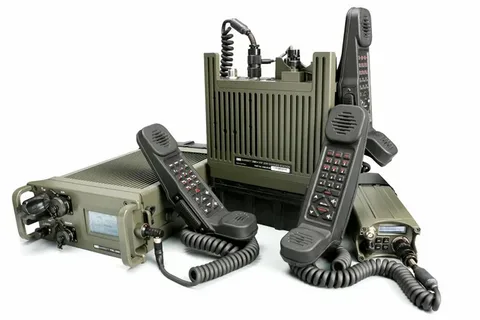
Tactical radios, essential for ground, air, and naval operations, are evolving to meet the demands of modern asymmetric warfare, natural disaster management, and law enforcement. Equipped with features such as encryption, noise suppression, GPS integration, and frequency hopping, these devices are vital in maintaining operational security and coordination during complex missions. Moreover, technological advancements in software-defined radios (SDRs) and integration with network-centric warfare systems have dramatically expanded the functional capabilities of tactical radios across global forces.
Get Ahead with Our Report: Request Your Sample Now!
https://www.futuremarketinsights.com/reports/sample/rep-gb-11861
Market Trends
-
Rising adoption of software-defined radios (SDRs) enabling multi-band and multi-mode communication.
-
Integration with unmanned systems (UAVs and UGVs) for real-time situational awareness.
-
Growing use of mesh networks and IP-based communication platforms for seamless connectivity.
-
Miniaturization and wearable tactical radio solutions for dismounted soldiers.
-
Increased emphasis on cybersecurity features in communication systems.
Driving Forces Behind Market Growth
-
Escalating global defense budgets and modernization programs.
-
Rising number of cross-border threats, cyberattacks, and asymmetric warfare scenarios.
-
Demand for interoperable communication systems across multi-national forces.
-
Surge in natural disasters and civil emergencies requiring coordinated response systems.
-
Growing investments in military digitization and C4ISR capabilities.
Challenges and Opportunities
-
Challenges:
-
High development and procurement costs for advanced tactical communication systems.
-
Compatibility issues across legacy systems and platforms.
-
Risk of signal jamming and cyber intrusions in contested environments.
-
Complex training requirements for operational personnel.
-
-
Opportunities:
-
Expanding use of tactical radios in non-military applications such as disaster relief and border control.
-
Advancements in AI-powered communication networks for enhanced signal routing.
-
Integration with 5G networks and satellite communication systems.
-
Potential growth in emerging markets through domestic manufacturing and procurement.
-
Recent Industry Developments
-
Development of multi-channel tactical radios capable of simultaneous voice and data transmission.
-
Launch of ruggedized, low-SWaP (size, weight, and power) radios for special forces and covert operations.
-
Defense agencies across NATO countries adopting encrypted SDR platforms for secure coalition interoperability.
-
Deployment of tactical communication networks supporting real-time ISR (intelligence, surveillance, and reconnaissance) sharing across battlefield nodes.
-
Integration of voice-to-text transcription and language translation features to support multinational forces.
Exhaustive Market Report: A Complete Study
https://www.futuremarketinsights.com/reports/tactical-radios-market
Regional Analysis
-
North America:
-
Dominant market share due to strong U.S. defense spending and ongoing military modernization.
-
Rapid deployment of next-generation radio systems for homeland security and tactical operations.
-
-
Europe:
-
Growth supported by increasing collaboration among NATO countries and investment in joint tactical communication programs.
-
Emphasis on interoperability and standardization across multinational defense forces.
-
-
Asia-Pacific:
-
Fastest-growing region with rising defense investments in India, China, Japan, and South Korea.
-
Strategic initiatives to strengthen communication capabilities amid geopolitical tensions.
-
-
Latin America and Middle East & Africa:
-
Gradual adoption driven by internal security threats and counterterrorism operations.
-
Investments in communication networks for paramilitary and peacekeeping forces.
-