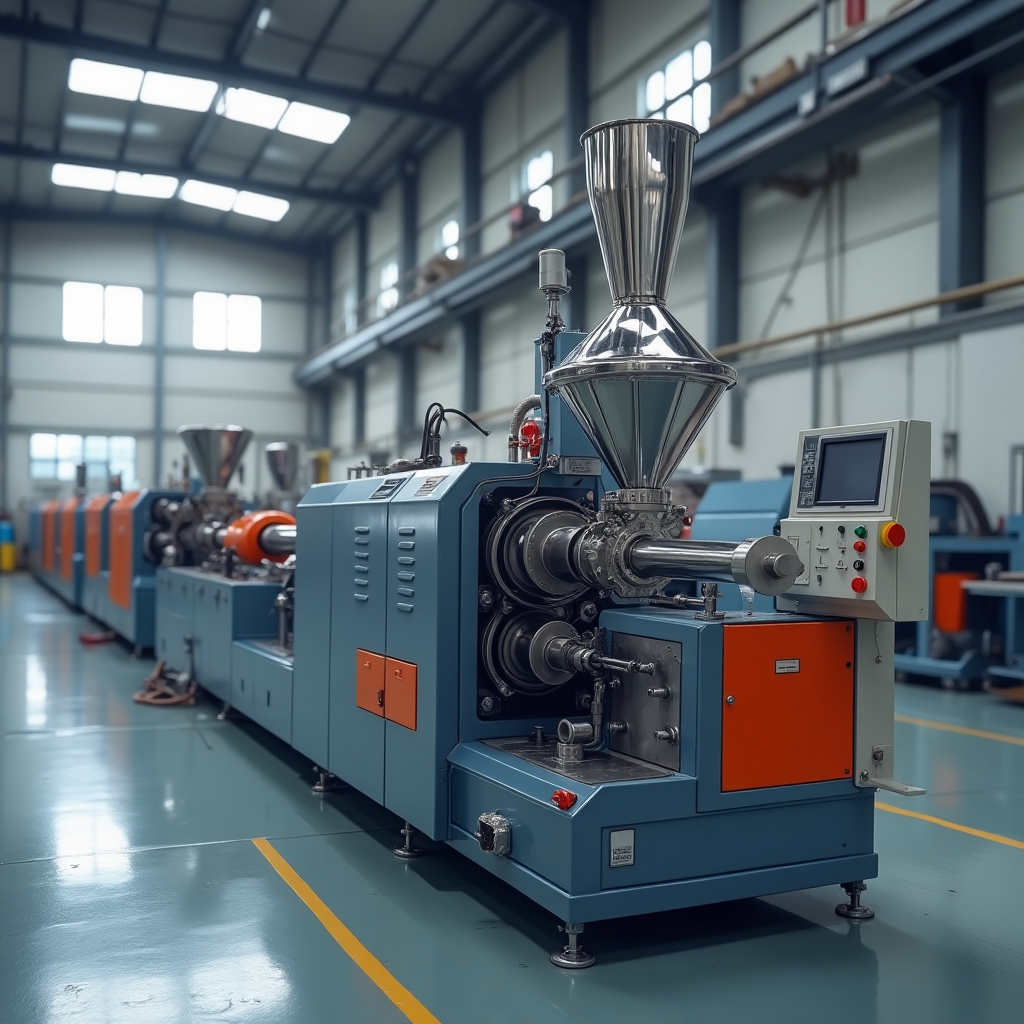
The global plastic extrusion machine market is expected to grow significantly, reaching a projected value of USD 12,343.2 million by 2035, expanding at a compound annual growth rate (CAGR) of 4.7% between 2025 and 2035. This growth is fueled by rising demand across packaging, construction, automotive, and consumer goods industries, alongside increasing adoption of energy-efficient and technologically advanced extrusion systems.
Stay Ahead with Market Trends: Access Your Sample Report Now! https://www.futuremarketinsights.com/reports/sample/rep-gb-5543
Key Industry Highlights
- Rising demand for lightweight and sustainable plastic components across construction, automotive, and packaging industries.
- Growing investments in bio-based and recyclable plastics boost the adoption of advanced extrusion systems.
- Shift toward customizable extrusion solutions to meet application-specific requirements in healthcare, agriculture, and electronics.
- Increasing preference for energy-efficient and low-maintenance extrusion lines by mid- and large-scale manufacturers.
Collaboration Between Small Players to Strengthen Product Portfolio
In an evolving competitive landscape, small and mid-sized companies are actively collaborating to co-develop niche technologies and expand product portfolios. These partnerships enable shared R&D investments, access to new markets, and the integration of complementary technologies.
- Example: Regional manufacturers are partnering with control system providers to embed automated fault detection and remote diagnostics.
- Strategic alliances allow smaller players to leverage supply chains and brand reach of larger firms while maintaining agility.
- Joint ventures and licensing agreements in Asia and Europe focus on the development of eco-friendly extrusion systems tailored to region-specific needs.
Growing Need for Market Insights: Access Our Full Report for Thorough Analysis and Trends! https://www.futuremarketinsights.com/reports/plastic-extrusion-machine-market
Country-Wise Insights
- China: The largest market, driven by expansive packaging, automotive, and construction industries, along with favorable government incentives for plastics machinery manufacturing.
- India: Witnessing significant growth, backed by smart city initiatives, infrastructure development, and demand for flexible packaging in food and retail.
- Germany: A key European hub for advanced plastic extrusion systems, driven by innovation in precision machinery and green manufacturing processes.
- United States: Home to leading companies and R&D centers, with strong demand from healthcare, defense, and consumer goods industries.
Key Takeaways
- Sustained market growth expected due to rising demand across diverse end-use sectors.
- Collaborative innovation among smaller firms enhances product variety and technological access.
- Advanced extrusion technologies are gaining traction, especially those focused on energy efficiency and precision.
- Regional markets in Asia-Pacific and Europe remain central to both production and consumption.
- Competitive focus is shifting toward custom solutions, automation, and sustainable materials handling.
Manufacturing Equipment Industry Analysis: https://www.futuremarketinsights.com/industry-analysis/manufacturing-equipment
Competition Outlook
Key players in the plastic extrusion machine market are focused on innovation, global expansion, and product differentiation.
Key Players

Key Segments of Market Report
By Machine Type:
Machine type is segmented based on single screw extrusion machine, twin screw extrusion machine, and multilayer extrusion machine
By Output Capacity:
Based on output capacity the market is segmented into low capacity (up to 100 kg/h), medium capacity (100 kg/h to 500 kg/h), and high capacity (above 500 kg/h)
By Automation Type:
Based on automation type the market is segmented into manual, semi-automatic, and fully automatic
By End Use Industry:
Based on end use industry the market is segmented into packaging, automotive, construction, electronics & electrical, medical, and others
By Region:
Regions considered in the study include North America, Latin America, Western Europe, Eastern Europe, East Asia, South Asia and Pacific, and the Middle East and Africa.