The drug formulation market is projected to expand from USD 1.7 trillion in 2025 to USD 2.8 trillion by 2035, growing at a CAGR of 5.7% during the forecast period. Rising demand for innovative therapeutics, growing prevalence of chronic diseases, and an aging global population are key factors driving this growth.
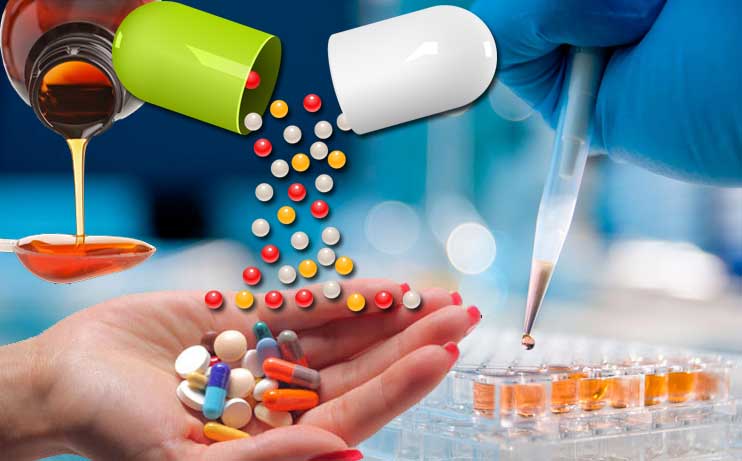
The drug formulation market plays a critical role in the global pharmaceutical industry, serving as the foundation for how active pharmaceutical ingredients (APIs) are transformed into usable medications. The process involves selecting the right combination of excipients, delivery methods, and packaging to ensure the stability, bioavailability, and safety of a drug. With advancements in drug discovery and personalized medicine, the drug formulation market is witnessing a transformation fueled by innovation, demand for quality, and global health needs.
Get Sample Report: – https://www.futuremarketinsights.com/reports/sample/rep-gb-15755
Market Trends
- Rise of Nanotechnology: The integration of nanotechnology in drug formulation is enabling targeted delivery systems that increase effectiveness and reduce side effects.
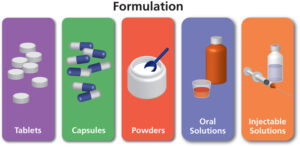
- Demand for Oral Solid Dosage Forms: Tablets and capsules remain the most preferred forms due to ease of consumption and manufacturing scalability.
- Growth of Biologics and Biosimilars: Formulating large molecules like monoclonal antibodies and proteins requires advanced techniques, which are driving specialty formulation services.
- Emphasis on Patient-Centric Formulations: Pharmaceutical companies are developing age-specific and condition-specific dosage forms to improve patient adherence.
- Automation and AI Integration: Automated formulation platforms and AI are being used for faster compound screening and optimization.
Driving Forces Behind Market Growth
- Expanding Chronic Disease Prevalence: Increasing cases of diabetes, cardiovascular diseases, and cancer are driving the need for efficient and long-lasting drug formulations.
- Innovation in Drug Delivery Systems: Advancements in controlled-release, transdermal, and injectable formulations are expanding treatment possibilities.
- Growing Geriatric Population: Aging demographics globally require safer and easier-to-consume formulations, boosting demand for oral and liquid drugs.
- Rise in Generic Drug Production: Patent expirations and cost pressures are pushing the demand for generic formulations, especially in developing markets.
- Supportive Regulatory Environment: Regulatory agencies are streamlining approval processes for innovative drug formulation techniques.
Challenges and Opportunities
- Complexity of Biologic Formulations: Developing stable and effective formulations for biologics remains a challenge due to sensitivity and storage needs.
- Cost and Time of Development: Formulation R&D is expensive and time-consuming, particularly for novel drug delivery platforms.
- Opportunity in Personalized Medicine: There is an increasing opportunity to design customized drug formulations based on genetic and metabolic profiles.
- Regulatory Variations: Different regulatory requirements across countries make global formulation standardization difficult.
- Need for Green Formulations: The industry is increasingly focusing on sustainable and environmentally friendly excipients and manufacturing processes.
Recent Industry Developments
- Launch of 3D Printed Pills: 3D printing is now being tested in drug formulation to create precise dosages and complex release profiles.
- Innovations in Lipid-Based Formulations: These are being widely adopted for improving the solubility and absorption of poorly water-soluble drugs.
- Use of Artificial Intelligence in Formulation Design: AI tools are helping predict stability, compatibility, and optimal excipient selection.
- Growth of CDMOs: Contract development and manufacturing organizations are increasingly offering end-to-end formulation services, including clinical trial supplies.
- Expansion of Injectable Formulations: Prefilled syringes and auto-injectors are gaining ground in chronic disease treatment markets.
Regional Analysis
- North America: Dominates the drug formulation market due to advanced healthcare systems, significant R&D investments, and regulatory support.
- Europe: A strong pharmaceutical base, particularly in Germany, France, and Switzerland, drives the region’s leadership in high-quality drug formulations.
- Asia-Pacific: Rapid industrialization, increasing healthcare access, and generic drug production are propelling market growth in India and China.
- Latin America: Countries like Brazil and Mexico are investing more in local drug manufacturing and formulation capabilities.
- Middle East & Africa: These regions are emerging markets for drug formulation due to growing pharmaceutical investments and healthcare reforms.
Competitive Outlook
- Strategic Alliances: Companies are partnering with academic institutions and research labs to access advanced formulation technologies.
- Product Diversification: Businesses are broadening their formulation portfolios to serve niche therapeutic areas such as oncology and neurology.
- Geographic Expansion: Firms are setting up formulation labs in emerging markets to reduce costs and accelerate regional market penetration.
- Focus on Quality Assurance: As global regulations tighten, companies are prioritizing cGMP compliance and robust quality control systems.
- Investment in R&D: Leaders in the drug formulation market are investing heavily in developing more effective, patient-friendly dosage forms.
Top Companies
- Pfizer Inc.
- GlaxoSmithKline plc
- Bayer AG
- Novartis AG
- Johnson & Johnson
- Merck & Co., Inc.
- Sanofi S.A.
- AstraZeneca plc
These companies have extensive capabilities in drug formulation, with strong global footprints and innovative product pipelines.
Explore In-Depth Analysis-Click Here to Access the Report:- https://www.futuremarketinsights.com/reports/drug-formulation-market
Segmentation Outlook
- By Dosage Form: Includes tablets, capsules, injectables, topical, and liquid formulations. Tablets hold the largest market share.
- By Route of Administration: Oral, parenteral, inhalation, and transdermal are key segments, with oral being the most dominant.
- By Therapeutic Area: Cardiovascular, oncology, infectious diseases, CNS disorders, and diabetes dominate drug formulation demand.
- By End User: Hospitals, research labs, pharmaceutical companies, and contract manufacturing organizations (CMOs) are key users.