Transforming from Traditional to Next-Gen Surface Solutions
Phosphate conversion coatings have long been associated with rust prevention and surface prep in industries like automotive and defense. However, the narrative is rapidly evolving. These coatings are no longer limited to just corrosion resistance—they are becoming central to cutting-edge applications in sectors like additive manufacturing, electronics, and energy storage.
As industries shift towards smarter, lighter, and more sustainable materials, phosphate coatings are gaining renewed attention for their ability to enhance performance and functionality beyond traditional boundaries.
𝐌𝐚𝐤𝐞 𝐈𝐧𝐟𝐨𝐫𝐦𝐞𝐝 𝐃𝐞𝐜𝐢𝐬𝐢𝐨𝐧𝐬 – 𝐀𝐜𝐜𝐞𝐬𝐬 𝐘𝐨𝐮𝐫 𝐒𝐚𝐦𝐩𝐥𝐞 𝐑𝐞𝐩𝐨𝐫𝐭 𝐈𝐧𝐬𝐭𝐚𝐧𝐭𝐥𝐲! https://www.futuremarketinsights.com/reports/sample/rep-gb-6690
New Applications Reshaping Market Dynamics
Additive Manufacturing: Coatings for 3D-Printed Metals
The rise of metal 3D printing has introduced unique surface challenges—porosity, poor adhesion, and microstructural inconsistencies. Phosphate coatings, especially zinc phosphate, are now being explored to improve the surface quality of 3D-printed parts made from aluminum and titanium.
In a study by the Fraunhofer Institute, phosphate coatings significantly enhanced the paint adhesion and crack resistance of printed aluminum alloys. These improvements are especially crucial for aerospace, defense, and medical devices, where high-performance surfaces are essential.
Electronics Industry: Enhanced EMI Shielding with Phosphate Layers
As electronic devices grow more complex, the need for electromagnetic interference (EMI) protection has intensified—particularly in defense, telecom, and healthcare sectors. Phosphate coatings are increasingly used as base layers beneath nickel or copper finishes to boost conductivity and adhesion.
This layered coating strategy has proven effective in military communication systems, where durability and electrical continuity are mission-critical. As 5G and IoT expand, phosphate coatings are enabling smaller, smarter devices to remain protected and reliable.
𝐔𝐧𝐥𝐨𝐜𝐤 𝐂𝐨𝐦𝐩𝐫𝐞𝐡𝐞𝐧𝐬𝐢𝐯𝐞 𝐌𝐚𝐫𝐤𝐞𝐭 𝐈𝐧𝐬𝐢𝐠𝐡𝐭𝐬 – 𝐄𝐱𝐩𝐥𝐨𝐫𝐞 𝐭𝐡𝐞 𝐅𝐮𝐥𝐥 𝐑𝐞𝐩𝐨𝐫𝐭 𝐍𝐨𝐰: https://www.futuremarketinsights.com/reports/phosphate-conversion-coatings-market
Energy Storage: Safety and Thermal Protection in Batteries
A less-publicized but highly promising trend is the use of phosphate coatings in lithium-ion battery systems. These coatings, when applied to battery casings, help improve thermal resistance, corrosion protection, and leak prevention.
South Korean research revealed that manganese phosphate coatings on lithium battery enclosures boosted thermal tolerance by 25%, reducing risks during thermal runaway scenarios. This could be game-changing for electric vehicles (EVs) and stationary energy storage, where safety is paramount.
Current Market Overview & Growth Outlook
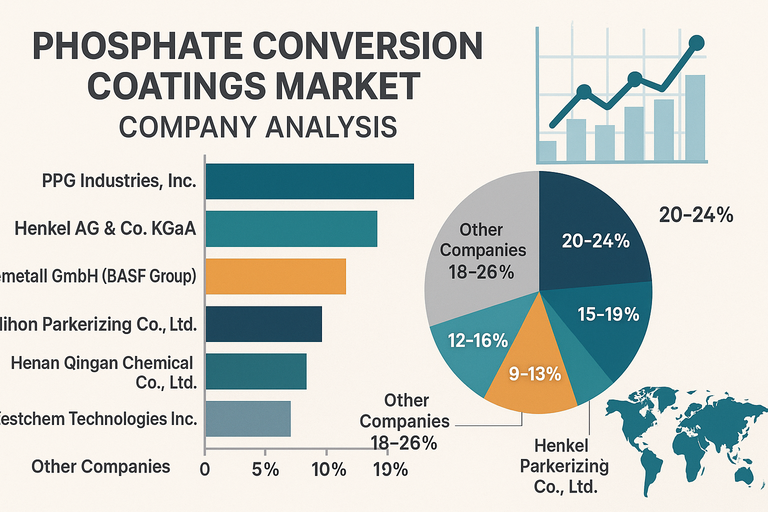
According to recent projections, the global phosphate conversion coatings market is poised to grow at a CAGR of 3.8% between 2025 and 2035. While automotive and industrial segments still dominate, niche applications are creating new revenue streams and diversifying end-use profiles.
Key Growth Drivers:
- Additive manufacturing compatibility
- Advanced EMI protection in electronics
- Safety applications in lithium-ion batteries
- Evolving sustainability regulations
Barriers and Innovation Gaps
Despite these new opportunities, several hurdles persist:
- Lack of standardized formulations for newer materials
- Environmental concerns related to phosphating waste
- Limited awareness of non-traditional applications
To bridge these gaps, the industry must invest in application-specific R&D, eco-friendly process development, and collaborative innovation with high-tech sectors.
Coatings, Inks, Adhesives & Sealants: https://www.futuremarketinsights.com/industry-analysis/coatings-inks-adhesives-and-sealants