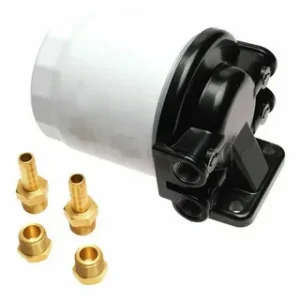
The Marine Fuel Filter Market has been projected to grow steadily from USD 934.3 million in 2020 to USD 1,189.7 million by 2025. With a compound annual growth rate (CAGR) of 3.2% projected between 2025 and 2035, the market is expected to exceed USD 1,634.3 million by the end of the forecast period. This sustained growth is largely attributed to the global tightening of marine emissions regulations, rising demand for cleaner fuel systems, and the continued expansion of commercial and recreational marine fleets. Fuel filtration systems are increasingly seen as a critical component in achieving compliance with International Maritime Organization (IMO) guidelines, especially regarding sulfur and particulate matter emissions. The filtration of marine diesel and heavy fuel oils is essential to protecting engine integrity, ensuring fuel purity, and enhancing overall vessel performance.
In parallel, the growing preference for high-efficiency engines and the rising costs of marine fuels have created a demand for advanced multi-stage filtration systems. Vessel operators are seeking to minimize engine wear, reduce operational downtime, and improve fuel economy—all of which are enabled by high-quality marine fuel filters. Moreover, the market is being positively influenced by retrofitting initiatives aimed at modernizing existing fleets and integrating emission control technologies. While North America and Europe remain mature markets due to strict regulatory frameworks and high fleet maintenance standards, Asia Pacific is poised to witness the fastest growth due to rapid shipbuilding activity, rising maritime trade, and increasing investments in naval and coast guard fleets.
Get Ahead with Our Report: Request Your Sample Now!
https://www.futuremarketinsights.com/reports/sample/rep-gb-10523
Key Takeaways from the Marine Fuel Filter Market
One of the most significant takeaways from the marine fuel filter market is its increasing importance in a decarbonizing world. Marine engines rely on clean, uncontaminated fuel to function efficiently, and fuel filters have become an essential safeguard against water, microbial growth, and solid particulates. As modern vessels incorporate more complex fuel injection systems and electronically controlled engines, the sensitivity to impurities has heightened, making fuel filtration an indispensable part of marine engine architecture. The growing reliance on low-sulfur fuels and blended biofuels also poses new contamination risks, necessitating the development of more robust filter media and modular filtration technologies.
Another key insight is the expanding application scope of marine fuel filters beyond traditional cargo vessels and tankers. There is rising adoption across passenger ferries, defense vessels, luxury yachts, fishing boats, and offshore support ships, all of which require reliable fuel delivery systems. With many shipowners seeking long-term operational reliability and environmental compliance, integrated fuel management systems that include advanced filters are being favored over stand-alone solutions. This trend reflects a broader shift toward predictive maintenance and data-driven performance optimization in the marine sector.
Emerging Trends in the Global Marine Fuel Filter Market
Several emerging trends are expected to influence the evolution of the marine fuel filter market over the next decade. One prominent trend is the transition toward hybrid and dual-fuel propulsion systems, which is generating demand for fuel filters compatible with alternative fuels like LNG, methanol, and biofuels. These fuels often have different physical and chemical properties that require customized filtration solutions. The integration of real-time monitoring systems in filtration units is also gaining popularity, enabling operators to monitor filter condition, fuel quality, and flow rates, thereby reducing the risk of unexpected engine issues.
Another trend is the development of self-cleaning and backflushable filter systems, which improve operational efficiency by reducing manual maintenance. These systems are particularly beneficial for large ocean-going vessels where continuous operation is essential. Additionally, manufacturers are focusing on enhancing filter material durability, corrosion resistance, and pressure handling capabilities to meet the diverse demands of marine environments. Compact, modular filtration units designed for space-constrained engine rooms are also in high demand, especially in the recreational and patrol boat segments.
Significant Developments and Opportunities in the Market
Several important developments are shaping opportunities in the marine fuel filter sector. Regulatory measures such as the IMO 2020 sulfur cap and the upcoming IMO 2050 carbon reduction strategy are pushing ship operators to upgrade their filtration systems as part of broader engine and fuel system enhancements. Government incentives for retrofitting emission-compliant technologies on older vessels are creating opportunities for aftermarket fuel filter suppliers. Additionally, the growth of global maritime tourism and recreational boating presents a new avenue for demand, especially in coastal economies with flourishing leisure marine sectors.
The increasing digitalization of maritime operations is another major opportunity area. With the rise of smart shipping and fleet management platforms, the need for connected filtration systems that can relay performance data to central monitoring systems is growing. This opens up possibilities for filter manufacturers to offer value-added services such as analytics, predictive maintenance alerts, and integration with fleet management software. Moreover, innovations in nanofiber filtration and advanced polymer-based filter media are enabling higher dirt-holding capacity and extended service intervals, which appeal to both OEMs and fleet operators looking to optimize maintenance schedules.
Recent Developments in the Marine Fuel Filter Market
In recent years, several leading companies have introduced next-generation fuel filtration systems tailored to meet the evolving needs of modern marine engines. In 2024, a global filtration technology provider launched a multi-layer filtration system with integrated water separation, targeting long-range cargo vessels operating on ultra-low sulfur fuels. Another notable development is the introduction of fuel filter systems equipped with IoT-enabled sensors, offering real-time diagnostics and remote monitoring capabilities. These systems allow operators to detect water contamination, clogging, and pressure drops before they impact engine performance.
Strategic partnerships and acquisitions are also reshaping the competitive landscape. Major marine engine manufacturers are increasingly collaborating with fuel filtration specialists to co-develop integrated fuel delivery solutions. Furthermore, several filter manufacturers have expanded their global footprint through mergers and facility expansions in key shipbuilding hubs such as South Korea, China, and India. Investment in R&D aimed at developing fuel filters for future marine propulsion systems—including hydrogen and ammonia—is also gaining momentum, reflecting the industry’s commitment to long-term sustainability.
Thorough Market Evaluation: Full Report
https://www.futuremarketinsights.com/reports/marine-fuel-filter-market
Competition Outlook in the Marine Fuel Filter Market
The marine fuel filter market is highly competitive, featuring a mix of global leaders and specialized regional players. Key companies operating in the space include Parker Hannifin Corporation, Donaldson Company Inc., Cummins Inc., Mann+Hummel Group, Mahle GmbH, Bosch Rexroth, Sogefi SpA, Filtrec S.p.A, Baldwin Filters, and Racor Division. These firms are focused on delivering high-performance, durable, and customizable fuel filter systems for various marine vessel types and operating conditions. Innovation, product certification, and aftersales service capabilities remain crucial differentiators in this competitive landscape.
Key Segmentations
In terms of segmentation, the market is categorized by product type (spin-on filters, cartridge filters, inline filters, water separators), by application (commercial vessels, defense vessels, recreational boats, others), by fuel type (diesel, heavy fuel oil, alternative fuels), and by region (North America, Europe, Asia Pacific, Latin America, Middle East & Africa). Among these, spin-on and cartridge filters continue to dominate the market due to their ease of maintenance and widespread compatibility. The Asia Pacific region is expected to register the highest growth owing to the rapid expansion of the shipbuilding industry, port infrastructure, and regional maritime trade.
About Future Market Insights (FMI)
Future Market Insights, Inc. (ESOMAR certified, recipient of the Stevie Award, and a member of the Greater New York Chamber of Commerce) offers profound insights into the driving factors that are boosting demand in the market. FMI stands as the leading global provider of market intelligence, advisory services, consulting, and events for the Packaging, Food and Beverage, Consumer Technology, Healthcare, Industrial, and Chemicals markets. With a vast team of 400 analysts worldwide, FMI provides global, regional, and local expertise on diverse domains and industry trends across more than 110 countries.
Contact Us:
Future Market Insights Inc.
Christiana Corporate, 200 Continental Drive,
Suite 401, Newark, Delaware – 19713, USA
T: +1-845-579-5705
For Sales Enquiries: sales@futuremarketinsights.com
Website: https://www.futuremarketinsights.com
LinkedIn| Twitter| Blogs | YouTube