The global Automotive Suspension System Market is projected to grow from USD 51.1 billion in 2025 to approximately USD 76.4 billion by 2035, expanding at a CAGR of 4.1% during the forecast period. In 2020, the market was valued at USD 42.8 billion, and since then, steady advances in vehicle performance requirements, road safety regulations, and evolving mobility trends have been driving consistent demand. As global vehicle production rebounds post-pandemic and consumers prioritize smoother driving experiences, automakers are investing more in advanced suspension systems to optimize ride comfort, stability, and handling precision across a variety of vehicle classes. The rise of electric and hybrid vehicles is also playing a pivotal role in reshaping the suspension landscape, as these vehicles demand more responsive and adaptive suspension setups to handle heavier battery packs and deliver seamless ride quality.
Additionally, urbanization, expanding middle-class populations, and infrastructure development across emerging economies have led to increased automobile sales, particularly in Asia Pacific and Latin America. These regions are rapidly adopting modern suspension technologies, not just in premium vehicles but also in mass-market models. North America and Europe continue to drive technological innovation in the space, with leading OEMs introducing electronically controlled and semi-active suspension systems to meet both luxury segment expectations and stringent regulatory norms.
Get Ahead with Our Report: Request Your Sample Now!
https://www.futuremarketinsights.com/reports/sample/rep-gb-713
Key Takeaways from the Automotive Suspension System Market
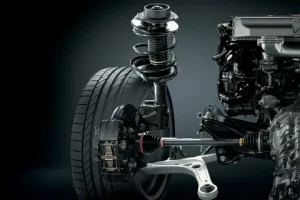
One of the core takeaways is the industry’s accelerated shift from traditional passive suspension to electronically controlled and adaptive systems. These innovations allow real-time adjustment to road conditions, offering drivers superior comfort and improved handling. As customer preferences lean towards vehicles that combine high performance with luxurious ride quality, automotive manufacturers are increasingly integrating multi-link setups, MacPherson struts, and air suspension components, especially in SUVs, premium sedans, and electric vehicles.
Suspension systems are also becoming integral to vehicle safety, contributing to better steering response, braking stability, and load distribution. This is particularly critical in autonomous and semi-autonomous vehicles, where the integration of smart suspension with vehicle dynamics control systems enhances decision-making and ride predictability. Furthermore, the shift toward lightweight materials in suspension components such as aluminum and high-strength composites is reducing overall vehicle weight, improving fuel efficiency, and contributing to sustainability goals.
Emerging Trends in the Global Automotive Suspension System Market
The global market is undergoing a transformation driven by electrification, automation, and connectivity. One prominent trend is the rapid adoption of electronically controlled suspension systems, including adaptive and semi-active variants, which adjust damping forces in real time based on terrain feedback. This is becoming increasingly relevant in electric vehicles (EVs), where smooth ride quality and chassis balance are crucial to managing battery distribution and regenerative braking systems. The integration of suspension systems with electronic stability control and advanced driver-assistance systems (ADAS) is enabling holistic vehicle dynamics management, which enhances safety and driving comfort.
Another key trend is the rising preference for modular suspension architectures that offer scalable configurations across multiple vehicle platforms. Automakers are leveraging these modular designs to reduce manufacturing complexity and cost while ensuring performance consistency across sedans, crossovers, and light trucks. Air suspension systems, once limited to high-end vehicles, are gradually being introduced in upper mid-range segments as consumer expectations rise. Moreover, the emergence of ride-sharing and mobility-as-a-service (MaaS) models is prompting OEMs to build durable and low-maintenance suspension systems tailored for fleet usage.
Significant Developments and Opportunities in the Market
Several significant developments are shaping opportunities in the suspension systems space. Governments worldwide are enforcing strict emissions and fuel efficiency regulations, pushing manufacturers to innovate in lightweight suspension solutions that meet regulatory standards without compromising on performance. Advanced materials such as carbon fiber-reinforced plastics and high-strength steel are being used more extensively in control arms, springs, and subframes, contributing to overall vehicle light-weighting strategies.
Moreover, the ongoing development of smart suspension technologies, including magnetorheological dampers and predictive suspension using AI and cloud connectivity, is opening new doors for premium vehicle manufacturers. These systems use data from road sensors and cameras to pre-adjust the suspension settings before the vehicle encounters uneven terrain, drastically improving comfort and control. Opportunities are also emerging in the retrofit market, where aftermarket companies are offering upgrade kits for standard vehicles to transform them into performance-oriented or off-road-capable machines.
Recent Developments in the Automotive Suspension System Market
Recent years have seen strategic alliances, acquisitions, and investments across the supply chain to enhance product portfolios and tap into evolving vehicle segments. Leading Tier 1 suppliers are investing in R&D to develop smarter, more integrated suspension modules that combine mechanical components with sensors and actuators. In 2024, a major suspension manufacturer announced the launch of its next-generation semi-active suspension system compatible with both ICE and electric platforms, targeting global OEMs across North America and Europe.
Furthermore, global automakers are entering long-term partnerships with suspension specialists to co-develop EV-specific suspension setups that accommodate low-floor battery pack designs without compromising on ride quality. In Asia, domestic manufacturers are enhancing their capabilities to export high-performance suspension components to North American and European markets. Several companies have also announced expansions of their manufacturing facilities in India and Southeast Asia, leveraging lower production costs and increasing demand in regional automotive markets.
Thorough Market Evaluation: Full Report
https://www.futuremarketinsights.com/reports/automotive-suspension-systems-market
Competition Outlook in the Automotive Suspension System Market
The competitive landscape of the automotive suspension system market is characterized by the presence of global leaders, regional suppliers, and technology-driven disruptors. Companies such as ZF Friedrichshafen AG, Tenneco Inc., KYB Corporation, Continental AG, Mando Corporation, Hitachi Astemo, WABCO (ZF), Magneti Marelli, and Thyssenkrupp are some of the key players influencing market dynamics. These companies are investing heavily in innovation, global supply chains, and joint ventures to maintain a competitive edge in both OEM and aftermarket channels.
Key Segmentations
In terms of segmentation, the market is categorized by system type (passive, semi-active, active), by component (spring, shock absorber, control arm, ball joint, strut, others), by vehicle type (passenger cars, light commercial vehicles, heavy commercial vehicles), and by geography (North America, Europe, Asia Pacific, Latin America, Middle East & Africa). Among these, the semi-active suspension segment is expected to witness the fastest growth due to its balance of performance, cost, and energy efficiency, especially in premium and electric vehicle segments.
About Future Market Insights (FMI)
Future Market Insights, Inc. (ESOMAR certified, recipient of the Stevie Award, and a member of the Greater New York Chamber of Commerce) offers profound insights into the driving factors that are boosting demand in the market. FMI stands as the leading global provider of market intelligence, advisory services, consulting, and events for the Packaging, Food and Beverage, Consumer Technology, Healthcare, Industrial, and Chemicals markets. With a vast team of 400 analysts worldwide, FMI provides global, regional, and local expertise on diverse domains and industry trends across more than 110 countries.
Contact Us:
Future Market Insights Inc.
Christiana Corporate, 200 Continental Drive,
Suite 401, Newark, Delaware – 19713, USA
T: +1-845-579-5705
For Sales Enquiries: sales@futuremarketinsights.com
Website: https://www.futuremarketinsights.com
LinkedIn| Twitter| Blogs | YouTube