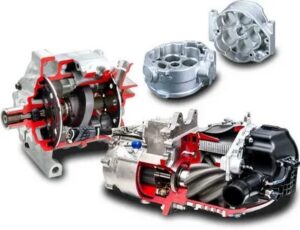
The global automotive AC compressor market was valued at USD 8.7 billion in 2020 and is estimated to reach USD 10.4 billion by 2025. Between 2025 and 2035, the market is projected to expand at a compound annual growth rate (CAGR) of 4.1%, reaching USD 15.6 billion by the end of the forecast period. This growth is expected to be driven by advancements in vehicle thermal management systems and the increasing adoption of electrified air conditioning technologies in hybrid and electric vehicles. As automakers transition toward energy-efficient and environmentally friendly solutions, the integration of electric compressors and variable displacement systems is accelerating. Furthermore, rising global temperatures, increased vehicle production in emerging markets, and evolving emission regulations are contributing to higher demand for efficient AC compressors across both passenger and commercial vehicle segments.
The shift from traditional internal combustion engines (ICEs) to hybrid and battery electric vehicles (BEVs) is influencing OEMs to deploy electrically driven compressors that can operate independently of the engine. These systems enhance the energy efficiency of HVAC systems while supporting modern cabin comfort expectations. Moreover, consumers now demand quieter and more compact AC systems, pushing manufacturers to invest in advanced designs that not only optimize performance but also reduce noise, vibration, and harshness (NVH). In parallel, the adoption of low-global-warming-potential refrigerants and smart AC compressor technologies integrated with thermal sensors and intelligent electronic controls is also gaining ground. Together, these technological advancements are reshaping the competitive landscape of the automotive AC compressor market and opening new avenues for innovation and differentiation.
Get Ahead with Our Report: Request Your Sample Now!
https://www.futuremarketinsights.com/reports/sample/rep-gb-1695
Key Takeaways
The automotive AC compressor market is poised for sustained expansion due to multiple converging factors. Growing consumer awareness regarding fuel economy, cabin comfort, and environmental impact is pushing automakers to innovate within the AC compressor segment. With more electric and hybrid vehicles being introduced globally, the demand for electric compressors that function independently of engine power continues to surge. Furthermore, regulatory mandates on fuel efficiency and emissions are prompting manufacturers to adopt compact and lightweight compressors that align with overall vehicle weight reduction strategies. Regional growth is particularly noticeable in Asia-Pacific, with countries like China, India, and Japan leading the adoption of efficient climate control systems due to high vehicle production volumes and climatic conditions.
Emerging Trends in the Global Market
A major trend influencing the automotive AC compressor market is the growing electrification of vehicle components. Electric AC compressors are increasingly being integrated into hybrid and electric powertrains, allowing better control over air conditioning systems without engine dependency. Another emerging trend is the development of smart and sensor-enabled compressors that adjust cooling based on real-time cabin conditions, reducing power consumption and optimizing energy usage. Variable displacement compressors are also gaining popularity due to their ability to provide on-demand cooling, improving fuel efficiency and passenger comfort. In addition, the adoption of eco-friendly refrigerants such as R-1234yf is reshaping compressor design parameters, forcing manufacturers to innovate materials and performance capabilities.
Significant Developments in Global Sector: Trends and Opportunities in the Market
Several technological and strategic developments are defining the competitive outlook of the automotive AC compressor market. Automakers and tier-1 suppliers are collaborating to co-develop next-generation compressors compatible with electric vehicle architectures. For instance, the integration of brushless DC motors with scroll-type compressors is enhancing energy efficiency while minimizing noise levels. Strategic partnerships and mergers among compressor manufacturers, HVAC component suppliers, and software companies are accelerating the commercialization of intelligent AC systems. Opportunities are also emerging in the aftermarket space, as vehicle owners seek compressor replacements that offer longer service life, energy efficiency, and compatibility with modern refrigerants. Moreover, government-backed initiatives supporting the adoption of clean vehicles are fueling R&D investment in lightweight and compact compressor technologies.
Recent Developments in the Market
In recent years, the automotive AC compressor market has seen several noteworthy developments. Leading players such as Denso, Mahle, Valeo, and Hanon Systems have launched advanced electric compressors designed for EVs and hybrids, emphasizing energy efficiency and reduced emissions. Denso, for example, has introduced electric scroll compressors optimized for use in electric vehicles, offering rapid cooling and minimal power draw. Valeo has expanded its line of variable displacement compressors that cater to both ICE and hybrid vehicles, offering smoother performance transitions and better thermal regulation. Additionally, collaborations between automotive HVAC players and semiconductor firms have resulted in the integration of intelligent thermal management modules that work seamlessly with vehicle electronics, further boosting efficiency and vehicle range.
Exhaustive Market Report: A Complete Study
https://www.futuremarketinsights.com/reports/automotive-air-conditioning-system-compressor-market
Competition Outlook
The competitive landscape of the automotive AC compressor market is marked by the presence of both established players and emerging innovators. Key companies operating in this space include Denso Corporation, MAHLE GmbH, Hanon Systems, Valeo SA, Robert Bosch GmbH, Sanden Holdings Corporation, Mitsubishi Heavy Industries Thermal Systems, Subros Limited, Calsonic Kansei Corporation, and HELLA GmbH & Co. KGaA. These players are actively pursuing strategies such as geographic expansion, technological innovation, and product differentiation to consolidate their positions in the global market. While incumbents are leveraging their extensive automotive networks to supply major OEMs, new entrants are focusing on electric-only platforms and niche applications, particularly in the electric and autonomous vehicle space.
Key Segmentations
The automotive AC compressor market can be segmented by type, drive type, vehicle type, sales channel, and region. By type, the market includes fixed displacement, variable displacement, and electric compressors. Based on drive type, it is segmented into conventional (belt-driven) and electric (independent drive). By vehicle type, the market covers passenger cars, light commercial vehicles (LCVs), and heavy commercial vehicles (HCVs). In terms of sales channels, the market is segmented into OEM and aftermarket. Regionally, Asia-Pacific dominates the global landscape, followed by North America and Europe, owing to robust vehicle production and climatic conditions that necessitate reliable air conditioning systems.
About Future Market Insights (FMI)
Future Market Insights, Inc. (ESOMAR certified, recipient of the Stevie Award, and a member of the Greater New York Chamber of Commerce) offers profound insights into the driving factors that are boosting demand in the market. FMI stands as the leading global provider of market intelligence, advisory services, consulting, and events for the Packaging, Food and Beverage, Consumer Technology, Healthcare, Industrial, and Chemicals markets. With a vast team of 400 analysts worldwide, FMI provides global, regional, and local expertise on diverse domains and industry trends across more than 110 countries.
Contact Us:
Future Market Insights Inc.
Christiana Corporate, 200 Continental Drive,
Suite 401, Newark, Delaware – 19713, USA
T: +1-845-579-5705
For Sales Enquiries: sales@futuremarketinsights.com
Website: https://www.futuremarketinsights.com
LinkedIn| Twitter| Blogs | YouTube