The environmental catalysts market has traditionally been viewed through the lens of pollution control—particularly in applications such as catalytic converters in vehicles and industrial emission reduction. However, a lesser-explored but rapidly evolving narrative is unfolding within the realm of sustainability: the integration of environmental catalysts into circular economy strategies. As the world shifts from a linear “take-make-dispose” model to a circular framework, the role of these catalysts is becoming significantly more dynamic, driving closed-loop processes, enhancing resource efficiency, and enabling advanced recycling techniques.
Beyond Emission Control: Catalysts as Circular Enablers
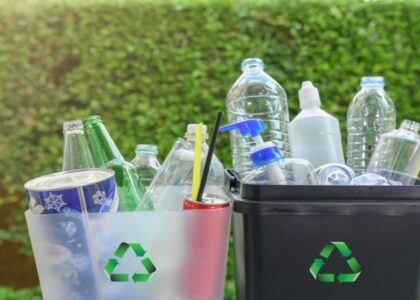
Environmental catalysts, often seen as reactive agents to neutralize harmful emissions, are increasingly being redeployed as active enablers of material regeneration. In the circular economy, where waste is reimagined as a resource, catalysts are playing a crucial role in transforming post-consumer waste into usable feedstocks. Technologies that convert plastic waste into monomers or fuels using selective catalytic processes are emerging as viable alternatives to traditional recycling methods, which often degrade material quality.
𝐌𝐚𝐤𝐞 𝐈𝐧𝐟𝐨𝐫𝐦𝐞𝐝 𝐃𝐞𝐜𝐢𝐬𝐢𝐨𝐧𝐬 – 𝐀𝐜𝐜𝐞𝐬𝐬 𝐘𝐨𝐮𝐫 𝐒𝐚𝐦𝐩𝐥𝐞 𝐑𝐞𝐩𝐨𝐫𝐭 𝐈𝐧𝐬𝐭𝐚𝐧𝐭𝐥𝐲! https://www.futuremarketinsights.com/reports/sample/rep-gb-2020
For instance, researchers at the University of California have developed a ruthenium-based catalyst that can depolymerize polyethylene—a common plastic—back into its original components. This innovation presents a direct challenge to the inefficiencies of mechanical recycling, which often results in downgraded plastic materials. By enabling molecular-level recovery, such catalytic innovations offer a glimpse into a future where plastic waste can be fully reintegrated into the production cycle without loss in quality.
Catalytic Carbon Capture and Conversion: A Dual Advantage
Another transformative application of environmental catalysts in circular systems lies in carbon capture and utilization (CCU). Traditional carbon capture systems have struggled with high energy demands and limited economic viability. However, the introduction of environmental catalysts into these systems is changing that equation. Catalysts such as copper-zinc alloys and metal-organic frameworks (MOFs) are facilitating the direct conversion of CO₂ into valuable products like methanol, ethylene, and even biodegradable plastics.
This catalytic repurposing of CO₂ doesn’t merely sequester emissions but effectively reintegrates them into the economy. A practical example is Carbon Recycling International (CRI) in Iceland, which uses proprietary catalytic processes to convert captured CO₂ and hydrogen into methanol—a clean fuel and chemical feedstock. This approach closes the carbon loop and provides economic incentives for emission-heavy industries to invest in capture systems.
Green Catalysts and Bio-Based Materials: A Silent Revolution
The transition to a circular economy isn’t just about closing material loops—it’s also about reducing the ecological footprint of the materials used in the first place. This is where green catalysts and bio-based catalytic systems come into play. Derived from natural or renewable sources, these catalysts reduce dependence on rare earth metals and toxic compounds commonly used in conventional catalytic processes.
𝐔𝐧𝐥𝐨𝐜𝐤 𝐂𝐨𝐦𝐩𝐫𝐞𝐡𝐞𝐧𝐬𝐢𝐯𝐞 𝐌𝐚𝐫𝐤𝐞𝐭 𝐈𝐧𝐬𝐢𝐠𝐡𝐭𝐬 – 𝐄𝐱𝐩𝐥𝐨𝐫𝐞 𝐭𝐡𝐞 𝐅𝐮𝐥𝐥 𝐑𝐞𝐩𝐨𝐫𝐭 𝐍𝐨𝐰: https://www.futuremarketinsights.com/reports/environmental-catalysts-market
Enzyme-mimicking catalysts, for instance, are being developed to replicate the specificity and efficiency of biological enzymes in industrial processes. These bio-inspired catalysts are particularly promising in applications like water treatment, where selective degradation of pharmaceuticals and heavy metals is critical. In Japan, the National Institute for Materials Science has reported success in using lignin-derived catalysts to break down industrial wastewater pollutants, offering a sustainable and circular solution for water purification.
Regional Insights: Europe and Asia Lead the Charge
Globally, the deployment of environmental catalysts in circular applications is being led by Europe and parts of Asia. In the European Union, policy frameworks like the Green Deal and the Circular Economy Action Plan have created a fertile ground for catalyst innovation. Countries like Germany and the Netherlands are investing heavily in catalytic upcycling of waste materials and are pioneering public-private partnerships that merge environmental technology with industrial applications.
Meanwhile, in Asia, South Korea and Japan are advancing rapidly in the development of sustainable catalytic converters for waste-to-energy systems. In South Korea, Hyundai Steel has launched pilot programs that use zeolite-based catalysts to convert municipal waste gases into hydrogen fuel, integrating emissions management directly into energy recovery systems. These regional trends indicate not just isolated innovation, but the beginning of systemic changes driven by catalysts within circular economies.
Market Outlook and Strategic Implications
The environmental catalysts market, often pigeonholed into segments like vehicular and industrial emission control, is poised for redefinition. As industries and governments prioritize decarbonization and material efficiency, the demand for catalysts that support circularity will grow significantly. According to Future Market Insights, the market for green and eco-friendly catalysts market is expected to be USD 43,888 million by 2025 and USD 68,157 million by 2035 with 4.5% CAGR, largely driven by their emerging roles in recycling and low-carbon manufacturing.
Functional Agents & Additives: https://www.futuremarketinsights.com/industry-analysis/functional-agents-and-additives
Despite the promise, challenges remain. High costs of novel catalysts, the need for infrastructure upgrades, and limited commercialization of lab-scale innovations continue to slow adoption. However, policy incentives such as carbon credits and extended producer responsibility (EPR) schemes can accelerate the integration of catalytic systems into mainstream industrial operations.
Conclusion: Catalysts as the Hidden Backbone of Sustainability
The future of the environmental catalysts market lies not just in reducing emissions but in reimagining production and waste as interconnected systems. As the world leans more heavily into circular economy models, catalysts will form the unseen infrastructure powering everything from carbon-neutral fuels to regenerative recycling processes. This silent but profound shift positions catalysts not merely as environmental defenders, but as proactive agents of sustainable transformation.
By expanding the narrative around environmental catalysts to include their strategic role in circular systems, stakeholders can uncover new growth opportunities, accelerate innovation, and contribute meaningfully to a more resilient and sustainable global economy.
Segmentation
By Application:
- VOC oxidation catalysts
- CO oxidation catalysts
- Selective catalytic reduction catalysts
- Others
By End-use Segments:
- Mobile source emission control
- Stationary source emission control
By Region:
- North America
- Latin America
- Western Europe
- Eastern Europe
- Asia Pacific Excluding Japan
- Japan
- Middle East & Africa
About Future Market Insights (FMI)
Future Market Insights, Inc. (ESOMAR certified, recipient of the Stevie Award, and a member of the Greater New York Chamber of Commerce) offers profound insights into the driving factors that are boosting demand in the market. FMI stands as the leading global provider of market intelligence, advisory services, consulting, and events for the Packaging, Food and Beverage, Consumer Technology, Healthcare, Industrial, and Chemicals markets. With a vast team of over 400 analysts worldwide, FMI provides global, regional, and local expertise on diverse domains and industry trends across more than 110 countries. Join us as we commemorate 10 years of delivering trusted market insights. Reflecting on a decade of achievements, we continue to lead with integrity, innovation, and expertise.
Contact Us:
Future Market Insights Inc.
Christiana Corporate, 200 Continental Drive,
Suite 401, Newark, Delaware – 19713, USA
T: +1-347-918-3531
For Sales Enquiries: sales@futuremarketinsights.com
Website: https://www.futuremarketinsights.com
LinkedIn| Twitter| Blogs | YouTube