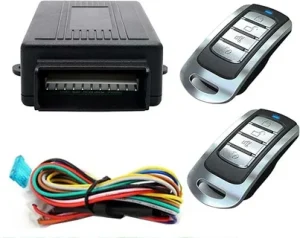
The North America Keyless Vehicle Access Control System market is poised for significant growth, expanding from USD 784.96 million in 2025 to USD 1,771.52 million by 2035. This surge reflects a strong CAGR of 8.5% over the forecast period. The growing emphasis on advanced vehicle security, convenience, and seamless user experiences is driving the adoption of keyless entry systems across North America. Automakers are increasingly integrating these systems into mid-range and high-end vehicles to appeal to a tech-savvy consumer base that prioritizes both safety and ease of access. With the rapid rise in connected vehicle technologies, the ability to lock, unlock, and start vehicles remotely through smartphones or biometric authentication has become a standard expectation.
The North American automotive landscape, driven by electric vehicle (EV) adoption, connected cars, and advanced driver assistance systems (ADAS), is accelerating the demand for keyless vehicle access control systems. These systems eliminate the need for traditional mechanical keys and enhance anti-theft protection through encrypted communication protocols and real-time tracking. Moreover, as subscription-based mobility services and car-sharing platforms expand in urban centers, the need for flexible and secure vehicle access solutions is growing rapidly. These shifts, combined with government mandates for automotive safety enhancements, are boosting the overall market potential.
Get Ahead with Our Report: Request Your Sample Now!
https://www.futuremarketinsights.com/reports/sample/rep-na-142
Key Takeaways
The market for keyless vehicle access control systems in North America is undergoing a transformation due to rising consumer demand for convenience, safety, and digital integration. Vehicle owners now expect seamless interactions with their cars, including remote access, auto-locking features, and driver recognition systems. The trend is not limited to premium vehicles—OEMs are rapidly integrating smart access systems into compact and mid-range models to stay competitive. This growing penetration is resulting in higher volumes and a wider consumer base, particularly among younger, urban buyers who favor connected mobility solutions.
There is also growing demand for biometric-based vehicle entry systems, which utilize facial recognition, fingerprint scanning, or iris authentication. These technologies, once considered futuristic, are entering mainstream adoption due to advancements in sensor accuracy, data encryption, and AI-based recognition algorithms. Additionally, fleet operators and logistics companies are exploring these systems to improve vehicle tracking, restrict unauthorized use, and reduce key management overhead, adding a commercial dimension to market growth.
Emerging Trends in the North American Market
Among the key trends driving this market is the integration of smartphone-based digital keys. These keys allow users to access and start their vehicles via secure apps that use near-field communication (NFC), Bluetooth, or ultra-wideband (UWB) technologies. Such solutions are increasingly being offered as part of a larger connected car ecosystem, enabling features like remote diagnostics, access sharing, and geo-fencing. The seamless blend of mobile technology and automotive control is proving to be a game-changer for automakers looking to differentiate their offerings.
Another major trend is the development of cloud-based vehicle access platforms. These platforms support remote configuration, over-the-air (OTA) updates, and centralized access control for fleets and mobility-as-a-service (MaaS) providers. Combined with machine learning algorithms, these systems can even personalize access experiences based on user behavior, preferences, and usage history. Furthermore, heightened cybersecurity measures are being built into new-generation systems to combat increasing threats to vehicle data and access integrity. Compliance with regulations such as ISO/SAE 21434 is becoming a key standard for suppliers in this space.
Significant Developments and Market Opportunities
The rapid digital transformation of the automotive industry is creating new avenues for keyless vehicle access control. Automakers and Tier-1 suppliers are heavily investing in R&D to develop integrated solutions that go beyond simple entry mechanisms. Multi-modal access systems that combine biometric, RFID, and mobile technologies are being explored for added redundancy and personalization. Moreover, the emergence of autonomous and semi-autonomous vehicles is making keyless access more critical, especially in applications where vehicles may operate without human supervision.
The expansion of EVs across the United States and Canada is also unlocking opportunities for smart access systems. EV platforms, which are often software-centric, are ideal candidates for digital access technologies that can be updated, scaled, and customized over time. Additionally, the shift toward shared and subscription-based vehicle ownership models is boosting the need for flexible, user-centric access solutions that support multiple users, secure data handling, and real-time monitoring.
Recent Developments in the Market
Recent developments in the North American market reflect growing strategic collaborations between OEMs, technology firms, and cybersecurity providers. Companies like Ford, GM, and Tesla are launching next-gen keyless systems that include features such as driver proximity detection, personalized seat and climate settings, and integration with smart home ecosystems. Simultaneously, third-party tech providers are launching modular solutions that can be integrated into aftermarket and commercial fleets, expanding the market beyond new vehicle production.
In parallel, several players are introducing subscription models for premium access features, enabling vehicle owners to upgrade their access capabilities on-demand. Innovations in battery-saving protocols, dual-authentication entry systems, and voice-activated access are entering pilot phases. These innovations aim to make vehicle entry more secure, responsive, and personalized, aligning with broader shifts toward intelligent transportation systems.
Thorough Market Evaluation: Full Report
https://www.futuremarketinsights.com/reports/north-america-keyless-vehicle-access-control-system-market
Competition Outlook
The competitive landscape in North America is dynamic, with a mix of global OEMs, Tier-1 automotive suppliers, and specialized tech startups vying for market share. Established automotive suppliers are enhancing their offerings through digital transformation, while tech companies are bringing in AI, cloud, and mobile expertise to reshape traditional access control paradigms. The emphasis is increasingly on integrated systems that combine physical hardware with cloud-based services and user-centric app interfaces.
Key players
Key players in the North America keyless vehicle access control system market include Continental AG, Robert Bosch GmbH, Denso Corporation, Valeo SA, Hella GmbH & Co. KGaA, Lear Corporation, Alps Alpine Co. Ltd., Mitsubishi Electric Corporation, Hyundai Mobis, and Panasonic Corporation. These companies are leading innovations in passive entry systems, biometric modules, smartphone-based digital keys, and connected access platforms. Strategic partnerships with automakers and advancements in cybersecurity protocols are defining competitive advantages in this evolving market.
Key Segmentations
The market can be segmented based on product type, technology, vehicle type, and end user. By product type, the market includes passive keyless entry, remote keyless entry, and smart keys, with passive systems gaining the most traction due to convenience and security. By technology, the segments include radio frequency identification (RFID), Bluetooth, NFC, UWB, and biometric systems. Vehicle type segmentation includes passenger cars, commercial vehicles, and electric vehicles, with the electric vehicle segment showing the fastest growth. End users comprise OEMs and aftermarket users, with OEMs currently dominating but aftermarket adoption expected to rise due to retrofitting demand and fleet upgrades.
About Future Market Insights (FMI)
Future Market Insights, Inc. (ESOMAR certified, recipient of the Stevie Award, and a member of the Greater New York Chamber of Commerce) offers profound insights into the driving factors that are boosting demand in the market. FMI stands as the leading global provider of market intelligence, advisory services, consulting, and events for the Packaging, Food and Beverage, Consumer Technology, Healthcare, Industrial, and Chemicals markets. With a vast team of 400 analysts worldwide, FMI provides global, regional, and local expertise on diverse domains and industry trends across more than 110 countries.
Contact Us:
Future Market Insights Inc.
Christiana Corporate, 200 Continental Drive,
Suite 401, Newark, Delaware – 19713, USA
T: +1-845-579-5705
For Sales Enquiries: sales@futuremarketinsights.com
Website: https://www.futuremarketinsights.com
LinkedIn| Twitter| Blogs | YouTube