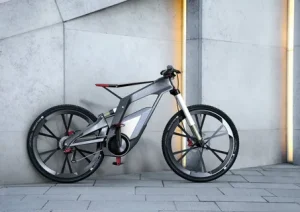
According to forecasts, the world electric bike market will increase from USD 54.7 billion in 2025 to USD 124.6 billion in 2035, growing at a strong CAGR of 8.5%. This remarkable growth trajectory is attributed to multiple converging factors, including strong policy support from governments, rapid technological advancements in battery and motor systems, and evolving consumer preferences for sustainable and flexible personal mobility. As cities worldwide grapple with congestion, pollution, and rising fuel costs, electric bikes (e-Bikes) are emerging as a highly attractive solution for short- to medium-range travel. The expansion of bike-sharing programs, the establishment of dedicated cycling infrastructure, and attractive subsidy programs for e-Bike buyers are further catalyzing adoption across urban centers.
E-Bikes are not just replacing traditional bicycles but are increasingly displacing motorcycles, mopeds, and even cars in urban commuting. This shift is being driven by a growing segment of environmentally conscious consumers, as well as businesses looking to optimize last-mile delivery solutions. The integration of lithium-ion batteries, smart sensors, IoT-based connectivity, and regenerative braking systems has significantly enhanced the performance, safety, and range of electric bikes. In many parts of Europe and Asia, especially in countries like the Netherlands, Germany, China, and Japan, e-Bikes are fast becoming a dominant mode of personal transport.
Get Ahead with Our Report: Request Your Sample Now!
https://www.futuremarketinsights.com/reports/sample/rep-gb-4683
Key Takeaways
The global electric bike market is witnessing significant expansion across both developed and developing regions. Rising fuel prices and increasing environmental awareness are making e-Bikes a compelling alternative to internal combustion engine (ICE) vehicles for daily commuting. Governments are actively supporting this transition through incentives, tax rebates, and regulations promoting electric vehicle infrastructure. As urbanization accelerates, more cities are investing in cycling-friendly infrastructure, including dedicated lanes and charging stations, making it easier and safer to adopt e-Bikes. The market is also being shaped by a shift in consumer behavior, with users increasingly prioritizing cost efficiency, convenience, and sustainability.
The popularity of e-Bikes in the commercial segment, particularly in logistics and food delivery services, is boosting demand for rugged, long-range models. In parallel, the recreational and sports e-Bike segments are growing due to rising interest in adventure tourism and fitness. High-performance models designed for off-road and mountainous terrain are gaining popularity among enthusiasts and athletes. As battery technology continues to improve, with shorter charging times and longer ranges, the total cost of ownership for e-Bikes is becoming more competitive, drawing in broader consumer demographics.
Emerging Trends in the Global Market
A key trend in the electric bike market is the emergence of connected and smart e-Bikes equipped with GPS tracking, theft detection, route planning, and performance analytics. These features are particularly appealing to tech-savvy consumers and are helping differentiate premium offerings in a competitive marketplace. Battery swapping and modular battery designs are also gaining momentum, enabling users to extend range and reduce downtime. The integration of artificial intelligence and machine learning in e-Bike systems is enhancing user experience by enabling adaptive performance based on terrain, weight, and speed.
Another major trend is the growing adoption of e-Bikes in rural and suburban areas, especially in developing nations, where they offer an affordable and reliable means of transport. Manufacturers are introducing durable, low-maintenance models tailored for tough road conditions and limited infrastructure. Lightweight materials such as carbon fiber and aluminum alloys are being used to develop more efficient and ergonomic bike frames, further improving ride comfort and portability. Moreover, micro-mobility ecosystems are evolving rapidly, with companies offering subscription-based e-Bike services, which lower the barrier to entry and broaden market access.
Significant Developments in the Global Sector: Trends and Opportunities in the Market
Significant developments in the sector include the proliferation of global and regional partnerships aimed at scaling production, enhancing distribution, and co-developing new battery technologies. Leading e-Bike manufacturers are entering strategic alliances with automotive companies, battery suppliers, and ride-sharing platforms to build integrated mobility solutions. The expansion of manufacturing capabilities in Asia-Pacific, particularly in China, India, and Taiwan, is leading to economies of scale and more affordable offerings for global markets.
There are substantial opportunities for innovation in areas such as solar-powered charging systems, dual-motor drive systems for enhanced torque and speed, and the use of blockchain for secure digital identification of e-Bikes. Companies are also exploring the integration of augmented reality (AR) for maintenance support and navigation, particularly for professional or fleet-based users. As ESG (Environmental, Social, and Governance) standards become increasingly important, businesses and municipalities are adopting e-Bikes for employee transport, last-mile logistics, and green commuting initiatives.
Recent Developments in the Market
Recent developments in the electric bike market include the launch of foldable e-Bikes, compact urban commuter models, and cargo e-Bikes designed to carry heavy loads for delivery applications. Key manufacturers are investing in R&D to improve battery density, reduce charging time, and enhance safety features such as automatic braking, anti-lock braking systems (ABS), and smart lighting. Market leaders are also incorporating removable batteries to improve user convenience and enable indoor charging.
Globally, several governments have rolled out new incentive programs to encourage e-Bike adoption as part of their post-pandemic recovery plans and green mobility strategies. Countries like Germany, France, and Canada are providing purchase subsidies, while cities such as Paris, Amsterdam, and New York are investing in bike lane networks and parking infrastructure. In Asia, China continues to lead the global production and export of e-Bikes, while Japan and South Korea are innovating in battery and drivetrain technologies.
Thorough Market Evaluation: Full Report
https://www.futuremarketinsights.com/reports/electric-bike-market
Competition Outlook
The global electric bike market is moderately consolidated, with a few large players dominating urban centers and numerous regional manufacturers catering to niche markets. Competition is based on innovation, pricing, battery performance, brand recognition, and dealer networks. Companies are focusing on expanding their footprint in emerging markets, offering financing options, and improving after-sales service to gain customer loyalty. Cross-industry collaborations between tech firms and e-Bike manufacturers are shaping the future landscape of the industry.
Key Players
Major players in the electric bike market include Giant Manufacturing Co. Ltd., Yamaha Motor Co. Ltd., Trek Bicycle Corporation, Accell Group, Merida Industry Co. Ltd., Riese & Müller GmbH, Aima Technology Group Co. Ltd., Pedego Electric Bikes, Specialized Bicycle Components Inc., and Rad Power Bikes. These companies are known for their advanced design capabilities, strong distribution networks, and commitment to sustainability and innovation.
Key Segmentations
The electric bike market can be segmented based on product type, battery type, drive mechanism, and end user. By product type, the market is divided into pedal-assist and throttle-on-demand models, with pedal-assist dominating due to regulatory advantages and fitness benefits. By battery type, lithium-ion batteries hold the largest share due to their superior energy density, light weight, and faster charging capabilities. The drive mechanism includes hub motors and mid-drive motors, with mid-drive gaining popularity in performance models. By end user, the market spans urban commuters, adventure cyclists, delivery personnel, and senior citizens, with urban commuters forming the largest and fastest-growing segment.
About Future Market Insights (FMI)
Future Market Insights, Inc. (ESOMAR certified, recipient of the Stevie Award, and a member of the Greater New York Chamber of Commerce) offers profound insights into the driving factors that are boosting demand in the market. FMI stands as the leading global provider of market intelligence, advisory services, consulting, and events for the Packaging, Food and Beverage, Consumer Technology, Healthcare, Industrial, and Chemicals markets. With a vast team of 400 analysts worldwide, FMI provides global, regional, and local expertise on diverse domains and industry trends across more than 110 countries.
Contact Us:
Future Market Insights Inc.
Christiana Corporate, 200 Continental Drive,
Suite 401, Newark, Delaware – 19713, USA
T: +1-845-579-5705
For Sales Enquiries: sales@futuremarketinsights.com
Website: https://www.futuremarketinsights.com
LinkedIn| Twitter| Blogs | YouTube