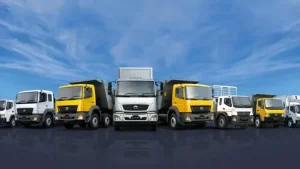
The MENA (Middle East and North Africa) commercial vehicles market is projected to expand from USD 7.61 billion in 2025 to USD 18.72 billion by 2035, registering a CAGR of 5.1% over the forecast period. This steady growth is being fueled by the ongoing expansion of infrastructure across the region, growing intra-regional trade, and strategic fleet modernization initiatives. As governments invest heavily in transportation, logistics, and public service networks, the demand for commercial vehicles—including trucks, buses, and vans—is expected to rise significantly. Key projects under the Belt and Road Initiative, Vision 2030 plans in Saudi Arabia and the UAE, and economic diversification agendas in North African nations are further contributing to the market’s upward trajectory.
Increased investment in urban development, logistics hubs, and smart city infrastructure is enhancing the demand for efficient, reliable, and technologically advanced commercial vehicle fleets. Public and private fleet operators are increasingly replacing outdated vehicles with modern, fuel-efficient, and low-emission alternatives, driven by both cost-efficiency goals and regulatory pressures. The commercial segment—including construction, oil and gas, transportation, and last-mile delivery—is especially witnessing a surge in demand for medium and heavy-duty vehicles. Additionally, the rise of e-commerce, cross-border trade facilitation, and economic recovery efforts post-COVID-19 have created favorable conditions for market growth across key MENA countries such as Saudi Arabia, the UAE, Egypt, Morocco, and Algeria.
Get Ahead with Our Report: Request Your Sample Now!
https://www.futuremarketinsights.com/reports/sample/rep-gb-6106
Key Takeaways from the MENA Commercial Vehicles Market:
The region is seeing a strong push for the adoption of cleaner and more fuel-efficient commercial vehicles as governments and corporations aim to reduce carbon emissions and operational costs. Diesel-powered trucks continue to dominate the market; however, the share of electric and alternative fuel-powered vehicles is steadily increasing, supported by favorable policies and infrastructure development. Urbanization and population growth are boosting demand for public buses and light commercial vehicles, particularly in rapidly growing cities. Additionally, government-supported localization efforts and industrial manufacturing hubs are creating opportunities for regional assembly and production of commercial vehicles, which is contributing to reduced import dependency and fostering job creation.
Emerging Trends in the MENA Commercial Vehicles Market:
One of the prominent trends driving the MENA commercial vehicle market is the shift toward electrification and green mobility solutions. As part of broader sustainability goals, several countries in the region have introduced incentives for low-emission commercial vehicles, including reduced import tariffs and subsidies for electric buses and delivery vans. With advancements in battery technology and improvements in charging infrastructure, electric commercial vehicles are gradually penetrating municipal transport systems, delivery fleets, and utility services.
Digitization and telematics integration are also becoming standard features across commercial vehicle fleets. Fleet operators are increasingly adopting GPS tracking, fuel management systems, predictive maintenance tools, and driver behavior monitoring platforms to enhance fleet productivity and safety. This shift toward connected vehicles is enabling better logistics management, reducing downtime, and improving the total cost of ownership. Moreover, autonomous and semi-autonomous vehicle trials are underway in parts of the Gulf Cooperation Council (GCC), pointing to future innovations in logistics and passenger transport automation.
Significant Developments and Opportunities in the Global Sector:
The MENA region presents significant opportunities for commercial vehicle OEMs, component suppliers, and logistics solution providers due to its unique combination of large-scale infrastructure projects, expanding urban centers, and supportive economic reform agendas. Multilateral development banks and sovereign funds are financing transport and logistics initiatives, opening doors for private sector participation. Several countries are investing in electric bus networks, smart mobility corridors, and integrated logistics platforms that require a reliable supply of modern commercial vehicles.
Recent developments include the expansion of manufacturing facilities and joint ventures between global OEMs and regional partners, aimed at localizing production and reducing costs. Vehicle manufacturers are also introducing region-specific models tailored to MENA’s climate, terrain, and operational requirements, including rugged chassis, enhanced cooling systems, and desert-ready components. Furthermore, the surge in demand for last-mile delivery vehicles due to booming online retail has prompted companies to invest in compact and efficient electric vans and mini trucks.
Exhaustive Market Report: A Complete Study
https://www.futuremarketinsights.com/reports/mena-commercial-vehicles-market
Competition Outlook :
The MENA commercial vehicles market features a competitive mix of global players and regional manufacturers, with competition intensifying around product innovation, pricing, and after-sales service. Leading players in the market include Daimler AG, Volvo Group, MAN Truck & Bus, Isuzu Motors, Ashok Leyland, Toyota Motor Corporation, Tata Motors, Iveco, CNH Industrial, and Hino Motors. These companies are strengthening their presence through dealership networks, strategic alliances, and participation in regional transport and mobility expos.
Key Market Segmentation:
The market can be segmented based on vehicle type, propulsion type, end-use application, and country. By vehicle type, the market comprises light commercial vehicles (LCVs), medium-duty vehicles (MDVs), and heavy-duty vehicles (HDVs), with LCVs gaining traction in urban logistics and delivery services. Based on propulsion type, diesel remains dominant, but electric and hybrid vehicles are rapidly growing in demand, especially in city transport and government fleets. In terms of end-use, segments such as logistics, construction, oil and gas, and municipal services hold major shares, with construction and logistics expected to witness the highest growth rates. Regionally, the Gulf countries lead the market in terms of value, followed by North African nations where development initiatives and population growth are spurring demand.
About Future Market Insights (FMI)
Future Market Insights, Inc. (ESOMAR certified, recipient of the Stevie Award, and a member of the Greater New York Chamber of Commerce) offers profound insights into the driving factors that are boosting demand in the market. FMI stands as the leading global provider of market intelligence, advisory services, consulting, and events for the Packaging, Food and Beverage, Consumer Technology, Healthcare, Industrial, and Chemicals markets. With a vast team of 400 analysts worldwide, FMI provides global, regional, and local expertise on diverse domains and industry trends across more than 110 countries.
Contact Us:
Future Market Insights Inc.
Christiana Corporate, 200 Continental Drive,
Suite 401, Newark, Delaware – 19713, USA
T: +1-845-579-5705
For Sales Enquiries: sales@futuremarketinsights.com
Website: https://www.futuremarketinsights.com
LinkedIn| Twitter| Blogs | YouTube