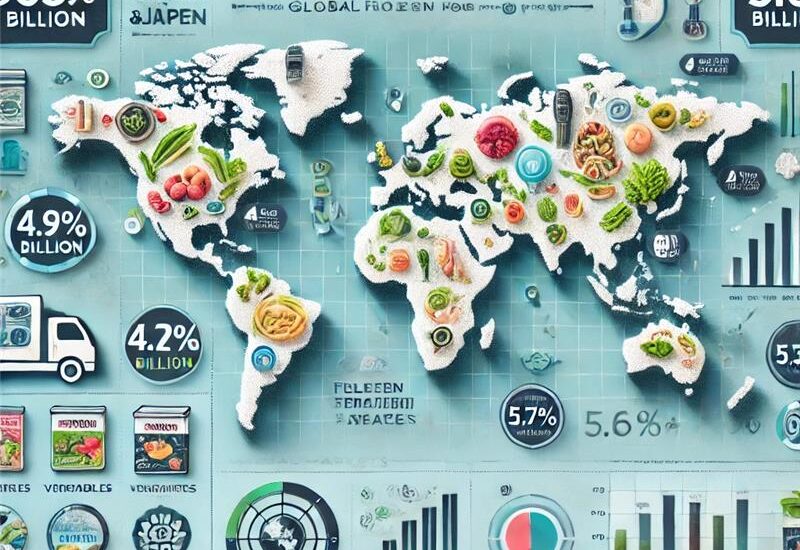
The global frozen food market is set to surge from USD 464 billion in 2025 to USD 785.1 billion by 2035, registering a compound annual growth rate (CAGR) of 5.4%. As consumers increasingly turn to convenient, long-lasting meal solutions without sacrificing quality, frozen food continues to evolve into a mainstay in households and foodservice channels alike.
Frozen food includes consumables that are preserved at sub-zero temperatures, maintaining their nutritional integrity, flavor, and texture. These products often contain freeze-concentrated solids with crystalline ice that enhance shelf life. The proportion of ice influences product structure by affecting melting points and the glass transition temperature of solute matrices. This delicate freeze science enables consistent texture, safety, and ease of storage in both animal and human food categories.
Stay Informed – Request a Sample Copy for Exclusive Insights: https://www.futuremarketinsights.com/reports/sample/rep-gb-17944
Key Takeaways
- The frozen food market will grow at a CAGR of 5.4% from 2025 to 2035.
- By 2035, the market will be worth USD 785.1 billion globally.
- Growing demand for convenience, extended shelf life, and premium frozen options are key growth drivers.
- China leads country-wise growth with a 6.3% CAGR, followed by Germany and the U.S.
Market Dynamics
Drivers
- Changing Lifestyles & Demand for Convenience
Urbanization and busy schedules have increased the demand for ready-to-cook and ready-to-eat options, making frozen food a go-to category. - Advancements in Freezing Technology
Improved cold chain logistics and freezing methods like Individual Quick Freezing (IQF) help preserve food quality, enabling wider product adoption. - Rising Health Awareness
Brands now offer clean-label, plant-based, and low-calorie frozen options that appeal to health-conscious consumers, boosting market share.
Restraints
- Cold Storage Infrastructure Gaps
Especially in developing countries, limited access to cold storage facilities can hinder market penetration. - Perception Issues
Some consumers still associate frozen foods with being less nutritious or lower in quality, although this perception is gradually changing.
Recent Developments in the Market
- Nestlé expanded its plant-based frozen meal range across Europe in 2024, targeting flexitarian consumers.
- Conagra Brands launched new frozen breakfast items under the Healthy Choice brand, tapping into the growing demand for nutritious frozen breakfasts.
- Nomad Foods acquired Fortenova’s frozen food business in Central and Eastern Europe, enhancing its regional footprint.
Key Benefits for Stakeholders
- Manufacturers can innovate with fewer spoilage concerns, enabling broader distribution.
- Retailers benefit from longer shelf life, reducing waste and optimizing inventory.
- Consumers gain access to diverse, nutritious options that align with modern lifestyles.
- Logistics Providers find steady demand in frozen food requiring consistent cold chain services.
Your Competitive Advantage Starts Here – Access Full Report: https://www.futuremarketinsights.com/reports/frozen-food-market
Competitive Analysis
Major players in the frozen food market include:
- Nestlé S.A.
- Conagra Brands, Inc.
- McCain Foods Limited
- General Mills Inc.
- Nomad Foods Ltd.
These companies are focusing on innovation, sustainability, and strategic partnerships to enhance their market position. Product diversification into plant-based, ethnic cuisines, and high-protein meals is a common trend.
Market Country-Wise Analysis
United States
The U.S. frozen food market is projected to grow at a CAGR of 3.8% from 2025 to 2035. Demand is steady due to the popularity of frozen pizzas, breakfast items, and premium meal kits. Innovation in gluten-free and keto options continues to draw in a wider consumer base.
China
China leads in growth potential with a 6.3% CAGR during the forecast period. Rising urbanization, e-commerce penetration, and Westernized eating habits are boosting the appeal of frozen convenience foods. Domestic and international brands are investing heavily in the Chinese market.
Germany
Germany’s market is growing at a CAGR of 4.5%, driven by health-conscious choices and sustainability trends. Demand for organic and plant-based frozen meals is on the rise, and German consumers increasingly value packaging transparency and ethical sourcing.
Explore Convenience Food Industry Analysis: https://www.futuremarketinsights.com/industry-analysis/convinience-food
Key Segments
By Product Type:
Frozen Ready Meals, Frozen Seafood & Meat Products, Frozen Snacks & Bakery Products, Frozen Fruits & Vegetables, Others
By Sales Channel:
Supermarkets/Hypermarkets, Convenience Stores & Independent Retailers, Online Retail, Food Service/HoReCa, Others
By Freezing Technique:
Individual Quick Freezing (IQF), Belt Freezing, Blast Freezing, Plate Freezing, Cryogenic Freezing
By Region:
Industry analysis has been carried out in key countries of North America, Latin America, Europe, Middle East and Africa, East Asia, South Asia, and Oceania
About Future Market Insights (FMI)
Future Market Insights, Inc. (ESOMAR certified, recipient of the Stevie Award, and a member of the Greater New York Chamber of Commerce) offers profound insights into the driving factors that are boosting demand in the market. FMI stands as the leading global provider of market intelligence, advisory services, consulting, and events for the Packaging, Food and Beverage, Consumer Technology, Healthcare, Industrial, and Chemicals markets. With a vast team of over 400 analysts worldwide, FMI provides global, regional, and local expertise on diverse domains and industry trends across more than 110 countries.
Contact Us:
Future Market Insights Inc.
Christiana Corporate, 200 Continental Drive,
Suite 401, Newark, Delaware – 19713, USA
T: +1-347-918-3531
For Sales Enquiries: sales@futuremarketinsights.com
Website: https://www.futuremarketinsights.com
LinkedIn| Twitter| Blogs | YouTube