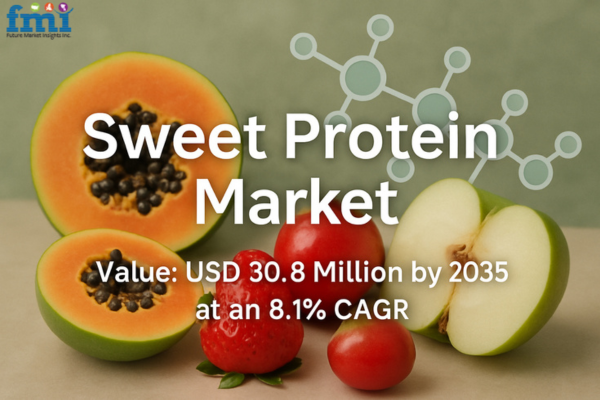
The global sweet protein market is poised for robust growth in the coming decade, fueled by increasing consumer preference for natural and low-calorie sweeteners. The market is projected to generate USD 14.1 million by 2025, expanding to USD 30.8 million by 2035, at a compound annual growth rate (CAGR) of 8.1%. This growth trajectory reflects a strong push towards healthier alternatives to sugar, especially in food and beverage formulations aimed at health-conscious consumers.
Sweet proteins, derived from tropical plants and fruits, such as thaumatin, brazzein, monellin, and miraculin, have gained traction as effective sugar substitutes due to their intense sweetness and negligible caloric value. With increasing scrutiny over artificial sweeteners and their health implications, food manufacturers are increasingly turning to sweet proteins for clean-label product development. This shift is also supported by growing R&D efforts and regulatory approvals for sweet protein use in several countries.
Stay Informed – Request a Sample Copy for Exclusive Insights: https://www.futuremarketinsights.com/reports/sample/rep-gb-18623
Key Sweet Protein Market Trends Highlighted
- Clean Label Momentum: Consumers are actively seeking ingredients they can recognize and trust. Sweet proteins are plant-based and perceived as natural, aligning perfectly with clean label trends.
- Functional Food and Beverage Innovation: Companies are leveraging sweet proteins in functional drinks, sports nutrition, and sugar-free snacks to cater to diabetic and weight-conscious populations.
- Biotechnological Advancements: Fermentation and synthetic biology are accelerating the scalable production of sweet proteins, reducing dependency on native plant extraction.
- Strategic Collaborations: Ingredient companies are forming strategic alliances with food tech startups to commercialize novel sweet protein formulations.
Sweet Protein Industry Developments
- In 2024, Amai Proteins collaborated with food conglomerates to scale up its precision-fermented sweet protein solutions for beverage applications.
- Sweegen, a key innovator in natural sweeteners, expanded its sweet protein portfolio by launching brazzein-based sweeteners for North American and Asian markets.
- Regulatory authorities in Europe and Asia-Pacific have initiated safety evaluations for thaumatin and monellin, opening doors for broader commercial use.
- Startups are increasingly filing patents on synthetic biology processes for producing sweet proteins sustainably and cost-effectively.
Key Takeaways of Report
- The global sweet protein market is forecast to grow at an 8.1% CAGR from 2025 to 2035, reaching over USD 30.8 million by the end of the forecast period.
- Thaumatin continues to dominate the market, driven by its application in confectionery, beverages, and oral care products.
- North America and Asia-Pacific are the fastest-growing regions, with rising demand for zero-calorie sweeteners in processed foods.
- Biotech innovations in fermentation and gene editing are expected to lower production costs and increase availability.
- Regulatory progress in the U.S., EU, and China will be critical to unlocking the full market potential.
Sweet Protein Market Drivers
- Rising Obesity and Diabetes Cases: Increasing global health concerns are compelling food manufacturers to adopt alternative sweeteners with low or zero calories.
- Natural Ingredient Demand: A strong consumer shift toward natural food ingredients is creating high demand for plant-based sweeteners like sweet proteins.
- Growing Vegan and Plant-Based Trends: The expansion of veganism and flexitarian diets has driven the adoption of plant-derived ingredients across food sectors.
- Stringent Sugar Regulations: Governments and health organizations are implementing sugar taxes and nutritional labeling laws, accelerating the use of sugar alternatives.
Your Competitive Advantage Starts Here – Access Full Report: https://www.futuremarketinsights.com/reports/sweet-protein-market
Sweet Protein Market Regional Insights
North America is projected to maintain a leading position in the global market, driven by heightened awareness around sugar consumption and strong investments in biotech-enabled food solutions. The U.S., in particular, has emerged as a hub for sweet protein research, with an expected CAGR of 7.20% from 2025 to 2035.
In Europe, countries such as Germany (7.00% CAGR) and France (6.90% CAGR) are seeing increased adoption of sweet proteins, largely driven by natural food trends and clean label demands. The United Kingdom is not far behind, with a 6.80% CAGR projected for the forecast period.
Asia-Pacific is experiencing the fastest overall growth. China, with a CAGR of 7.40%, is leading the region, followed by South Korea (7.30%), Japan (7.10%), and Australia (6.40%). Growing middle-class populations and expanding functional beverage industries are significant drivers.
In Oceania, New Zealand is projected to grow at 6.30% CAGR, driven by health-conscious consumers and increased imports of specialty food ingredients. Italy, with a projected 6.50% CAGR, also reflects growing interest in low-calorie, natural sweeteners in the Mediterranean diet.
Competition Outlook
The sweet protein market is characterized by innovation, partnerships, and increased investments in sustainable production technologies. Key players are focusing on improving taste profiles and production scalability to gain a competitive edge.
Some of the most active participants include:
- Amai Proteins
- Sweegen
- Evolva
- Joywell Foods
- Conagen
These companies are strategically leveraging advances in synthetic biology and precision fermentation to make sweet proteins commercially viable at scale. Intellectual property remains a key differentiator, with several patents filed around fermentation techniques and flavor optimization.
As demand continues to rise, collaborations between food manufacturers and ingredient innovators will define the next phase of growth in the global sweet protein industry. The successful commercialization of sweet proteins holds the potential to transform how sweetness is delivered across diverse consumer categories—from beverages to pharmaceuticals.
Explore Protein Industry Analysis: https://www.futuremarketinsights.com/industry-analysis/protein
Key Segmentation
By Source:
Plant-based and microbial-based sweet proteins
By Application:
Food & beverages, pharmaceuticals, and dietary supplements
By Region:
North America, Latin America, Europe, East Asia, South Asia, Oceania, and the Middle East & Africa (MEA)
About Future Market Insights (FMI)
Future Market Insights, Inc. (ESOMAR certified, recipient of the Stevie Award, and a member of the Greater New York Chamber of Commerce) offers profound insights into the driving factors that are boosting demand in the market. FMI stands as the leading global provider of market intelligence, advisory services, consulting, and events for the Packaging, Food and Beverage, Consumer Technology, Healthcare, Industrial, and Chemicals markets. With a vast team of over 400 analysts worldwide, FMI provides global, regional, and local expertise on diverse domains and industry trends across more than 110 countries.
Contact Us:
Future Market Insights Inc.
Christiana Corporate, 200 Continental Drive,
Suite 401, Newark, Delaware – 19713, USA
T: +1-347-918-3531
For Sales Enquiries: sales@futuremarketinsights.com
Website: https://www.futuremarketinsights.com
LinkedIn| Twitter| Blogs | YouTube