The railway traction inverter market is anticipated to grow significantly from USD 4,821.3 million in 2025 to USD 8,313.9 million by 2035, registering a robust compound annual growth rate (CAGR) of 5.6% during this period. Traction inverters are crucial components in modern railway systems, responsible for converting electrical power into a suitable form to efficiently drive electric locomotives and railcars. These devices not only optimize energy utilization but also contribute to smoother acceleration and deceleration, reducing energy losses and enhancing overall system performance. The accelerating global shift towards rail electrification, driven by environmental concerns and governmental policies targeting carbon emissions reduction, further propels demand for advanced traction inverter technologies.
The expansion of railway networks, especially in emerging economies across Asia-Pacific, Latin America, and Africa, is supporting market growth as governments invest heavily in sustainable public transportation infrastructure. Moreover, modernization and upgrading of existing rail fleets in developed regions like North America and Europe are also creating substantial opportunities. Traction inverters are evolving with advancements in power semiconductor technologies, digital control systems, and thermal management, which collectively improve efficiency, reliability, and reduce maintenance costs. These trends are helping rail operators meet stringent regulatory requirements for energy consumption and emission standards, making traction inverters indispensable for future-ready rail systems.
Get Ahead with Our Report: Request Your Sample Now!
https://www.futuremarketinsights.com/reports/sample/rep-gb-10536
Key Takeaways
The railway traction inverter market is forecast to grow from USD 4,821.3 million in 2025 to USD 8,313.9 million by 2035, reflecting a CAGR of 5.6%. Growth is primarily driven by increasing rail electrification projects worldwide and the demand for energy-efficient, reliable traction systems in both passenger and freight transportation. Technological advancements such as silicon carbide (SiC) and gallium nitride (GaN) semiconductor components are enabling higher efficiency and compact designs in traction inverters. Government initiatives to curb carbon emissions, enhance rail infrastructure, and promote green transportation further support the expansion of this market. Rising investments in high-speed rail and metro projects globally underscore the growing need for advanced traction inverter solutions.
Emerging Trends in the Global Market
One of the most notable trends in the railway traction inverter market is the adoption of wide bandgap semiconductors like silicon carbide (SiC) and gallium nitride (GaN), which significantly improve power conversion efficiency and thermal performance compared to traditional silicon-based inverters. These materials allow for smaller, lighter, and more reliable inverters that consume less energy, aligning well with the push toward greener and more sustainable railway operations. Another emerging trend is the integration of smart diagnostics and predictive maintenance systems into traction inverters, enabling real-time monitoring of performance parameters, fault detection, and automated alerts. This trend helps reduce downtime, lowers operational costs, and extends equipment life.
Digitalization and the use of advanced control algorithms are also reshaping the traction inverter landscape. Inverters now feature improved pulse width modulation (PWM) techniques and vector control systems that enhance precision in motor control, resulting in smoother train operations and reduced mechanical stress. Additionally, modular designs in traction inverters are gaining traction, offering scalability and easier maintenance for diverse railway applications ranging from urban transit to long-distance freight. The increasing focus on retrofit solutions to upgrade aging fleets with state-of-the-art traction inverters is further propelling market demand.
Significant Developments in the Global Sector: Trends and Opportunities in the Market
The railway traction inverter market is witnessing significant developments as manufacturers and rail operators collaborate to innovate and meet evolving industry needs. Stricter emission regulations and the global commitment to sustainable transportation present opportunities for companies to develop next-generation traction inverters that deliver higher energy efficiency and reduced carbon footprint. Governments worldwide are channeling investments into railway electrification and modernization projects, particularly in Asia-Pacific, where urbanization and population growth are creating immense pressure on public transit systems. This environment offers fertile ground for the deployment of advanced traction inverter technologies.
Strategic partnerships between semiconductor manufacturers, inverter producers, and rail system integrators are facilitating faster innovation cycles and more comprehensive product offerings. The trend toward integrated systems that combine traction inverters with energy storage solutions and regenerative braking technologies also opens new avenues for efficiency improvements and cost savings. Furthermore, increased adoption of high-speed rail networks and metro systems across developing countries highlights opportunities for traction inverter suppliers to provide customized and scalable solutions tailored to specific rail transport requirements.
Recent Developments in the Market
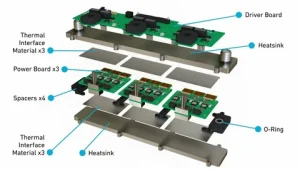
Recent market developments include the launch of traction inverters with improved power density and enhanced cooling mechanisms to withstand harsh operating conditions, such as extreme temperatures and vibrations common in railway environments. Leading companies have introduced products leveraging SiC technology, offering superior efficiency and smaller footprints compared to legacy systems. Additionally, several firms have announced collaborations aimed at integrating IoT-enabled monitoring platforms with traction inverters, enabling predictive analytics and real-time operational insights.
Noteworthy advancements also include traction inverters designed for hybrid and battery-powered trains, addressing the growing need for flexible propulsion systems that reduce reliance on continuous overhead electrification. The rise of digital twins and simulation tools is further accelerating product development and customization, helping manufacturers optimize inverter design and performance before deployment. Investment in aftermarket services, including maintenance contracts and system upgrades, is also gaining importance as rail operators seek to maximize the lifecycle and reliability of their traction equipment.
Exhaustive Market Report: A Complete Study
https://www.futuremarketinsights.com/reports/railway-traction-inverter-market
Competition Outlook
The railway traction inverter market is competitive, with numerous global and regional players competing based on technology innovation, product reliability, and service capabilities. Major companies such as Siemens AG, ABB Ltd., Mitsubishi Electric Corporation, Toshiba Corporation, and Bombardier Inc. hold significant market shares due to their extensive product portfolios and strong global presence. These players continuously invest in R&D to develop energy-efficient, compact, and smart traction inverter solutions that comply with stringent safety and environmental standards.
Regional manufacturers, particularly in Asia, are emerging as competitive contenders by offering cost-effective products tailored to local market needs, especially in rapidly growing economies. Small and medium-sized enterprises focusing on niche applications and after-sales services also contribute to the competitive landscape. Strategic alliances, mergers, and acquisitions remain key approaches for companies to enhance their technological edge and expand geographical reach in this dynamic market.
Key Players
Key players in the railway traction inverter market include Siemens AG, ABB Ltd., Mitsubishi Electric Corporation, Toshiba Corporation, Bombardier Inc., Alstom, Hitachi Ltd., and Schneider Electric. These companies offer a wide range of products designed to cater to various railway applications such as high-speed trains, metros, freight locomotives, and light rail systems.
Key Segmentations
The market segmentation by component includes power modules, control systems, and cooling units, with power modules dominating due to their critical role in energy conversion. By technology, the market is divided into insulated gate bipolar transistors (IGBT) based inverters and silicon carbide (SiC) based inverters, with SiC technology rapidly gaining traction. End-use segmentation covers passenger rail, freight rail, and urban transit, with urban transit showing strong growth potential owing to expanding metro projects worldwide.
About Future Market Insights (FMI)
Future Market Insights, Inc. (ESOMAR certified, recipient of the Stevie Award, and a member of the Greater New York Chamber of Commerce) offers profound insights into the driving factors that are boosting demand in the market. FMI stands as the leading global provider of market intelligence, advisory services, consulting, and events for the Packaging, Food and Beverage, Consumer Technology, Healthcare, Industrial, and Chemicals markets. With a vast team of 400 analysts worldwide, FMI provides global, regional, and local expertise on diverse domains and industry trends across more than 110 countries.
Contact Us:
Future Market Insights Inc.
Christiana Corporate, 200 Continental Drive,
Suite 401, Newark, Delaware – 19713, USA
T: +1-845-579-5705
For Sales Enquiries: sales@futuremarketinsights.com
Website: https://www.futuremarketinsights.com
LinkedIn| Twitter| Blogs | YouTube