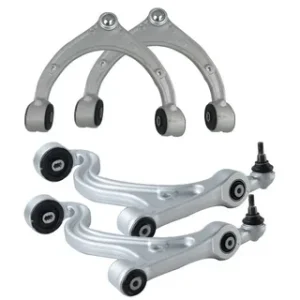
The automotive suspension control arms market is forecast to experience steady growth between 2025 and 2035, underpinned by multiple driving forces shaping the global automotive landscape. Rising vehicle production globally, coupled with increasing consumer expectations for superior ride comfort and handling stability, are key factors boosting demand. Additionally, the rapid surge in electric vehicle (EV) adoption and the increasing emphasis on lightweight vehicle components are significantly influencing market dynamics. The market value is expected to rise from USD 49,534.4 million in 2025 to an estimated USD 68,534.6 million by 2035, with a compound annual growth rate (CAGR) of 3.3% during this period. As automakers strive to improve vehicle safety and driving performance, suspension control arms are becoming increasingly sophisticated, integrating advanced materials and designs to meet these evolving needs.
Growth in the automotive suspension control arms market is also closely tied to advancements in manufacturing technologies and materials engineering. Lightweight alloys and composites are increasingly being used to reduce unsprung mass, which in turn enhances fuel efficiency and handling. The global shift towards stricter vehicle safety and emission regulations is further encouraging manufacturers to innovate with suspension components that provide durability, strength, and better performance without compromising weight. Moreover, the growing penetration of EVs is creating new challenges and opportunities in suspension systems design, as these vehicles often feature different weight distributions and performance requirements compared to conventional internal combustion engine vehicles.
Get Ahead with Our Report: Request Your Sample Now!
https://www.futuremarketinsights.com/reports/sample/rep-gb-10342
Key Takeaways
The automotive suspension control arms market is set to expand from USD 49,534.4 million in 2025 to USD 68,534.6 million by 2035, driven by a CAGR of 3.3%. This growth is propelled by rising vehicle production, particularly in emerging markets, where increasing disposable incomes and urbanization lead to higher vehicle demand. Consumer preference for enhanced driving comfort and stability is pressuring manufacturers to upgrade suspension systems with advanced control arms. The surge in electric vehicle production is also pivotal, as suspension components need to accommodate battery weight and different chassis designs. The focus on lightweight materials such as aluminum and composites aids in improving vehicle efficiency and performance, supporting broader environmental goals. Regulatory trends around vehicle safety and emissions are further shaping product innovation in this sector.
Emerging Trends in the Global Market
One significant emerging trend is the integration of advanced materials such as aluminum alloys, carbon fiber composites, and high-strength steel in suspension control arms. These materials offer a desirable balance of lightweight and strength, helping reduce overall vehicle weight, improve fuel efficiency, and enhance handling performance. Another trend is the increasing adoption of electronically controlled suspension systems, which require precision-engineered control arms to handle dynamic load adjustments for superior ride comfort and stability. The rise of electric and hybrid vehicles is driving the development of suspension components specifically designed to cope with altered weight distribution and higher torque delivery, requiring innovative design approaches.
The demand for aftermarket upgrades and replacements is also growing, especially in regions with older vehicle fleets. Consumers and fleet operators are seeking durable and performance-enhancing suspension components to extend vehicle lifespans and improve safety. Moreover, advances in manufacturing processes such as robotic welding, 3D printing, and precision forging are allowing companies to produce more complex and reliable suspension control arms with greater efficiency. This trend towards technological sophistication aligns with the automotive industry’s broader push towards smart and connected vehicles.
Significant Developments in Global Sector: Trends and Opportunities in the Market
The automotive suspension control arms market is witnessing notable developments as manufacturers respond to evolving regulatory and consumer demands. Stricter safety standards globally are prompting the integration of improved bushings and ball joints within control arms, enhancing vehicle stability and crashworthiness. Increasing urbanization and infrastructure improvements in emerging economies are boosting vehicle sales, creating opportunities for suspension component suppliers. Simultaneously, the rising popularity of SUVs and crossovers, which require robust suspension systems to handle diverse terrains and driving conditions, is expanding the market scope.
Opportunities are also emerging from the push towards sustainability, with automakers seeking eco-friendly materials and manufacturing processes for suspension components. Collaborations between material scientists, automotive engineers, and suppliers are leading to the development of recyclable and lighter control arms. Additionally, the expansion of electric vehicle manufacturing plants worldwide is driving demand for suspension parts optimized for EV platforms. Companies investing in R&D to tailor products for these platforms and meet stricter emission norms stand to benefit significantly.
Recent Developments in the Market
Recent years have seen several advancements in suspension control arm technology, including the introduction of aluminum-based and composite control arms that offer weight reductions of up to 30% compared to traditional steel parts. Leading manufacturers have launched products that incorporate noise, vibration, and harshness (NVH) reduction technologies to improve cabin comfort. Industry players are also focusing on digital twin technology and simulation tools to design control arms that optimize performance while minimizing material usage.
Strategic partnerships and acquisitions have been notable, with major companies collaborating with tech startups and material innovators to accelerate product development. Additionally, some manufacturers have expanded their geographic footprint by establishing production facilities closer to key automotive hubs, enabling quicker turnaround times and localized customization for clients. The aftermarket segment has also seen new product introductions aimed at enhancing vehicle handling for performance enthusiasts and commercial fleet operators.
Exhaustive Market Report: A Complete Study
https://www.futuremarketinsights.com/reports/automotive-suspension-control-arms-market
Competition Outlook
The competition in the automotive suspension control arms market is intense, with several global and regional players striving for technological leadership and market share. Prominent companies such as ZF Friedrichshafen AG, Hyundai Mobis, Delphi Technologies, Denso Corporation, and Hitachi Automotive Systems are recognized for their strong product portfolios and continuous innovation. These companies invest heavily in R&D to develop control arms that meet evolving regulatory standards and customer expectations around durability, lightweight, and ride quality.
Emerging players, especially those from Asia, are gaining traction by offering cost-effective and customized solutions that cater to growing vehicle production in developing regions. The competition is further characterized by strategic mergers, acquisitions, and joint ventures aimed at broadening technological capabilities and geographic presence. Firms that can balance cost efficiency with high-performance innovations are well positioned to capitalize on the increasing global demand for advanced suspension systems.
Key Players
Key players in the automotive suspension control arms market include ZF Friedrichshafen AG, Hyundai Mobis, Delphi Technologies, Denso Corporation, Hitachi Automotive Systems, NSK Ltd., and Mubea Group. These companies provide a variety of products catering to passenger vehicles, commercial vehicles, and electric vehicles.
Key Segmentations
Market segmentation by material includes steel, aluminum, and composites, with aluminum gaining significant traction due to its lightweight properties. By vehicle type, the market is divided into passenger cars, light commercial vehicles, heavy commercial vehicles, and electric vehicles. End-use segmentation focuses on OEMs and the aftermarket, with OEM demand driven by new vehicle production and aftermarket demand growing in line with vehicle aging and performance upgrades.
About Future Market Insights (FMI)
Future Market Insights, Inc. (ESOMAR certified, recipient of the Stevie Award, and a member of the Greater New York Chamber of Commerce) offers profound insights into the driving factors that are boosting demand in the market. FMI stands as the leading global provider of market intelligence, advisory services, consulting, and events for the Packaging, Food and Beverage, Consumer Technology, Healthcare, Industrial, and Chemicals markets. With a vast team of 400 analysts worldwide, FMI provides global, regional, and local expertise on diverse domains and industry trends across more than 110 countries.
Contact Us:
Future Market Insights Inc.
Christiana Corporate, 200 Continental Drive,
Suite 401, Newark, Delaware – 19713, USA
T: +1-845-579-5705
For Sales Enquiries: sales@futuremarketinsights.com
Website: https://www.futuremarketinsights.com
LinkedIn| Twitter| Blogs | YouTube