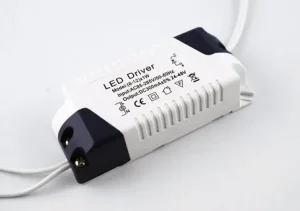
The global LED driver for lighting market is set for remarkable expansion, projected to exceed USD 208,646.6 million by 2035, growing at a compound annual growth rate (CAGR) of 19.0% during the forecast period. This growth is largely driven by the global push toward sustainability, stringent government regulations promoting energy efficiency, and the widespread adoption of LED lighting across diverse sectors. Advanced driver technologies such as dimmable, smart, and programmable drivers are increasingly being integrated into lighting systems, enhancing control, efficiency, and user experience. At the same time, major infrastructure developments and large-scale retrofitting initiatives across commercial, industrial, and residential spaces are further fuelling demand for robust and adaptive LED driver solutions.
The adoption of LED drivers is being accelerated by their ability to optimize lighting performance, prolong the life of LED fixtures, and provide intelligent control capabilities. As smart city programs proliferate globally, municipalities are investing in intelligent street lighting systems equipped with sensors and communication technologies powered by advanced LED drivers. Similarly, the commercial sector is leveraging smart lighting to manage energy consumption and improve operational efficiency in buildings, warehouses, and retail outlets. In the residential domain, the rise of connected homes and the growing popularity of ambient lighting setups are supporting the demand for user-customizable and IoT-compatible LED driver systems. Additionally, industries such as horticulture, automotive, and entertainment are increasingly using specialized LED lighting systems, further expanding the scope and application of LED driver technologies.
Request Your Sample and Stay Ahead with Our Insightful Report!
https://www.futuremarketinsights.com/reports/sample/rep-gb-17279
Key Takeaways
The LED driver for lighting market is poised for rapid growth, driven by increasing environmental regulations and a global shift toward energy-efficient lighting. By 2035, the market is expected to reach a valuation of over USD 208.6 billion, registering a CAGR of 19.0%. Demand is being reinforced by accelerating infrastructure projects, urban redevelopment programs, and retrofitting initiatives. Technological advancements in programmable and dimmable drivers are enabling precision lighting control and energy savings, while integration with IoT platforms is making smart lighting solutions more accessible and effective. North America and Europe currently hold significant market shares, but the Asia-Pacific region is emerging as the fastest-growing segment, propelled by urbanization, government subsidies, and widespread industrialization.
Emerging Trends in the Global Market
The LED driver for lighting market is witnessing several transformative trends. A major shift is the increased integration of connectivity features within drivers, allowing remote management and data analytics through wireless communication protocols such as Zigbee, Bluetooth, and Wi-Fi. DALI (Digital Addressable Lighting Interface) and PoE (Power over Ethernet) are gaining popularity in commercial and industrial applications due to their ability to enable networked lighting systems. The demand for human-centric lighting that adjusts color temperature and intensity based on circadian rhythms is pushing innovation in tunable white LED drivers. Moreover, eco-friendly and recyclable driver designs are becoming prominent, in alignment with global environmental objectives. The proliferation of low-voltage DC lighting systems in off-grid and solar-powered applications is also encouraging the development of versatile, compact driver units.
Significant Developments in the Global Sector: Trends and Opportunities in the Market
The LED driver industry is evolving with the increasing need for scalability and integration with building automation systems. Drivers with built-in intelligence for adaptive dimming, motion sensing, and daylight harvesting are becoming standard in next-generation commercial lighting solutions. In the industrial sector, robust drivers capable of withstanding harsh environments and power fluctuations are gaining traction. Additionally, opportunities are emerging in the form of driver-as-a-service business models, where companies offer hardware combined with analytics and predictive maintenance platforms. Key players are also investing in the development of universal drivers that support various LED types and configurations, reducing complexity and increasing compatibility across applications. Growth opportunities are particularly pronounced in emerging economies, where electrification and modernization projects are creating large-scale demand for smart, energy-efficient lighting systems.
Recent Developments in the Market
Recent years have seen a surge in product launches and technological innovations in the LED driver market. Companies are introducing ultra-compact drivers designed for space-constrained applications such as under-cabinet and automotive lighting. Developments in digital LED drivers are enabling smoother dimming transitions, reduced flicker, and enhanced performance at low light levels. Several manufacturers have released programmable drivers that allow customization of output current, dimming curves, and timing settings via software interfaces. Smart drivers equipped with cloud-based monitoring and diagnostics features are helping facility managers gain insights into energy use and system health. Meanwhile, collaborations between LED driver manufacturers and IoT platform providers are enhancing the interoperability and intelligence of smart lighting ecosystems across residential, commercial, and municipal projects.
Thorough Market Evaluation: Full Report
https://www.futuremarketinsights.com/reports/led-driver-for-lighting-market
Competition Outlook
The LED driver for lighting market is characterized by intense competition and rapid technological innovation. Leading companies are focused on delivering differentiated value through energy efficiency, intelligent controls, and product versatility. Many are expanding their global presence through partnerships, mergers, and acquisitions to strengthen their position in key growth markets. The emphasis is on designing flexible, application-specific solutions that cater to verticals like automotive, retail, horticulture, healthcare, and hospitality. With increasing concerns over data privacy and security in connected systems, vendors are also prioritizing cybersecurity features in smart LED drivers to ensure compliance with global standards and customer trust.
Key players in the LED driver for lighting market include Signify NV, OSRAM GmbH, Inventronics Inc., Mean Well Enterprises Co. Ltd., Texas Instruments Incorporated, STMicroelectronics, Macroblock Inc., Cree LED, Tridonic GmbH & Co KG, and Delta Electronics Inc. These companies are at the forefront of innovation in LED lighting and driver technologies, offering a wide range of programmable, dimmable, and connected solutions tailored for both general and specialized lighting applications.
Key Segmentations
By type, the market is segmented into constant current drivers and constant voltage drivers, with constant current drivers dominating due to their efficiency and suitability for high-power applications. By component, the market includes driver ICs, discrete components, and others, with driver ICs leading due to their integration in compact and smart lighting solutions. By application, the market is categorized into residential, commercial, industrial, and outdoor lighting, with commercial applications accounting for the largest share due to widespread adoption in offices, malls, and public infrastructure. By channel, the market is divided into direct sales and distribution, with direct sales increasing among large-scale commercial projects. Regionally, the market is segmented into North America, Europe, Asia-Pacific, Latin America, and the Middle East & Africa, with Asia-Pacific projected to record the highest CAGR driven by government initiatives, urbanization, and industrial growth.
About Future Market Insights (FMI)
Future Market Insights, Inc. (ESOMAR certified, recipient of the Stevie Award, and a member of the Greater New York Chamber of Commerce) offers profound insights into the driving factors that are boosting demand in the market. FMI stands as the leading global provider of market intelligence, advisory services, consulting, and events for the Packaging, Food and Beverage, Consumer Technology, Healthcare, Industrial, and Chemicals markets. With a vast team of 400 analysts worldwide, FMI provides global, regional, and local expertise on diverse domains and industry trends across more than 110 countries.
Contact Us:
Future Market Insights Inc.
Christiana Corporate, 200 Continental Drive,
Suite 401, Newark, Delaware – 19713, USA
T: +1-845-579-5705
For Sales Enquiries: sales@futuremarketinsights.com
Website: https://www.futuremarketinsights.com
LinkedIn| Twitter| Blogs | YouTube