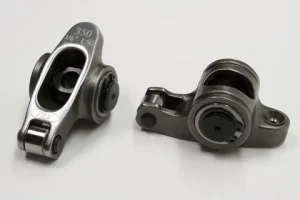
The global automotive rocker arm market is poised for substantial growth between 2025 and 2035, driven by escalating global vehicle production, increasing consumer demand for high-performance engine components, and a shift toward fuel-efficient internal combustion engine technologies. The market is forecast to grow from USD 11,693.8 million in 2025 to USD 20,233.2 million by 2035, marking a compound annual growth rate (CAGR) of 5.6%. Rocker arms play a pivotal role in ensuring optimal valve timing and efficient fuel combustion in engines, and their relevance remains high even as the automotive sector transitions gradually to electrification. Manufacturers are enhancing rocker arm designs with advanced materials and reduced friction technologies to comply with stringent emission regulations and support fuel economy targets.
Rising automotive production in emerging economies, coupled with a sustained appetite for sports and performance vehicles in developed markets, is contributing to increased demand for advanced valvetrain systems. While electric vehicles continue to expand, internal combustion engines (ICEs) are expected to retain a substantial share of the market in the medium term, particularly in hybrid configurations. This sustains the demand for rocker arms, especially those optimized for variable valve timing and lightweight construction. Moreover, the integration of roller rocker arms and hydraulic lash adjusters is becoming more widespread, improving engine responsiveness, reducing wear and tear, and supporting long-term durability—all key concerns for automakers and consumers alike.
Get Ahead with Our Report: Request Your Sample Now!
https://www.futuremarketinsights.com/reports/sample/rep-gb-3388
Key Takeaways
The automotive rocker arm market is projected to grow at a CAGR of 5.6% from 2025 to 2035, reaching USD 20,233.2 million by the end of the forecast period. This growth is driven by increasing global vehicle production, rising demand for fuel-efficient and high-performance engines, and technological enhancements in engine valvetrain components. Lightweight rocker arms using high-strength steel, aluminum, and composite materials are gaining popularity due to their contribution to overall vehicle weight reduction and emissions control. Passenger vehicles remain the dominant application segment, supported by high production volumes and consumer demand for performance-enhanced driving experiences. Asia-Pacific leads the market due to strong automotive manufacturing hubs in China, India, Japan, and South Korea.
Emerging Trends in the Global Market
A major trend shaping the automotive rocker arm market is the growing preference for roller and finger-follower rocker arms, which offer reduced friction and improved energy transfer in the valvetrain. Automakers are increasingly adopting variable valve timing systems that rely on precision rocker arm components to achieve optimal combustion cycles. In line with this, manufacturers are investing in simulation-based design and computer-aided manufacturing to produce rocker arms with micro-level tolerances and superior surface finishes. Another notable trend is the integration of lightweight rocker arms in hybrid vehicles, where engine downsizing requires components that deliver high strength-to-weight ratios and thermal stability. Additionally, demand for aftermarket rocker arm replacements is on the rise, particularly in regions with aging vehicle fleets and growing DIY repair culture.
Significant Developments in the Global Sector: Trends and Opportunities in the Market
There is a growing opportunity for manufacturers to collaborate with OEMs on customized rocker arm solutions tailored to specific engine platforms. With ICEs evolving to comply with Euro 7 and other emission standards, engine designers are prioritizing components that enable precise valve operation and minimal energy loss. This opens new avenues for innovative rocker arm geometries and coatings that reduce friction and extend engine life. Advancements in metallurgy and surface treatment technologies are enabling the development of rocker arms that perform reliably under high-pressure and high-temperature operating conditions. Furthermore, as hybrid powertrains become more complex, there is a surge in demand for rocker arms that can withstand frequent engine start-stop cycles and variable loads. The market is also seeing investment in additive manufacturing techniques for rapid prototyping and short-run production, which helps accelerate innovation timelines and reduce development costs.
Recent Developments in the Market
Recent years have seen the launch of rocker arms designed specifically for turbocharged engines, which are becoming increasingly common in compact and mid-size passenger vehicles. These new components are engineered to handle the higher stress and temperature profiles associated with turbocharging, offering enhanced fatigue resistance and operational stability. Leading automotive component suppliers have expanded their production capacities in Asia and Eastern Europe to meet growing OEM demand and regional cost advantages. Research and development efforts are also being directed toward the use of carbon-fiber-reinforced materials and ceramics for ultra-lightweight applications in racing and high-end sports cars. In the aftermarket segment, companies are introducing precision-machined performance rocker arms targeted at car enthusiasts and tuners seeking enhanced engine output and responsiveness.
Detailed Market Study: Full Report and Analysis
https://www.futuremarketinsights.com/reports/automotive-rocker-arm-market
Competition Outlook
The global automotive rocker arm market is moderately consolidated, with several established players competing on innovation, material technology, and OEM partnerships. Companies are focusing on long-term supply agreements, value-added services such as engine testing support, and enhanced customization options to maintain competitive advantages. Strategic investments in R&D and facility expansion are helping firms address evolving regulatory requirements and broaden their product offerings. Additionally, global supply chain optimization and localization strategies are being employed to reduce lead times and improve cost-efficiency.
Key players in the automotive rocker arm market include Schaeffler AG, NSK Ltd., MAHLE GmbH, Rane Engine Valve Ltd., Eaton Corporation, Aisin Seiki Co., Ltd., Federal-Mogul (Tenneco), and INA (a subsidiary of the Schaeffler Group). These companies are at the forefront of technological advancements and collaborate closely with OEMs to develop custom-engineered rocker arm solutions suited for diverse engine architectures and performance requirements.
Key Segmentations
By type, the market is segmented into roller rocker arms, shaft rocker arms, and pedestal rocker arms, with roller rocker arms witnessing the fastest growth due to their efficiency in reducing friction and enhancing engine output. By material, key categories include steel, aluminum, and composite materials, with aluminum-based rocker arms gaining traction due to their lightweight and high thermal conductivity. By vehicle type, the market is divided into passenger cars, light commercial vehicles, and heavy commercial vehicles, with passenger cars accounting for the largest share due to high production volumes and increased engine complexity. Geographically, the market is segmented into North America, Europe, Asia-Pacific, Latin America, and the Middle East & Africa, with Asia-Pacific leading the market owing to robust automotive manufacturing activity and a strong focus on engine performance enhancement.
About Future Market Insights (FMI)
Future Market Insights, Inc. (ESOMAR certified, recipient of the Stevie Award, and a member of the Greater New York Chamber of Commerce) offers profound insights into the driving factors that are boosting demand in the market. FMI stands as the leading global provider of market intelligence, advisory services, consulting, and events for the Packaging, Food and Beverage, Consumer Technology, Healthcare, Industrial, and Chemicals markets. With a vast team of 400 analysts worldwide, FMI provides global, regional, and local expertise on diverse domains and industry trends across more than 110 countries.
Contact Us:
Future Market Insights Inc.
Christiana Corporate, 200 Continental Drive,
Suite 401, Newark, Delaware – 19713, USA
T: +1-845-579-5705
For Sales Enquiries: sales@futuremarketinsights.com
Website: https://www.futuremarketinsights.com
LinkedIn| Twitter| Blogs | YouTube