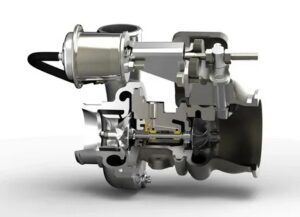
The global gasoline turbochargers market is projected to expand significantly over the coming decade, driven by increasing demand for high-performance passenger and light commercial vehicles with lower environmental impact. According to recent industry research, the market is expected to grow from USD 15,011.4 million in 2025 to USD 30,086.5 million by 2035, reflecting a robust compound annual growth rate (CAGR) of 7.2% during the forecast period. This growth trajectory is fueled by tightening emission regulations, consumer demand for better engine efficiency, and the automotive industry’s continued shift toward downsized engines without compromising on power output.
Automakers are increasingly turning to turbocharging systems to meet stringent emission targets while maintaining vehicle performance. Gasoline turbochargers offer an ideal solution by enhancing engine efficiency through increased air intake, allowing smaller engines to produce more power and torque. This not only improves acceleration and drivability but also contributes to fuel economy and reduced CO₂ emissions. With growing consumer preference for vehicles that combine performance with sustainability, turbocharger adoption is accelerating across both developed and emerging markets. Moreover, the integration of turbochargers in hybrid powertrains is opening new avenues for market expansion, especially as manufacturers focus on balancing electrification with internal combustion technologies.
Get Ahead with Our Report: Request Your Sample Now!
https://www.futuremarketinsights.com/reports/sample/rep-gb-1554
Key Takeaways:
The gasoline turbochargers market is witnessing sustained growth due to a convergence of performance, regulatory, and consumer-driven factors. The rise in stringent fuel economy standards and CO₂ emission regulations globally has prompted automakers to adopt advanced turbocharging technologies. As a result, turbochargers are no longer limited to performance-oriented vehicles but are now being widely integrated into mainstream and economy vehicle segments. The increased emphasis on engine downsizing without sacrificing output continues to drive turbocharger penetration, while innovations in lightweight materials and cooling technologies are further enhancing product adoption.
Emerging Trends in the Global Market:
One of the most notable trends reshaping the gasoline turbochargers market is the growing integration of electric-assisted turbochargers, which reduce turbo lag and improve responsiveness. These systems, which leverage electric motors to spool up the turbo quickly, are gaining traction in premium and sports vehicles and are gradually entering the mid-range segment as costs decline. Another emerging trend is the use of twin-scroll and variable geometry turbochargers in gasoline engines, offering improved boost control and more efficient exhaust gas utilization across a wider range of engine speeds.
As hybrid and mild-hybrid vehicles continue to gain popularity, there is a rising trend toward combining turbocharging with electrified powertrains. This combination allows automakers to optimize the balance between fuel efficiency and performance, especially under part-load conditions. Furthermore, the advancement of simulation and digital twin technologies is helping turbocharger manufacturers improve design precision, reduce development time, and enhance durability and heat resistance under high-performance conditions.
Significant Developments in the Global Sector: Trends and Opportunities in the Market:
Recent years have seen considerable technological advancements and strategic investments in turbocharger development. Turbocharger manufacturers are investing heavily in R&D to develop more compact, lightweight, and thermally efficient designs that can operate at higher temperatures and pressures. These developments are crucial for meeting the needs of modern engines, especially as hybridization and higher compression ratios become more prevalent.
The global push toward sustainability is also creating new opportunities. Many manufacturers are exploring renewable fuels and synthetic gasoline as a part of the transition to low-emission mobility. Turbochargers, by enhancing combustion efficiency, are poised to play a key role in this shift. Additionally, developing regions such as Southeast Asia, Latin America, and parts of Africa present untapped growth potential, driven by rising vehicle ownership and government initiatives to curb emissions from transportation.
Recent Developments in the Market:
Over the past year, several leading companies have announced next-generation turbocharger models designed to meet future emission and performance requirements. A prominent European manufacturer recently launched a new line of high-temperature gasoline turbochargers for hybrid applications, featuring advanced ceramic ball bearing technology to reduce friction and improve durability. Meanwhile, an Asian firm introduced an electrically assisted turbocharger system for passenger vehicles, boasting 30% faster response times and reduced turbo lag.
Strategic partnerships and acquisitions have also shaped the market landscape. For instance, a major automotive component supplier formed a joint venture with a European OEM to co-develop variable geometry turbochargers for smaller displacement engines. Another noteworthy development includes the expansion of a U.S.-based company’s production facility dedicated to electric and hybrid-compatible turbochargers, signaling increased focus on clean and efficient propulsion systems.
Detailed Market Study: Full Report and Analysis
https://www.futuremarketinsights.com/reports/gasoline-turbochargers-market
Competition Outlook:
The gasoline turbochargers market is moderately consolidated, with several global and regional players competing through technological innovation, strategic collaborations, and expanded production capacities. Key players are focused on developing durable, cost-effective solutions that can operate efficiently under increased thermal and mechanical loads. Emphasis is also being placed on aftermarket services and partnerships with OEMs to maintain competitive advantage.
Leading companies in the market include Honeywell International Inc., BorgWarner Inc., Mitsubishi Heavy Industries Ltd., Continental AG, IHI Corporation, Bosch Mahle Turbo Systems, Cummins Inc., Precision Turbo & Engine, Continental Turbo Technologies, and Turbo Energy Private Limited. These companies continue to lead through product innovation, investment in hybrid-compatible technologies, and global expansion strategies.
Key Segmentations:
The gasoline turbochargers market is segmented based on technology type, vehicle type, sales channel, and region. By technology, the market includes wastegate turbochargers, variable geometry turbochargers, and twin-scroll turbochargers, with variable geometry turbochargers gaining traction for their efficiency across various engine speeds. Based on vehicle type, passenger cars hold the largest share due to high adoption in compact and mid-size segments, while light commercial vehicles are increasingly integrating turbo systems to meet regulatory standards. By sales channel, the market is divided into OEMs and the aftermarket, with OEMs accounting for the majority share due to growing factory installations. Regionally, Europe leads the market due to early adoption and stringent regulations, followed by Asia Pacific, where rapid urbanization and rising vehicle demand fuel market growth.
About Future Market Insights (FMI)
Future Market Insights, Inc. (ESOMAR certified, recipient of the Stevie Award, and a member of the Greater New York Chamber of Commerce) offers profound insights into the driving factors that are boosting demand in the market. FMI stands as the leading global provider of market intelligence, advisory services, consulting, and events for the Packaging, Food and Beverage, Consumer Technology, Healthcare, Industrial, and Chemicals markets. With a vast team of 400 analysts worldwide, FMI provides global, regional, and local expertise on diverse domains and industry trends across more than 110 countries.
Contact Us:
Future Market Insights Inc.
Christiana Corporate, 200 Continental Drive,
Suite 401, Newark, Delaware – 19713, USA
T: +1-845-579-5705
For Sales Enquiries: sales@futuremarketinsights.com
Website: https://www.futuremarketinsights.com
LinkedIn| Twitter| Blogs | YouTube