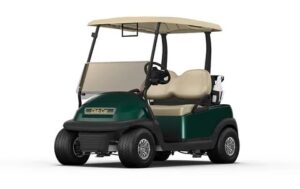
The Electric Golf Cart Market is expected to witness steady growth between 2025 and 2035, driven by the increasing adoption of eco-friendly transportation solutions across golf courses, resorts, gated communities, and commercial sectors. The market is projected to reach USD 1,414.2 million in 2025 and is anticipated to grow to USD 2,154.5 million by 2035, reflecting a compound annual growth rate (CAGR) of 4.3% throughout the forecast period. Rising demand for low-emission, cost-effective, and energy-efficient transportation alternatives is positioning electric golf carts as a preferred mobility solution in both recreational and utility applications.
Alongside their traditional use in golf courses, electric golf carts are rapidly being integrated into broader mobility ecosystems including residential townships, university campuses, large manufacturing facilities, airports, and event venues. The global shift toward green mobility and carbon-neutral targets is boosting the market, particularly in countries with supportive regulatory environments and tax incentives for electric vehicles. Technological advancements in battery efficiency, enhanced safety features, and smart connectivity are also contributing to the market’s transformation and expanding the carts’ utility in commercial and industrial domains.
Get Ahead with Our Report: Request Your Sample Now!
https://www.futuremarketinsights.com/reports/sample/rep-gb-10910
Key Takeaways
The electric golf cart market is being propelled by sustainability mandates, urbanization of recreational transport, and technological innovation. Demand is rising in both developed and emerging economies, supported by improvements in charging infrastructure, battery life, and reduced operational costs. Additionally, the expansion of tourism and resort-based real estate in Asia-Pacific, the Middle East, and the Americas is bolstering the deployment of electric golf carts for guest mobility and internal logistics.
Emerging Trends in the Global Market
One of the most notable trends is the integration of lithium-ion batteries in place of traditional lead-acid batteries. This shift results in longer operational ranges, faster charging times, and lower maintenance costs, making lithium-ion-powered carts highly attractive to fleet operators. Another emerging trend is the development of solar-powered golf carts, which are gaining attention in sun-rich regions and sustainability-conscious resorts. Furthermore, smart golf carts equipped with GPS navigation, real-time diagnostics, Bluetooth connectivity, and geofencing capabilities are being introduced, enhancing user experience and fleet management capabilities.
The evolution of customization in cart design is also gaining momentum, as manufacturers now offer bespoke solutions tailored to specific sectors such as hospitality, healthcare, and security services. Additionally, there is growing interest in multi-passenger electric golf carts for transporting groups within campuses, industrial parks, or airports. The surge in e-commerce is also subtly influencing the market, as last-mile logistics and warehouse operations explore electric golf carts for lightweight delivery and material transport.
Significant Developments in the Global Sector: Trends and Opportunities in the Market
The global sector is witnessing a strong uptick in demand as sustainability and energy efficiency gain prominence in public and private sector decision-making. Strategic partnerships between golf cart manufacturers and battery technology firms are emerging, aimed at advancing electric drive systems and improving energy storage solutions. Additionally, government incentives for electric vehicle adoption are now encompassing low-speed electric mobility solutions, which include electric golf carts, especially in countries such as the United States, China, and Germany.
Infrastructure upgrades in gated communities, smart townships, and institutional campuses are opening new avenues for market expansion. These developments create demand for electric golf carts as an ideal solution for short-range transportation, offering low noise, zero emissions, and high maneuverability. New players are also entering the market with offerings that blend functionality with aesthetic customization, targeting high-end hospitality and leisure venues. Moreover, electric golf carts are increasingly being used by municipalities and event organizers for crowd control and mobility assistance, expanding their scope beyond conventional sectors.
Recent Developments in the Market
In recent years, leading manufacturers have focused on upgrading their product portfolios to include advanced electric golf carts with enhanced user comfort, improved durability, and integrated digital features. Some companies have launched models with air conditioning, ergonomic seating, touchscreen dashboards, and regenerative braking systems, elevating the driving experience. Others have invested in mobile applications that allow users to book, track, or operate electric carts remotely, enhancing fleet efficiency.
Several regional players have expanded operations through dealership networks and joint ventures to penetrate high-growth markets in Southeast Asia, the Middle East, and Latin America. The pandemic period also highlighted the importance of contactless and shared mobility within private campuses, prompting institutional buyers to increase their fleets of electric carts. Rental services are also growing, particularly in the tourism and event management sectors, where short-term demand for clean, quiet mobility options is high.
Detailed Market Study: Full Report and Analysis
https://www.futuremarketinsights.com/reports/electric-golf-cart-market
Competition Outlook
The electric golf cart market is moderately competitive, with a mix of established brands and niche players focusing on innovation, energy efficiency, and customer-centric design. Leading companies are emphasizing the development of lightweight frames, advanced battery systems, and smart integrations to differentiate their offerings. Regional partnerships, leasing models, and after-sales services are being leveraged as competitive tools in both mature and emerging markets.
Prominent players in the electric golf cart market include Club Car, which has a broad portfolio of electric carts for recreational and utility applications. Yamaha Golf-Car Company offers technologically advanced carts with a strong presence in the North American market. E-Z-GO, a Textron Inc. brand, is known for innovation and fleet management capabilities in both golf and commercial segments. Garia, a luxury golf cart manufacturer, caters to high-end customers with customized, automotive-grade features. Polaris GEM, a leader in low-speed electric vehicles, provides solutions suited for campuses, municipalities, and hospitality.
Additional notable manufacturers include Columbia Vehicle Group, HDK Electric Vehicles, Suzhou Eagle Electric Vehicle Manufacturing, Bintelli Electric Vehicles, and Marshell Electric Vehicle. These companies are actively contributing to market growth through product diversification and regional expansion strategies.
Key Segmentations
The electric golf cart market can be segmented based on product type, end-use, battery type, and region. By product type, the market includes single-seater, two-seater, and multi-seater carts, with multi-seaters gaining popularity for group transport in resorts and institutions. By end-use, the market spans golf courses, commercial properties, residential communities, industrial zones, and tourism hubs, with commercial use showing significant growth. Based on battery type, the segmentation includes lead-acid and lithium-ion, where lithium-ion is emerging as the faster-growing segment due to its superior performance and lifecycle. Regionally, North America holds the largest market share due to its mature golf industry, while Asia-Pacific is expected to register the fastest growth owing to infrastructure development, tourism expansion, and government initiatives supporting electric mobility.
About Future Market Insights (FMI)
Future Market Insights, Inc. (ESOMAR certified, recipient of the Stevie Award, and a member of the Greater New York Chamber of Commerce) offers profound insights into the driving factors that are boosting demand in the market. FMI stands as the leading global provider of market intelligence, advisory services, consulting, and events for the Packaging, Food and Beverage, Consumer Technology, Healthcare, Industrial, and Chemicals markets. With a vast team of 400 analysts worldwide, FMI provides global, regional, and local expertise on diverse domains and industry trends across more than 110 countries.
Contact Us:
Future Market Insights Inc.
Christiana Corporate, 200 Continental Drive,
Suite 401, Newark, Delaware – 19713, USA
T: +1-845-579-5705
For Sales Enquiries: sales@futuremarketinsights.com
Website: https://www.futuremarketinsights.com
LinkedIn| Twitter| Blogs | YouTube