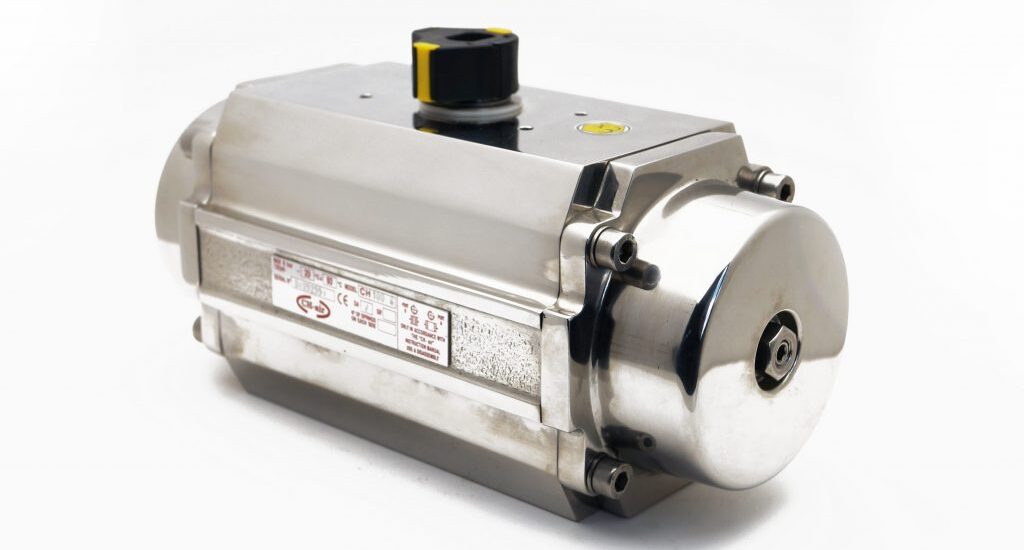
The industrial automation landscape is witnessing a shift as Emerson unveils its latest innovation, the Fisher™ easy-Drive™ 200R Electric Actuator. This self-calibrating marvel positions itself as a strong contender against the established dominance of pneumatic actuators, offering a compelling blend of sustainability, reliability, and performance.
While the global pneumatic actuator market is projected to reach a substantial US$ 26.51 billion by 2033, its growth faces potential disruption from eco-conscious alternatives like the 200R. This electric actuator boasts significant advantages:
· Reduced Emissions: Unlike gas-powered pneumatic actuators, the 200R eliminates control-related emissions, crucial for environmentally sensitive applications like oil and gas installations in remote locations.
· Enhanced Sustainability: Its low energy consumption (less than 0.4 watts in holding mode) makes it suitable for situations with limited or absent utility power, minimizing reliance on fossil fuels.
· Extreme Temperature Resilience: Operational even at -40°C, the 200R eliminates the need for space heaters in most settings, further reducing energy consumption.
· Simplified Installation and Maintenance: The one-click calibration and free configuration software ensure ease of use, potentially lowering maintenance costs.
· Remote Monitoring and Control: The Modbus RTU interface enables real-time tracking of performance metrics, facilitating proactive maintenance and troubleshooting.
These features align perfectly with the growing demand for sustainable and efficient industrial solutions. While pneumatic actuators have traditionally held sway due to their durability and affordability, the 200R presents a viable alternative with its eco-friendly design and potential for lower lifecycle costs.
Emerson’s new actuator signifies a pivotal moment in the industrial automation sector. As companies strive to balance performance with environmental responsibility, the 200R stands as a testament to innovation that can reshape the market landscape. Its success could trigger a paradigm shift, paving the way for wider adoption of electric actuators and accelerating the transition towards a more sustainable future for industrial operations.