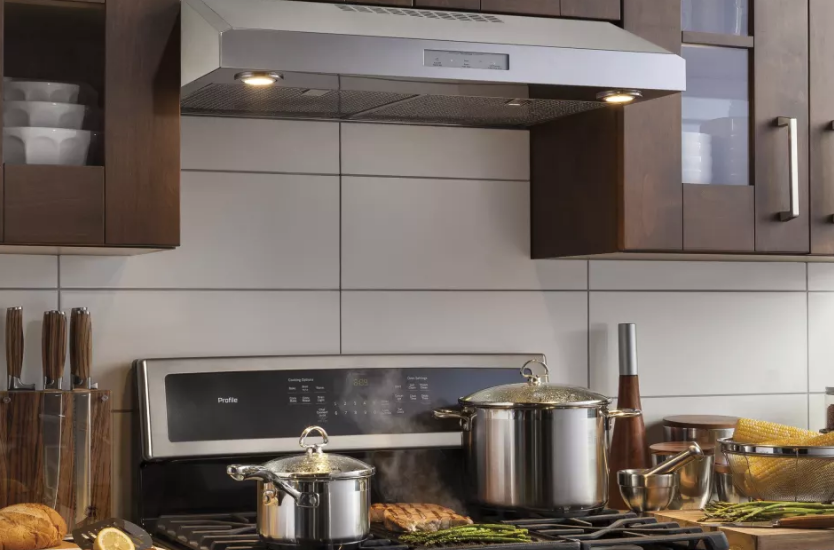
In 2023, the kitchen hood market is projected to reach a value of US$ 12.0 billion, and from 2023 to 2033, it is projected to grow at a CAGR of 4.5% to reach a value of US$ 18.8 billion. In the historical period from 2018 to 2022, the Kitchen Hood market experienced a CAGR of 2.2%.
The kitchen hoods successfully remove undesirable particles out of the home and away from everyone in the kitchen, thus reducing the amount of toxic air, also snipping the growth of bacteria, germs and even mold in the kitchen.
Ventilation is a prime aspect of the kitchen. Traditionally, chimneys were designed in a vertical fashion to be able to pass hot gases. Besides offering valuable filtering support for the stove, the kitchen hoods are so designed to expel gases and odors from within the home. Kitchen hoods are a mandate appliance within the home.
As a matter of fact, the prime role of the kitchen hood is to eradicate potentially toxic pollutants and gasses from within the kitchen. Meal preparation, sometimes, involves steam, smoke and grease, which might affect the elderly or people with respiratory issues.
In addition to such unwanted byproducts, kitchen hoods are also responsible for cutting down the amount of carbon monoxide that may be present inside the house. There are many health dangers associated with carbon monoxide, and inadequate ventilation will just exasperate the potential problems this toxic gas presents.
Get your Sample Report to Boost Your Industry Knowledge for Valuable Insights!
https://www.futuremarketinsights.com/reports/sample/rep-gb-13053
Global Kitchen Hood Market: Market Dynamics
How is Electric Kitchen Hood driving the Demand in Commercial Sector?
Considering the growing trend of out-of-home eating, the number of commercial food establishments is on a rise globally, especially in the developing regions. This rise in food joints has proportionally spiked the demand for kitchen hoods. The reason being, exhaust treatment solutions are a primal part of kitchen designing. Additionally, various countries have regulatory standards and guidelines for the kitchen to abide by.
Commercial kitchens, generally, make use of ducted kitchen hoods over the ductless ones. Since, ducted kitchen hoods have larger ranges that tend to generate greater amounts of smoke, fumes or dirty air that should be vented outside.
Ducted hoods are likely to be more efficient for eradicating humidity and steam from the cooking area because of the fact that these are not actually filtering and re-circulating the air, instead venting it out of the kitchen completely.
How is Omni-channel Retailing Helping the Kitchen Hood Market Gain Momentum?
No sooner did the COVID-19 pandemic hit, a majority of the store retailers shifted to internet retailing.The trend of Omni-channel retailing had begun even before the COVID-19 pandemic became known to the world, however, the lockdown period was a nail in the coffin. Just from February to March 2020, there has been a dramatic shift to e-Commerce: the use of online grocery services more than doubled.
Request the Full Report Methodology Now!
https://www.futuremarketinsights.com/request-report-methodology/rep-gb-13053
A more important fact is that a considerable section of new e-Commerce users intend to continue with online retailing.This omni-channel shift during lockdown has been driving sales mostly across the food and beverage categories.Primarily, stores that develop effective Omni-channel capabilities so as to maintain position among the physical grocers and also in a digital sphere are driving the market’s momentum.
Will Technological Innovations Drive the Global Kitchen Hood Market over the Forecast Period?
Consumer spending is soaring high as a result of the increasing disposable income. Consequently, the indulgence on luxuries and technologically advanced products is rising.Product innovations amidst the technical sphere within the kitchen hood market have up ticked the demand for high-end kitchen hood.
Apart from being energy efficient and eco-friendly, smart kitchen hood with remote connectivity are serving convenience to the consumers. The players in the market are encouraged to develop innovations that facilitate hyper convenience in case of usage. In June 2020, Xiaomi launched the MIJIA smart kitchen hood.
The MIJIA smart kitchen hood tags along MIJIA app connectivity, featuring an interconnection between the hood and the cooker; thereby implying that if the cooker is turned on, the kitchen hood automatically gets turned on.
Global Kitchen Hood Market: Key Players
The key players in the global kitchen hood market are
- Asko Appliances
- Broan, Inc.
- BSH Home Appliances Corp.
- Elica S.p.A.
- Faber S.p.A.
- Falmec S.p.A.
- Miele, Inc.
- LG
- Glen India
- Panasonic Corp.
- Samsung Electronics,
- Whirlpool Corp
- Among others.
About Future Market Insights (FMI)
Future Market Insights, Inc. (ESOMAR certified, recipient of the Stevie Award, and a member of the Greater New York Chamber of Commerce) offers profound insights into the driving factors that are boosting demand in the market. FMI stands as the leading global provider of market intelligence, advisory services, consulting, and events for the Packaging, Food and Beverage, Consumer Technology, Healthcare, Industrial, and Chemicals markets. With a vast team of over 5000 analysts worldwide, FMI provides global, regional, and local expertise on diverse domains and industry trends across more than 110 countries.
Contact Us:
Future Market Insights Inc.
Christiana Corporate, 200 Continental Drive,
Suite 401, Newark, Delaware – 19713, USA
T: +1-845-579-5705
For Sales Enquiries: sales@futuremarketinsights.com
Website: https://www.futuremarketinsights.com
LinkedIn| Twitter| Blogs | YouTube